Surat al-'Asr is one of the Meccan surahs, and in the early Islamic centuries it received far more attention from exegetes than in later centuries. Because they breathed the atmosphere in which the verses were revealed, they probably grasped truths that today lie beyond the reach of our understanding.
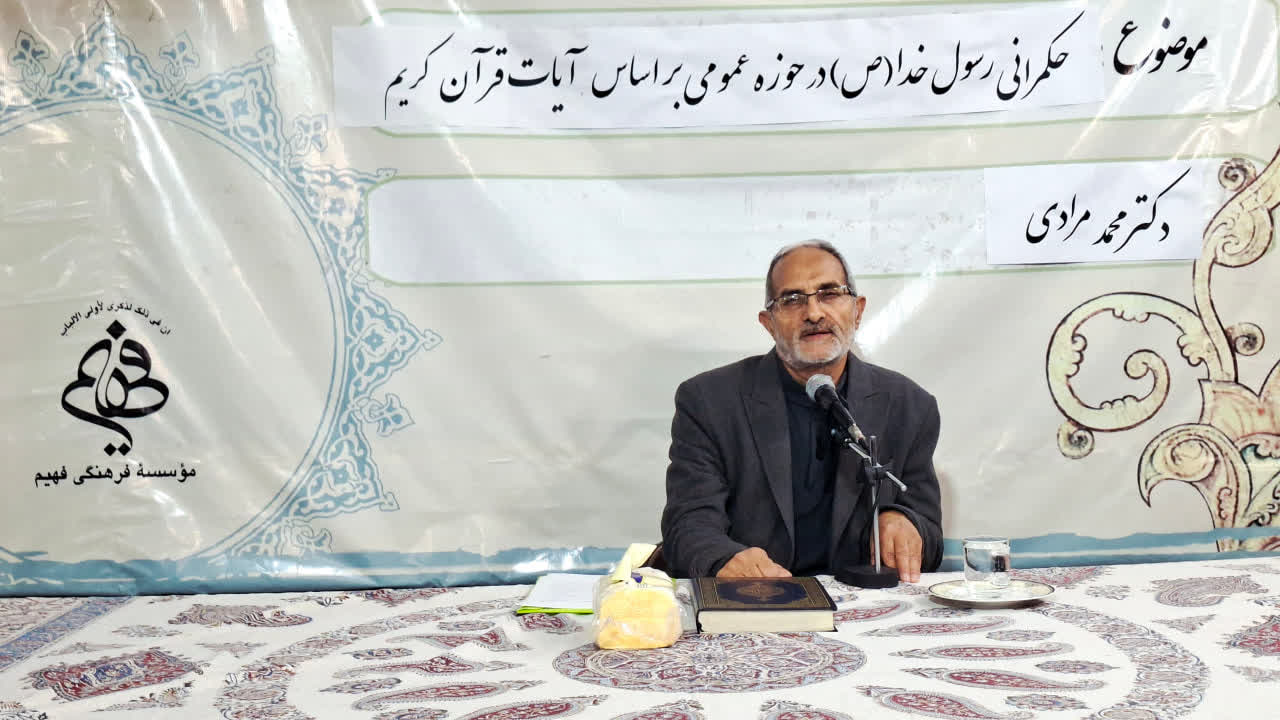
In this brief opportunity, I shall address a topic entitled “The Governance of the Messenger of God in the Public Sphere According to the Verses of the Noble Qur'an”. In these blessed days of the month of Ramadan — the month of the Qur'an and of the Divine Word — I shall endeavour to share a Qur'anic insight with you.
The great nights of the blessed month of Ramadan, and especially the final ten days of this month, which are known for i'tikaf and supplication, bring forth for us the highest manifestations of servitude to God. We thank and give praise to the Lord of the worlds for granting all of us the opportunity to witness this month, these nights, these days, these hours, days and nights.
I offer my condolences on these days of calamity and mourning for the Household of the Prophethood: the passing of the Noble Prophet of Islam (PBUH), the martyrdom of Imam al-Mujtaba (AS), and these nights, which are the nights of the martyrdom of our benefactor, Imam al-Rida (AS).
Today, somewhere, a dear friend said from the pulpit that the great scholars have advised that during these days one should only recite elegies (rawdah), and that talking should be left for other times. It seems, however, that I have been invited by mistake! For if I were to act on that gentleman's principle, at most I could briefly trouble you with some seminary-style remarks and discussions of this kind. I apologise in advance to all the professors and the esteemed audience, and I hope that God Almighty will cause beneficial words to flow through my mind and tongue.
24 October 2026
Conversational search
Hello! Type a topic, a scholar's name or your question and I will find related items in the archive.