


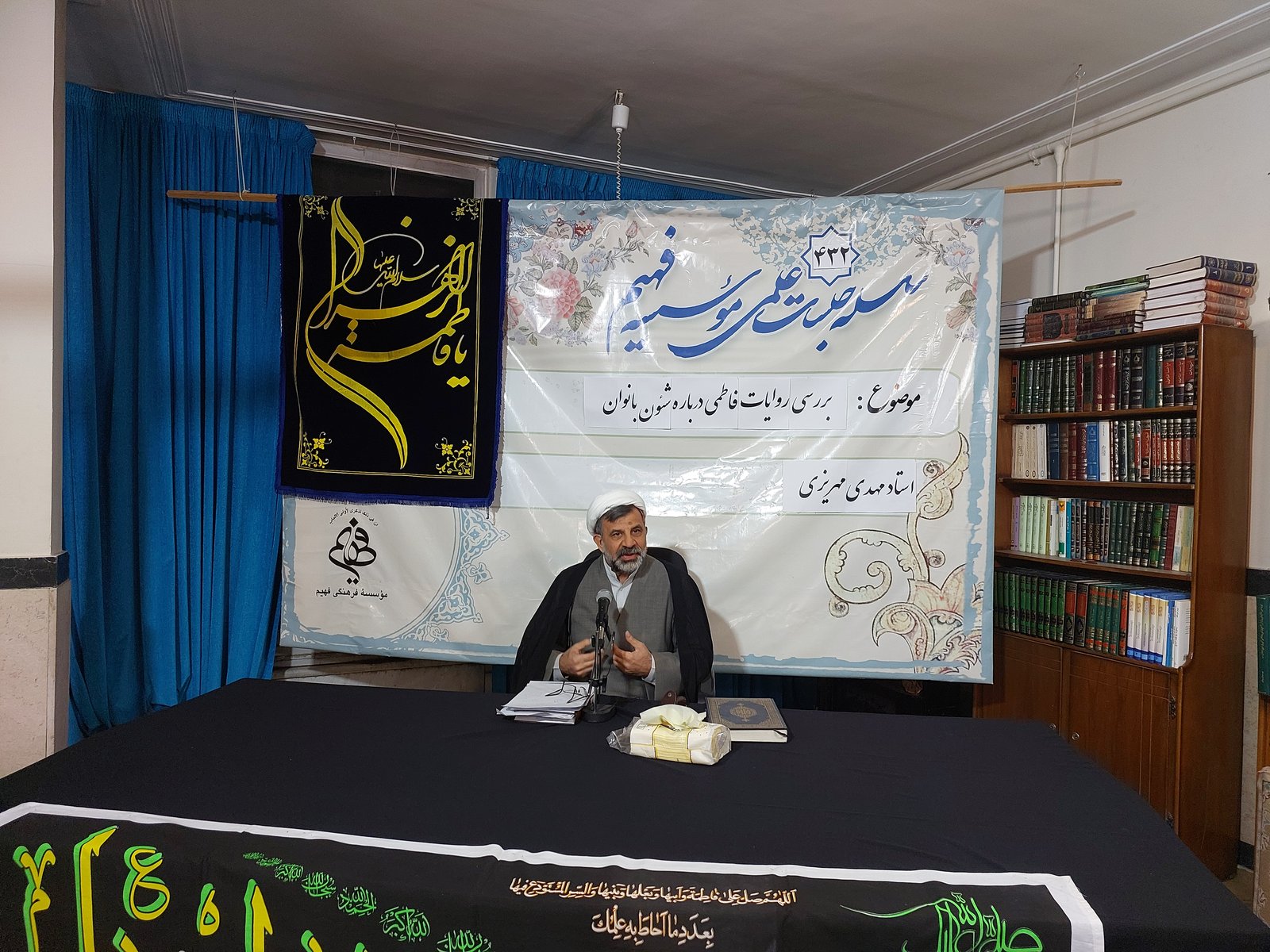
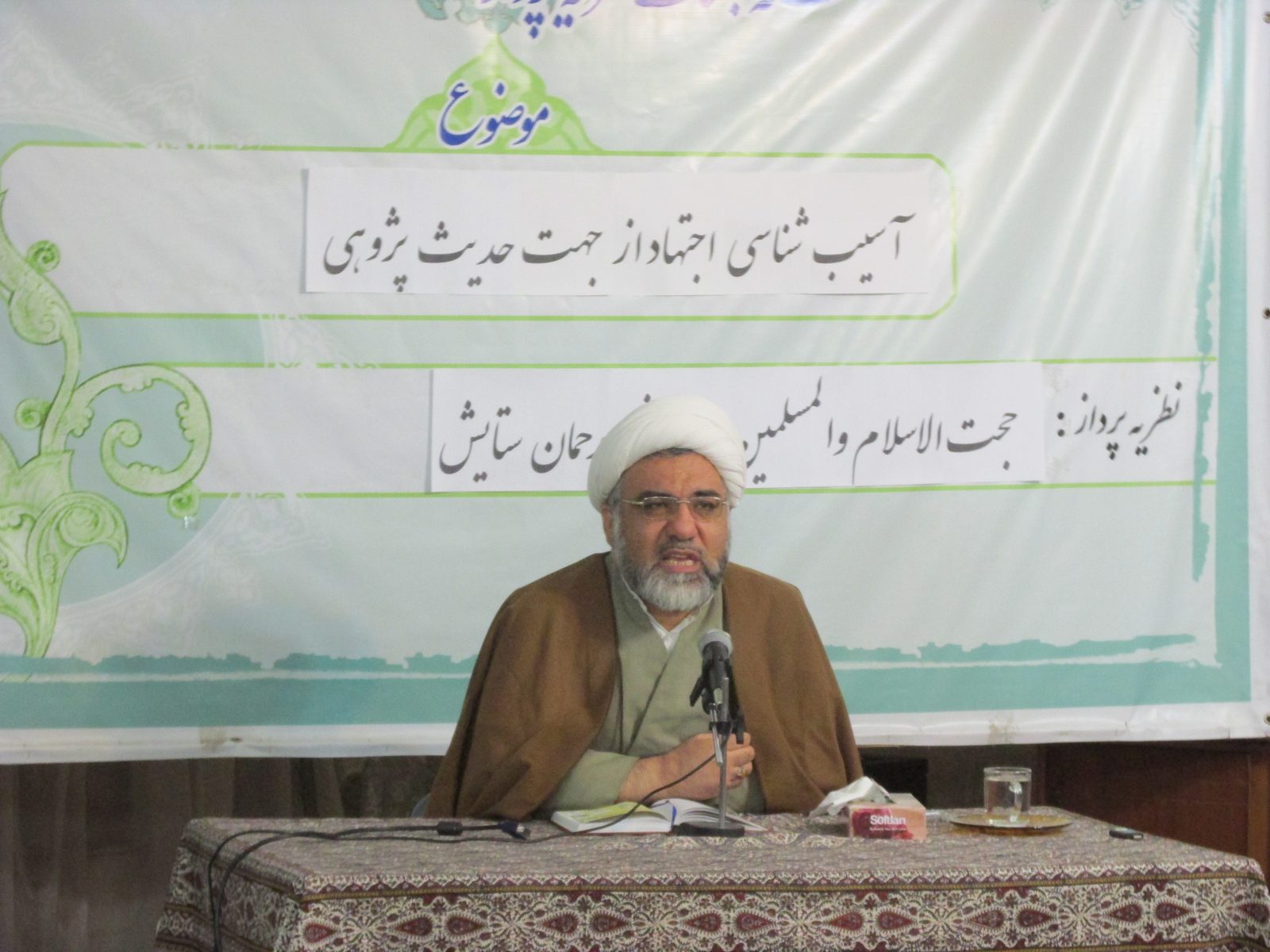
A Critical Rereading of the Fatimid Narrations: A New Approach in Fiqh al-Hadith and Women's Issues
أعوذُ بِاللهِ مِنَ الشَّيطانِ الرَّجيم، بِسمِ اللهِ الرَّحمنِ الرَّحيم. الحَمدُ لِلهِ رَبِّ العالَمينَ بَارِئِ الخَلَائِقِ أَجمَعين، وَ الصَّلاةُ وَ السَّلامُ عَلَى سَيِّدِنا وَ نَبِيِّنا أَبِي القاسِمِ المُصطَفَى مُحَمَّدٍ وَ عَلَى أهلِ بَيتِهِ الطَّيِّبينَ الطَّاهِرينَ المَعصُومينَ وَ أصحَابِهِ المُنتَجَبين. «رَبِّ اشْرَحْ لِي صَدْرِي وَ يَسِّرْ لِي أَمْرِي وَ احْلُلْ عُقْدَةً مِنْ لِسانِي يَفْقَهُوا قَوْلِي».
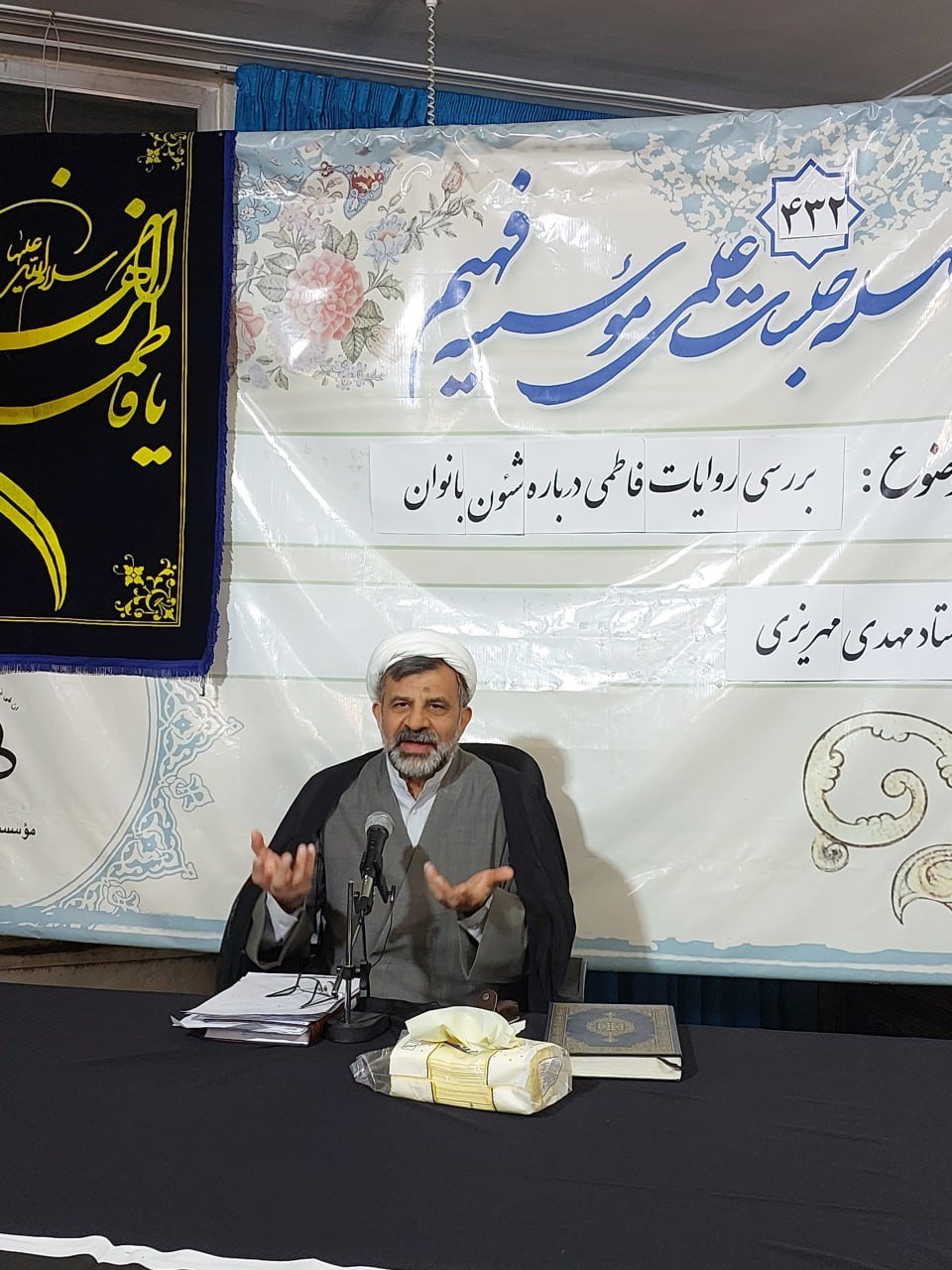
The topic I have chosen to present before the esteemed professors and distinguished scholars is formulated under the title "Women's Issues Today and a Rereading of Several Narrations Related to Lady Fatima al-Zahra (SA)." In this opportunity, I intend to examine five narrations or narrative themes that are in some way connected with her conduct and personality; themes that have at times been reported directly from her own words, at times reflect her practical conduct, and at times appear in the narrative texts concerning her personality. These themes are: the well-known narration on the "division of labour," the episode of the "testimony of Umm Ayman" in the affair of Fadak, the conflicting narrations concerning her "monthly period," the hadith «خَیرٌ لِلنِّسَاءِ أَنْ لَا يَرَينَ الرِّجَالَ وَ لَا يَرَاهُنَّ الرِّجَالُ» (it is best for women that they do not see men and that men do not see them), and finally the narrations known as «خِطبَةُ بِنْتِ أَبِيجَهْل» (the proposal to the daughter of Abu Jahl); although, given the shortage of time, I do not think there will be an opportunity to present all of them.
Before entering the main discussion, a methodological introduction on how to approach the hadith heritage seems necessary. Although in the epistemic system of Islam the noble Qur'an ought to hold the central position and intellectual authority, historical reality shows that the greater part of the religious culture of Muslims, both Shi'a and Sunni, has been shaped by "hadiths." Hence, a careful rereading of the narrative heritage with approaches concerned with "issuance" (sudur) and with "fiqh al-hadith" is unavoidable, especially in gatherings such as this, whose audience are people of learning and virtue. In my view, the process of inference and of engaging with any hadith must pass through three fundamental stages: first, "establishing issuance"; second, "establishing the authenticity of the text"; and third, "applying the rules of fiqh al-hadith." If this threefold process is not completed, the use of hadith will be an unscholarly and lay undertaking.
At the first stage, namely "establishing issuance," reliance on discussions of 'ilm al-rijal alone is not sufficient, for the science of rijal is narrower than the claim of establishing issuance. To be assured of a narration's issuance, three components must be examined: the "source," the "chain of transmission and its narrators," and the "text." In examining the source, it must be established, first, that the author had an actual historical existence; second, that the book is attributed to him and is recorded in the early sources; and third, which is the most important and the most challenging of all, it must be proven that there is "identity," that is, whether the copy in our hands today is exactly the same text that the author wrote. Unfortunately, in many books this missing link exists, and the mere sharing of a book's title is deemed sufficient to attribute thousands of hadiths to its author, which is itself an obvious fallacy. After passing beyond the source and the chain, it is the turn of examining the text as a contextual indicator of issuance: whether or not the content is consistent with the personality of the speaker (the Infallible).
The second stage is "establishing the authenticity of the text." Even after issuance is confirmed, we must be certain that the words that have reached us are exactly the words issued by the Infallible. Over the course of history our narrative texts have suffered from numerous defects: "transmission by meaning" (naql bi-l-ma'na), "fragmentation" (taqti'), "scribal corruption" (tashif) and "verbal alterations" (minor interferences and modifications). For example, in the narration concerning Imam al-Rida's (AS) mention of the names of the Imams (AS), a phrase about "standing up and placing the hand on the head when the name of al-Qa'im is mentioned" has been added in later copies, which does not exist in the original sources such as 'Uyun Akhbar al-Rida.
The third and final stage is "fiqh al-hadith." At this stage one must seek to understand what the Infallible intended, which requires examining "similar and parallel narrations," "conflicting narrations" and "concordant narrations," as well as attention to the context of the speech, the circumstances of issuance (taqiyya, a governmental ruling, or the statement of a permanent ruling) and lexical questions. Unfortunately, it must be admitted that even in current juristic discussions these stages are sometimes not completed with the necessary rigour, and had this methodology been applied in full, the resulting fatwas would in many cases have been different from what we see today.
In light of this methodological introduction, we turn to the examination of the first theme, namely the "narration on the division of labour." It is well known that the Messenger of God (PBUH) assigned work outside the home to the Commander of the Faithful (AS) and work inside the home to Lady al-Zahra (SA), and that she expressed her delight at this division of labour. But if we refer to the opening of the narration, a completely different meaning emerges. The origin of this narration is the book Qurb al-Isnad, and it is not found in the Four Books such as al-Kafi or al-Tahdhib, although Majlisi has reported it in Bihar al-Anwar. The exact text of the narration begins thus: «تَقَاضَى عَلِيٌّ وَ فَاطِمَةُ إِلَى رَسُولِ اللَّهِ ص فِي الْخِدْمَةِ»; that is, their complaint and request to the Prophet concerned a "servant." The living conditions of that time, with small children born one after another and the hardship of daily chores (grinding wheat, fetching water, gathering firewood), made it necessary for them to request a servant.
In reply to this request, the Prophet (PBUH) said that you are the household of prophethood and should not have a servant (voluntary poverty, or serving as an exemplar); he therefore said: «فَقَضَى عَلَى عَلِيٍّ بِالْخِدْمَةِ مَا خَلْفَ الْبَابِ وَ قَضَى عَلَى فَاطِمَةَ بِالْخِدْمَةِ مَا دُونَ الْبَابِ» (He assigned to Ali the service beyond the door and assigned to Fatima the service within the door). In fact, the Prophet said that, so that the burden of work on Fatima (SA) might be lightened, Ali (AS) should perform the outside tasks (which included fetching water and bringing firewood for the oven, which were counted among household chores). Thus the delight of Lady al-Zahra (SA), who said: «فَلَا يَعْلَمُ مَا دَاخَلَنِي مِنَ السُّرُورِ إِلَّا اللَّهُ بِإِكْفَاءِ رَسُولِ اللَّهِ ص تَحَمُّلَ رِقَابِ الرِّجَالِ» (None but God knows the joy that entered me when the Messenger of God (PBUH) spared me from bearing burdens on the necks of men), referred to the fact that the heavy burden of tasks such as drawing water and carrying firewood had been lifted from her shoulders, not that a woman's social presence or her leaving the home had been prohibited. This is supported by another narration from the Commander of the Faithful (AS), who, addressing his mother Fatima bint Asad, says: «يَا أُمَّاه... تَكْفِينَ فَاطِمَةَ بِنْتَ رَسُولِ اللَّهِ ص سِعَايَةَ الْبَيْتِ وَ الْمَاءَ وَ تَكْفِيكِ هِيَ الطَّحْنَ وَ الْعَجْنَ»; that is, you (Fatima bint Asad) do the outside tasks (fetching water), and Fatima (SA) the inside tasks (grinding flour). Why? Because Fatima (SA) is occupied with caring for the children. This shows that a woman's going out to obtain necessities was not in principle prohibited, and that the division of labour was based on "facilitation," not "restriction." The noble Qur'an too has accepted the social presence of women with conditions such as «لَا يَخْضَعْنَ بِالْقَوْلِ» (not speaking in a soft, alluring voice) and «لَا تَبَرَّجْنَ» (refraining from displaying oneself), and mentions the story of the daughters of Shu'ayb as a model of chaste presence in society (تَمْشِي عَلَى اسْتِحْيَاءٍ – walking with modesty).
The second theme is the question of the "testimony of Umm Ayman" in the affair of Fadak. A narration in al-Kafi (Bab al-Hujja) reports that after the usurpation of Fadak, Lady al-Zahra (SA) went to the first caliph and asked for its return. The caliph demanded a witness («هَاتِي أَسْوَدَ أَوْ أَحْمَرَ شَهِدَ لَكِ بِذَلِك» – bring anyone, black or red, who will testify for you to that). She brought the Commander of the Faithful (AS) and Umm Ayman. On the testimony of these two (one man and one woman), the caliph wrote the ruling. But the narration continues: «فَخَرَجَتْ وَ الْكِتَابُ مَعَهَا فَلَقِيَهَا عُمَرُ... فَقَالَ مَا هَذَا مَعَكِ يَا بِنْتَ مُحَمَّد... فَأَخَذَهُ وَ تَفَلَ فِيهِ وَ مَزَّقَهُ» (the second caliph took the document and tore it up). The significant juristic and rijal point is that in this important historical event the testimony of "one man and one woman" was accepted, and the Commander of the Faithful (AS), with knowledge of his own infallibility, brought only one woman (Umm Ayman) with him and did not say that there must be two women to take the place of one man. Strangely, this important narration is not cited in the juristic chapters on "testimonies" and appears only in theological and historical discussions, whereas it has been reported with a reliable chain in al-Kafi, in Shaykh al-Tusi's al-Tahdhib and in Shaykh al-Mufid's al-Muqni'a. Even if we measure this narration against the noble verse «فَإِنْ لَمْ يَكُونَا رَجُلَيْنِ فَرَجُلٌ وَامْرَأَتَانِ» (and if there are not two men, then one man and two women) (al-Baqara: 282), the rationale given in the verse («أَنْ تَضِلَّ إِحْدَاهُمَا فَتُذَكِّرَ إِحْدَاهُمَا الْأُخْرَى» – so that if one of them errs, the other may remind her) shows that the number of women has no intrinsic significance but is a means of ensuring against forgetting; therefore, if the trustworthiness and accuracy of the narrator (such as Umm Ayman) are established, her testimony alone may suffice. Moreover, the verse concerns the stage of "bearing witness" (tahammul al-shahada, at the time a contract is written), not the stage of "giving testimony" (ada' al-shahada) in court.
The third topic is the narrations concerning the "monthly period." On this subject we face two groups of conflicting narrations. The first group consists of narrations on the virtues of Lady al-Zahra (SA) which state: «إِنَّ بَنَاتِ الْأَنْبِيَاءِ لَا يَطْمَثْنَ» (the daughters of the prophets do not menstruate), or a narration from Imam al-Rida (AS): «طَاهِرَةٌ لَا تَحِيضُ» (pure, she does not menstruate). In contrast, however, there are narrations in the juristic chapters (Kitab al-Hayd) that explicitly refer to her making up missed fasts: «كَانَ يَأْمُرُ بِذَلِكَ فَاطِمَةَ وَ كَانَتْ تَأْمُرُ بِذَلِكَ الْمُؤْمِنَات» (the Prophet used to instruct Fatima to make up the fasts of the days of menstruation, and she in turn used to instruct the believing women likewise). The root of some negative views of menstruation lies in presuppositions that regard it as "impurity," "divine punishment" and "deficiency of faith." There are anomalous narrations, some of them of Isra'iliyyat origin, such as those reported in 'Ilal al-Shara'i' or al-Mustadrak, that present menstruation as Eve's punishment for being deceived by Satan and eating from the forbidden tree: «جَعَلْتُكِ نَاقِصَةَ الْعَقْلِ وَ الدِّينِ... وَ سَلَّطْتُ عَلَيْكِ الطَّمْثَ» (I made you deficient in intellect and religion... and imposed menstruation upon you). These narrations depict a vengeful image of God and turn the natural hardship of the continuation of the species into a punishment. Yet the noble Qur'an attributes Satan's whispering to both of them (Adam and Eve) («فَوَسْوَسَ لَهُمَا الشَّيْطَانُ» – then Satan whispered to them both) and calls menstruation "adha" (hardship and discomfort), not "rijs" (spiritual impurity). Accepting narrations that present menstruation as a punishment contradicts divine justice and the best possible order of creation.
In conclusion, and on the occasion of the days of mourning for the Truthful and Pure Lady (SA), let us recite an elegy from the words of the Commander of the Faithful (AS) in Nahj al-Balagha (Sermon 202) at the burial of Lady al-Zahra (SA); words that reveal the anguish of a man with "a broken heart and a restless soul." Addressing the Messenger of God (PBUH), he says: «السَّلَامُ عَلَيْكَ يَا رَسُولَ اللَّهِ عَنِّي وَ عَنِ ابْنَتِكَ النَّازِلَةِ فِي جِوَارِكَ وَ السَّرِيعَةِ اللَّحَاقِ بِكَ! قَلَّ يَا رَسُولَ اللَّهِ عَنْ صَفِيَّتِكَ صَبْرِي وَ رَقَّ عَنْهَا تَجَلُّدِي...» (Peace be upon you, O Messenger of God, from me and from your daughter who has now descended into your vicinity and has swiftly joined you! O Prophet of God, my patience over the loss of your chosen one has grown little, and my endurance has failed...). «أَمَّا حُزْنِي فَسَرْمَدٌ وَ أَمَّا لَيْلِي فَمُسَهَّدٌ... وَ سَتُنَبِّئُكَ ابْنَتُكَ بِتَضَافُرِ أُمَّتِكَ عَلَى هَضْمِهَا فَأَحْفِهَا السُّؤَالَ وَ اسْتَخْبِرْهَا الْحَالَ» (As for my grief, it is everlasting, and as for my nights, they pass in sleeplessness... Soon your daughter will inform you how your community joined hands to crush her; so question her closely and ask her how things stand). وَ السَّلَامُ عَلَيْكُمَا سَلَامَ مُوَدِّعٍ لَا قَالٍ وَ لَا سَئِمٍ... والسلام علیکم و رحمة الله و برکاته.
Comments
No comments yet. Be the first.
Write a note, critique or commentShare your view with us and other readers without leaving this page.