


بِسْمِ اللَّهِ الرَّحْمَنِ الرَّحِيمِ
الْحَمْدُ لِلَّهِ رَبِّ الْعَالَمِينَ وَ صَلَّى اللَّهُ عَلَى سَيِّدِنَا وَ نَبِيِّنَا وَ حَبِيبِ قُلُوبِنَا أَبِي الْقَاسِمِ مُحَمَّدٍ صَلَّى اللَّهُ عَلَيْهِ وَ آلِهِ وَ سَلَّمَ وَ أَهْلِ بَيْتِهِ الطَّيِّبِينَ الطَّاهِرِينَ الْمَعْصُومِينَ الْمُكَرَّمِينَ، سِيَّمَا بَقِيَّةِ اللَّهِ الْأَعْظَمِ رُوحِي وَ أَرْوَاحُ الْعَالَمِينَ لِتُرَابِ مَقْدَمِهِ الْفِدَاءُ.
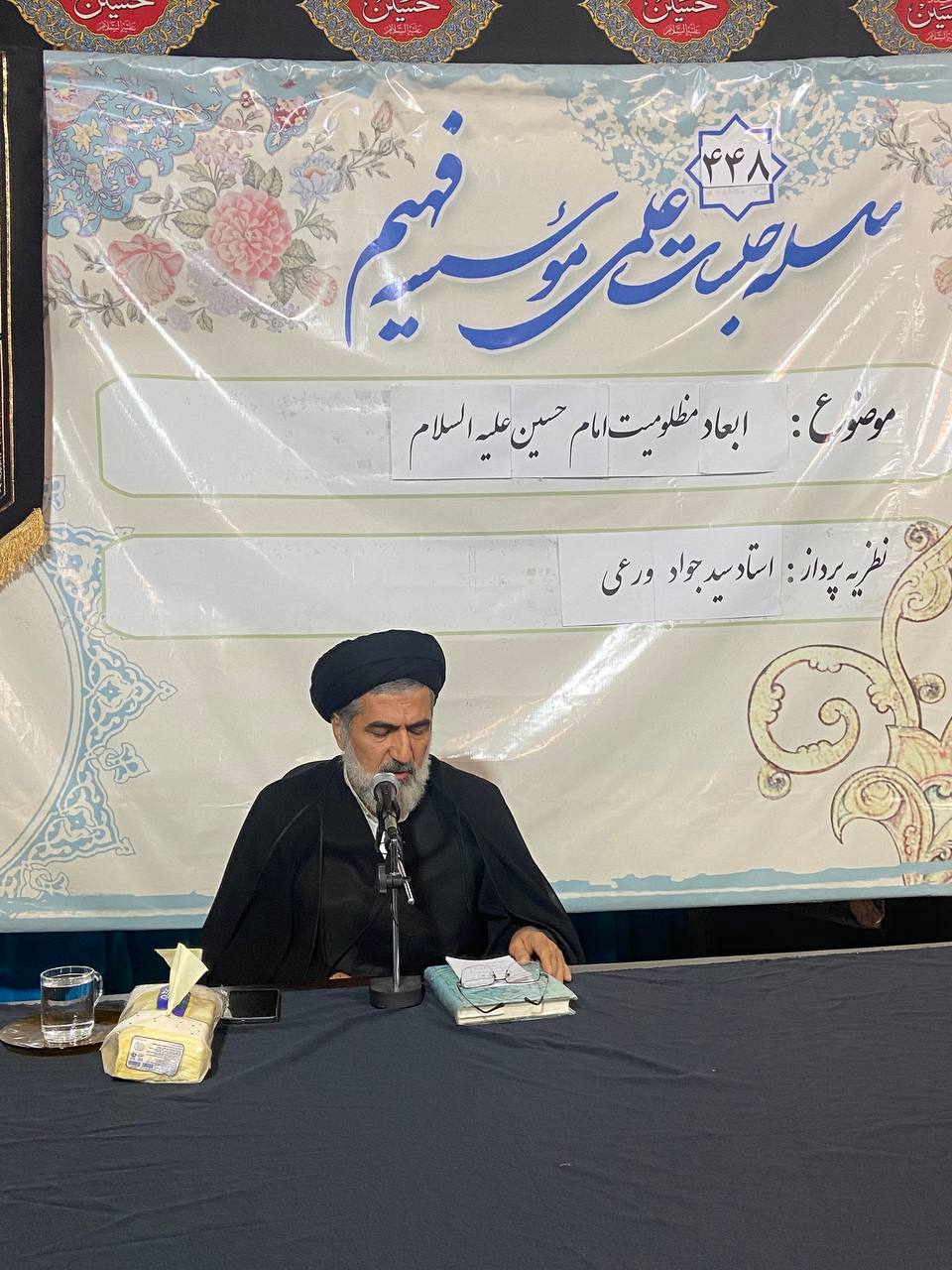
Respected professors and esteemed scholars, as you are aware, the dimensions of the oppression suffered by Imam Husayn (AS), from the beginning of his movement to the moment of his martyrdom, are extremely wide-ranging. Some of these dimensions have been presented with full prominence in gatherings and assemblies; yet there are hidden aspects of the oppression of the Master of Martyrs (AS) that are far more harrowing than the outward calamities, but which have received less attention and are rarely addressed.
The Evident Manifestations of His Oppression
In the historical sources and in the ziyarah texts, the attribute of "being oppressed" (mazlumiyyah) is among the most prominent characteristics of the Master of Martyrs. The evident signs of this estrangement are as follows:
- Displacement from the Prophet's sanctuary: a figure such as Husayn ibn Ali (AS), the sole remaining memento and son of the Prophet at that time, was unable to remain in the city of his grandfather because he refused to pledge allegiance to the rule of Yazid ibn Mu'awiyah, and was compelled to leave Medina and take refuge in Mecca.
- Insecurity in God's safe sanctuary: even in Mecca, and that during the Hajj season when everyone was heading towards Arafat, the Imam could not remain for fear for his life, and left Mecca bound for Kufa.
- The blocking of his path and the siege: the son who had set out for that land at the invitation of the people of Kufa themselves was not permitted to enter; his way was blocked and he was left wandering in the deserts.
- The tragedy of Ashura and captivity: his encirclement in the plain of Karbala, the atrocious martyrdom of the Imam, his companions and his family, and finally the taking captive of the household of the Prophetic mission.
All of these are clear instances of the oppression of the Master of Martyrs, which are constantly recounted in gatherings, and I shall pass over them.
The Hidden and Harrowing Dimension of the Oppression of Aba Abd Allah (AS)
The dimension of oppression that I have in mind is this: the unparalleled personality and station of Aba Abd Allah al-Husayn (AS) was completely disregarded, not only in the eyes of his enemies, but even in the view of the elites and the religious and political figures of that era, and in some cases even by his admirers and those close to him. This is the very height of the oppression of a figure such as Husayn ibn Ali (AS), and, relying on historical texts, I present it to you, honoured scholars, under several specific headings:
Insult to the Station and Personality of the Imam
The first aspect of this oppression is where the dignity of the Imam was insulted and his standing in society was disregarded, both by his enemies and by those who made claims of their own.
- Mu'awiyah's accusation of sedition: in a letter, Mu'awiyah accused the Master of Martyrs (AS) of seeking to sow division in the community of the Prophet and of pursuing sedition, rebellion and turmoil in society! The Imam (AS) replied to him decisively: «مَا أَعْلَمُ فِتْنَةً أَعْظَمَ مِنْ وِلَايَتِكَ أَمْرَ هَذِهِ الْأُمَّةِ» (I know of no sedition greater or more ruinous than your rule and authority over this Islamic community). That Mu'awiyah, knowing full well the Imam's station and his relationship to the Prophet (PBUH), permitted himself to level such a base accusation against him is one of the clearest signs of the insult directed at his person.
- The insolence of the governor of Mecca: Amr ibn Sa'id (the governor of Mecca), when Imam Husayn (AS) was departing from Mecca, said to him in a discourteous tone: «يَا حُسَيْنُ أَ لَا تَتَّقِي اللَّهَ؟ تَخْرُجُ مِنَ الْجَمَاعَةِ وَ تُفَرِّقُ بَيْنَ هَذِهِ الْأُمَّةِ؟» (O Husayn! Do you not fear God, that you create division among the community of the Prophet and disrupt the unity of the Islamic society?). Imagine how grievous it must be for the son of the Prophet and an infallible Imam to hear such words! Today, if we hear in society that someone has shown disrespect to a venerable marja' al-taqlid, we react immediately and find it intolerable; now see how they spoke to an infallible Imam. In reply, the Imam set out his reasoning, namely that one who calls people to God never seeks to create discord and rifts in society: «مَنْ دَعَا إِلَى اللَّهِ وَ عَمِلَ صالِحاً لَمْ يُشَاقِقِ اللَّهَ وَ رَسُولَهُ».
- The persistence of this accusation throughout history: this accusation did not remain confined to the era of the Master of Martyrs (AS). Later, too, certain innovators, including Ibn Taymiyyah, attributed this same unjust charge to Imam Husayn (AS) and, siding with Yazid, claimed that Imam Husayn had created division in the Islamic community and rebelled against the caliph of the Muslims; hence Yazid was within his rights to deal with one who had rebelled and disrupted the unity of society!
The Accusation of Leaving the Religion and Apostasy
The second instance of this oppression is the accusation of leaving the religion. They told the Imam that he had rebelled against the Commander of the Faithful (the caliph of the time) and had left the religion! Yazid ibn Mu'awiyah, whose rule was not yet firmly established and who had not yet been able to obtain the allegiance of the prominent figures, tells the Imam of the community that he has left the religion. This, while in the time of the Commander of the Faithful Ali (AS), when the oath-breakers and the Khawarij came to wage war against the rightful Imam, he said of them: "These are our brothers who have transgressed against us." Yet this group branded the son of the Prophet as one who had left the religion, for the crime of not pledging allegiance, and with these baseless accusations they drew simple-minded people into war against Husayn ibn Ali (AS) under the slogan «قُربَةً إِلَی اللَّهِ» (seeking nearness to God)!
- The Umayyad troops set out for the battlefield with the slogan «يَا خَيْلَ اللَّهِ ارْكَبِي» (O cavalry of God, mount!) and with the promise of Paradise.
- Amr ibn Hajjaj al-Zubaydi, one of the commanders of Umar ibn Sa'd's army, would cry out to his troops: «يَا أَهْلَ الْكُوفَةِ الْزَمُوا طَاعَتَكُمْ وَ جَمَاعَتَكُمْ وَ لَا تَرْتَابُوا فِي قَتْلِ مَنْ مَرَقَ مِنَ الدِّينِ وَ خَالَفَ إِمَامَ الْمُسْلِمِينَ» (O people of Kufa! Hold firm to your obedience and your community, and have not the slightest doubt about killing one who has left the religion and opposed the imam of the Muslims!).
Accusations of this kind against an incomparable figure such as Husayn ibn Ali (AS) carry a far deeper pain and a far more intense oppression than the martyrdom itself and those outward crimes. Imam al-Sajjad (AS) says in a heart-rending narration: «لَا يَوْمَ كَيَوْمِ الْحُسَيْنِ ازْدَلَفَ عَلَيْهِ ثَلَاثُونَ أَلْفَ رَجُلٍ... كُلٌّ يَتَقَرَّبُ إِلَى اللَّهِ عَزَّ وَ جَلَّ بِدَمِهِ وَ هُوَ بِاللَّهِ يُذَكِّرُهُمْ فَلَا يَتَّعِظُونَ حَتَّى قَتَلُوهُ بَغْياً» (There is no day like the day of Husayn; thirty thousand men who considered themselves part of the community of the Prophet shed his blood to draw near to God, while the Imam continually reminded them of God and admonished them, yet they took no heed, until they martyred him out of injustice).
This line of slander was pursued by the Umayyads in Kufa and Syria even after Ashura. Ubayd Allah ibn Ziyad said shamelessly in the governor's palace in Kufa: «الْحَمْدُ لِلَّهِ الَّذِي فَضَحَكُمْ وَ أَكْذَبَ أُحْدُوثَتَكُمْ...» (Praise be to God who disgraced you, exposed your lies and killed you!).
The Accusation of Violating the Sanctity of Islam and of the Arabs
Another aspect of the estrangement of the station of Aba Abd Allah (AS) is that they told the son of the Prophet, who had risen to forbid wrongdoing, that he had violated the sanctity of Islam, the sanctity of the Arabs and the sanctity of Quraysh! What is remarkable is that these accusations were not made by the Umayyads; rather, it was the prominent figures and personalities contemporary with the Imam who voiced them.
Abd Allah ibn Muti' (who later became one of the agents of Abd Allah ibn al-Zubayr in Kufa) says to the Imam: «أُذَكِّرُكَ اللَّهَ يَا ابْنَ رَسُولِ اللَّهِ وَ حُرْمَةَ الْإِسْلَامِ أَنْ تُنْتَهَكَ... فَوَاللَّهِ لَئِنْ قُتِلْتَ لَيُقْتَلَنَّ بَعْدَكَ أَحَدٌ أَبَداً» (O son of the Messenger of God! I adjure you by God to preserve the sanctity of Islam and to respect the sanctity of Quraysh and the Arabs. If you clash with these people and they kill you, after you they will show mercy to no one). These words show that they knew what the Imam's station was, and that if a government dared to kill the son of the Prophet, shedding the blood of others would be very easy for it; yet instead of protesting to the Umayyads as to why they were violating the sanctity of the Prophet's household - whereas in Arab culture it is well known that «يُكْرَمُ الْمَرْءُ فِي وُلْدِهِ» (a man's honour is preserved through respect for his children) - they aimed the arrowhead of the accusation of violating sanctity at Imam Husayn (AS)!
The Demeaning and Audacious Proposals of Well-Wishers and Elites
Another part of this oppression lies in the very recommendations made to the Imam by certain social and political figures. The very proposal "pledge allegiance to Yazid" was a manifest insult. Nothing else was to be expected from the Umayyad government, since it needed the Imam's allegiance to legitimise itself; but to hear this proposal from the mouths of the elites of society, and even from well-wishers, is deeply painful. Without drawing any comparison, suppose that in our society today someone were to propose to a marja' al-taqlid and deputy of the Imam of the Age: come and pledge allegiance to a dissolute young man who plays with dogs and monkeys and drinks wine, and who has no regard even for the outward rules of the Shari'ah! See how insulting that is; and yet this proposal was being made, on an incomparably higher plane, to Aba Abd Allah al-Husayn (AS).
- The insolence of Marwan: uttering some of these words is truly difficult. Marwan says to Imam Husayn (AS): I am your well-wisher; follow me and you will be guided! «أَقُولُ إِنِّي آمُرُكَ بِبَيْعَةِ أَمِيرِ الْمُؤْمِنِينَ يَزِيدَ فَإِنَّهُ خَيْرٌ لَكَ فِي دِينِكَ وَ دُنْيَاكَ» (I command you to pledge allegiance to Yazid, for therein lies the good of your world and your Hereafter). The Imam replied to him: «إِنَّا لِلَّهِ وَ إِنَّا إِلَيْهِ راجِعُونَ وَ عَلَى الْإِسْلَامِ السَّلَامُ إِذْ قَدْ بُلِيَتِ الْأُمَّةُ بِرَاعٍ مِثْلِ يَزِيدَ...» Then he said: Woe to you! Do you command me to pledge allegiance to a corrupt man? You have spoken an outrageous word! Of course, nothing more than this is to be expected of you and your father, who were cursed by the Prophet; one who is accursed by the Messenger of God has no better solution than calling to allegiance with Yazid.
- The advice of Jabir ibn Abd Allah al-Ansari: Jabir, a figure of great standing and the first pilgrim to visit the Master of Martyrs on Arba'in, who held a lofty position from the time of the Prophet to that of Imam al-Baqir (AS), nevertheless says to the Imam on the basis of his own understanding: just as your brother made peace and it had good results, you too should make peace! This was an analogy between dissimilar cases; for Imam al-Mujtaba (AS) made peace out of necessity with a Mu'awiyah who had ruled Syria with political shrewdness for twenty years, whereas likening those circumstances to pledging allegiance to Yazid was a great injustice.
- The proposal of Abd Allah ibn Umar: the son of the second caliph advises the Imam to make peace with Yazid! The Imam says in astonishment: "Abd Allah! Should I pledge allegiance to Yazid and make peace with him? Do you think I am mistaken?" Abd Allah, who himself harboured claims to the caliphate, was ashamed, adopted a tone of sympathy and said: I fear that this beautiful face of yours will be confronted by the merciless swords of the Umayyads and that they will kill you.
- The letter of safe-conduct of Abd Allah ibn Ja'far: the state of the Prophet's community reaches the point where a figure such as Abd Allah ibn Ja'far says: stay in Mecca; I myself will go and obtain from Yazid a letter of safe-conduct for you, your family and your children so that they will not trouble you! Is this proposal to the son of the Prophet, even if made out of sympathy, not insulting? The Imam replied to him profoundly: «فَخَيْرُ الْأَمَانِ أَمَانُ اللَّهِ» (the best safe-conduct is the security that is attained under the protection of God Almighty).
- The faithlessness of the Kufans: in a city such as Kufa, where the Commander of the Faithful (AS) had ruled and where Imam Hasan and Imam Husayn (AS) had lived among its people for years, they write numerous letters and 18,000 people pledge allegiance to the Imam's envoy, yet overnight they abandon him and block the Imam's path! The Imam's estrangement reaches the point where, out of the entire Islamic community, only 72 people remain to support him. Is this not a violation of the sanctity of the Master of Martyrs and a measure of his oppression?
The Oppression of the Master of Martyrs after Ashura and throughout History
This oppression continued even after his martyrdom, manifesting itself in the form of reductive analyses and distorted eulogies:
- Reductive analyses (a "special duty"): the Holy Prophet (PBUH) said: «الْحَسَنُ وَ الْحُسَيْنُ إِمَامَانِ قَامَا أَوْ قَعَدَا»; there is no difference between these two Imams in their being models and exemplars. Yet some jurists, in their analyses, considered the uprising of Imam Husayn (AS) a "special duty" (taklif ikhtisasi) that is not open to emulation and following at all! Removing the most important period of the Imam's life - a movement that brought about the salvation of Islam - from the sphere of exemplarity for humanity and for seekers of freedom is itself a dimension of his oppression. Of course, it is quite evident that sound emulation requires an understanding of the logic of the Imam's conduct and a knowledge of the requirements of the time, and that unwarranted and superficial analogies are likewise to be rejected.
- Distortion in eulogies: another problem is eulogies from which emanates not the fragrance of dignity, grandeur and epic heroism, but the odour of abasement and helplessness, and this in itself is a great injustice to Aba Abd Allah. The martyred Professor Mutahhari (RA) rightly states in his book Hamasa-yi Husayni (The Husayni Epic) that the event of Karbala has two scenes: one scene is the unprecedented crime of the Umayyads; but the other scene is the grandeur, the manifestation of moral and human values, and the heavenly and epic dimension of the Imam and his companions. Ignoring this magnificent scene and focusing solely on the aspects of mourning is a twofold oppression of Karbala.
The Anguish of True Scholars: From Karbala to the Present Day
In conclusion, since we are in the month of Khordad, at the anniversary of the passing of Imam Khomeini (may God be pleased with him) and of the uprising of the Fifteenth of Khordad, I would like to refer to a message of his known as the "Charter of the Clergy". This message recounts the sufferings and hardships of the path of truth. The late Imam has a remarkable statement about Martyr Beheshti, saying that the oppression of Mr Beheshti in our society was more heart-rending than his martyrdom. Friends who remember that period know that in the streets people chanted: "Beheshti, Beheshti, you killed Taleghani!" They made grave accusations, and he did not say a word, saying that we must not spend the Imam on our own behalf; until his martyrdom awakened those dormant and unaware hearts.
In his message, Imam Khomeini writes of the period of his residence in Qom and Najaf and of the beginning of the struggle. He emphasises that the cutting remarks and words he heard from those of his own class and calling (the sanctimonious and the rigidly reactionary) were far more harrowing than the treatment he received from the despotic Pahlavi regime. Wherever people felt it their duty to stand against the tyranny of the Shah and in defence of Islam, they became the target of accusations and insinuations. He states: "Do not imagine that the accusation of dependence and the slander of irreligion were cast upon the clergy only by outsiders; never! The blows of the unaware clergy and of the aware but dependent clergy have been, and still are, far more wounding than those of outsiders."
Today too, in our politicised society, irreligion and dependence are attributed to certain figures in a way that astonishes one. Describing that era, the Imam says: "At the beginning of the Islamic struggles, if you wanted to say that the Shah was a traitor, you would immediately hear the reply that the Shah is a Shi'i! A group of regressive pseudo-pious people regarded everything as forbidden... The anguish your old father has suffered from this reactionary group he has never suffered from the pressures and hardships inflicted by others." In that reactionary mindset, once involvement in politics and government was forbidden, a cleric's foolishness in his dealings with people became a "virtue"! A cleric was worthy of respect only when foolishness poured from every part of his being; otherwise a competent and astute scholar would be accused of having some hidden scheme! Learning a foreign language was considered unbelief, and philosophy and mysticism were counted as sins; to the extent that in the Fayziyyah School they ritually washed a jug from which the Imam's young son (the late Haj Agha Mustafa) had drunk water, merely for the crime that his father taught philosophy! The Imam says that had that trend continued, the state of our seminaries (hawzas) would have become like that of the churches of the Middle Ages.
The purpose of mentioning these points was for us to realise that in every era this kind of oppression has befallen truth-seeking figures (with due regard for their respective ranks and stations).
Recitation of the Tragedy: The Eve of Ashura and the Memento of Imam al-Mujtaba (AS)
I apologise for taking up your time and for the length of my remarks, and I hope that God will convey the reward of these Husayni gatherings to the souls of the departed, the professors, the late Imam and the dear martyrs, and grant us the success of following the path of the Master of Martyrs. The gathering will continue with the contributions of our friends and the recitation of the rawdah, but I too, by way of introduction, will offer a few words of tawassul.
It is a fine custom that during the nights of Muharram each night is dedicated to one of the martyrs of Karbala, and the sixth night of Muharram belongs to Qasim ibn al-Hasan (AS), the memento of Imam al-Mujtaba; a youth who had grown up in the loving care of the Master of Martyrs.
On the eve of Ashura, when Aba Abd Allah (AS) was speaking among his companions and supporters and informing them that all of them would be martyred the next day, this zealous youth rose and asked: "Dear uncle! Will I too be martyred tomorrow?" The Imam, wishing to test him and gauge his spiritual readiness, asked: «كَيْفَ الْمَوْتُ عِنْدَكَ؟» (How is death in your eyes?). He replied: «أَحْلَى مِنَ الْعَسَلِ» (Sweeter than honey!). The Imam said: Yes, memento of my brother! Tomorrow you too, after being afflicted with a great trial, will attain martyrdom.
On the day of Ashura it became clear what that great trial was. When Qasim came to ask permission to go to the battlefield, the Imam at first would not allow him. Qasim fell at his uncle's hands and feet and kissed them until he obtained permission. Uncle and nephew embraced each other so tightly and wept so much that both fell unconscious. The young Qasim set out for the battlefield and fought valiantly, until his cry of "O uncle!" rang out. The Master of Martyrs, like a hunting falcon, reached Qasim's side, while the memento of his brother was in the throes of death. With a wounded heart the Imam said: «عَزَّ وَاللَّهِ عَلى عَمِّكَ اَنْ تَدْعُوَهُ فَلا يُجيبَكَ اَوْ يُجيبَكَ فَلا يَنْفَعَكَ...» (By God, it is hard and grievous for your uncle that you call him and he cannot answer you, or that he answers you but it is of no avail to you...).
صَلَّى اللَّهُ عَلَيْكُمْ يَا أَهْلَ بَيْتِ النُّبُوَّةِ وَ مَعْدِنَ الرِّسَالَةِ.
السَّلَامُ عَلَيْكَ يَا أَبَا عَبْدِ اللَّهِ وَ عَلَى الْأَرْوَاحِ الَّتِي حَلَّتْ بِفِنَائِكَ، عَلَيْكَ مِنِّي سَلَامُ اللَّهِ أَبَداً مَا بَقِيتُ وَ بَقِيَ اللَّيْلُ وَ النَّهَارُ، وَ لَا جَعَلَهُ اللَّهُ آخِرَ الْعَهْدِ مِنِّي لِزِيَارَتِكُمْ.
السَّلَامُ عَلَى الْحُسَيْنِ وَ عَلَى عَلِيِّ بْنِ الْحُسَيْنِ وَ عَلَى أَوْلَادِ الْحُسَيْنِ وَ عَلَى أَصْحَابِ الْحُسَيْنِ...
فَيا لَيْتَنِي كُنْتُ مَعَكُمْ فَأَفُوزَ فَوْزاً عَظِيماً.
Comments
No comments yet. Be the first.
Write a note, critique or commentShare your view with us and other readers without leaving this page.