


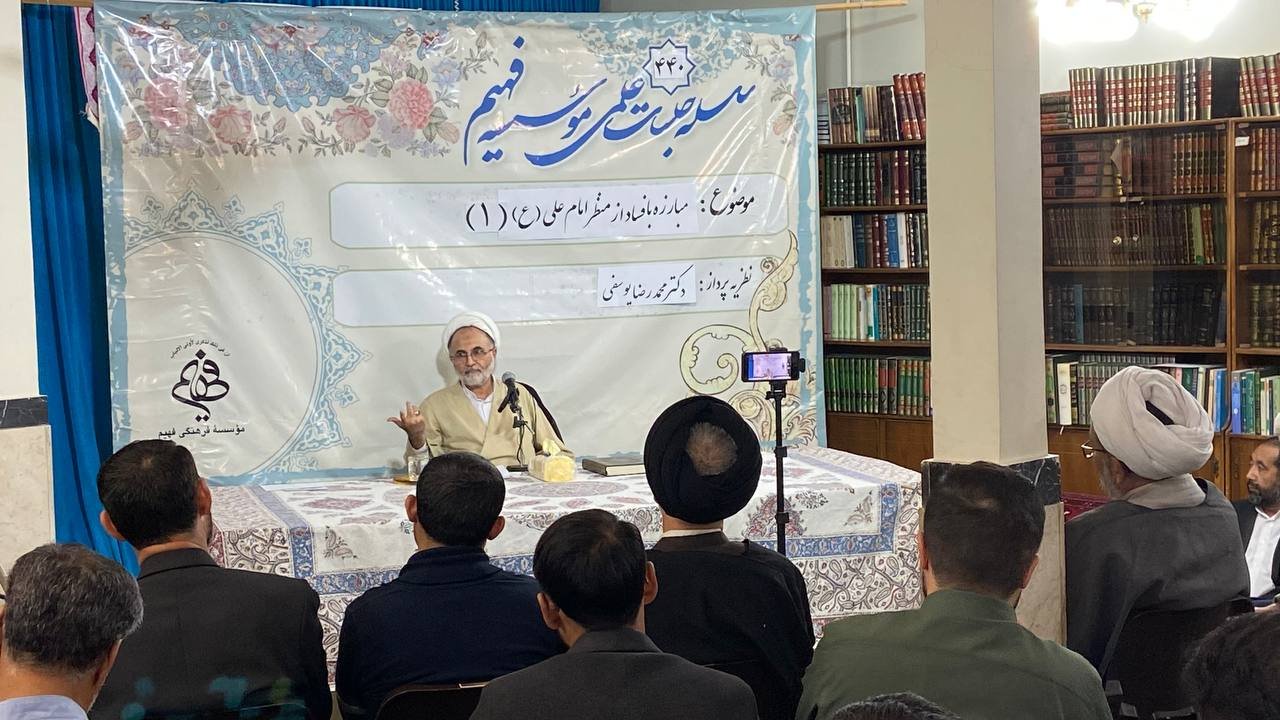
«أَعُوذُ بِاللَّهِ مِنَ الشَّيْطَانِ الرَّجِيمِ. بِسْمِ اللَّهِ الرَّحْمَنِ الرَّحِيمِ. الْحَمْدُ لِلَّهِ رَبِّ الْعَالَمِينَ، وَالصَّلَاةُ وَالسَّلَامُ عَلَى سَيِّدِ الْأَنْبِيَاءِ وَالْمُرْسَلِينَ أَبِي الْقَاسِمِ مُحَمَّدٍ. اللَّهُمَّ صَلِّ عَلَى مُحَمَّدٍ وَآلِ مُحَمَّدٍ وَعَلَى آلِهِ الطَّيِّبِينَ الطَّاهِرِينَ.»
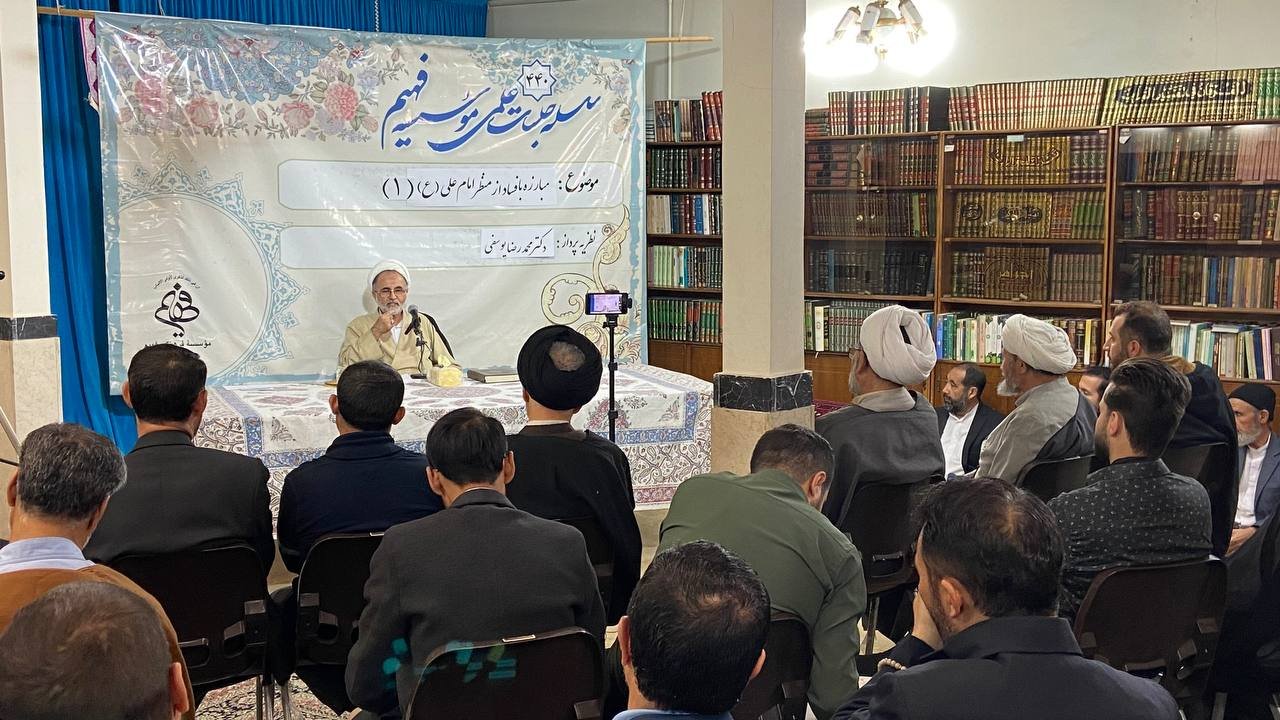
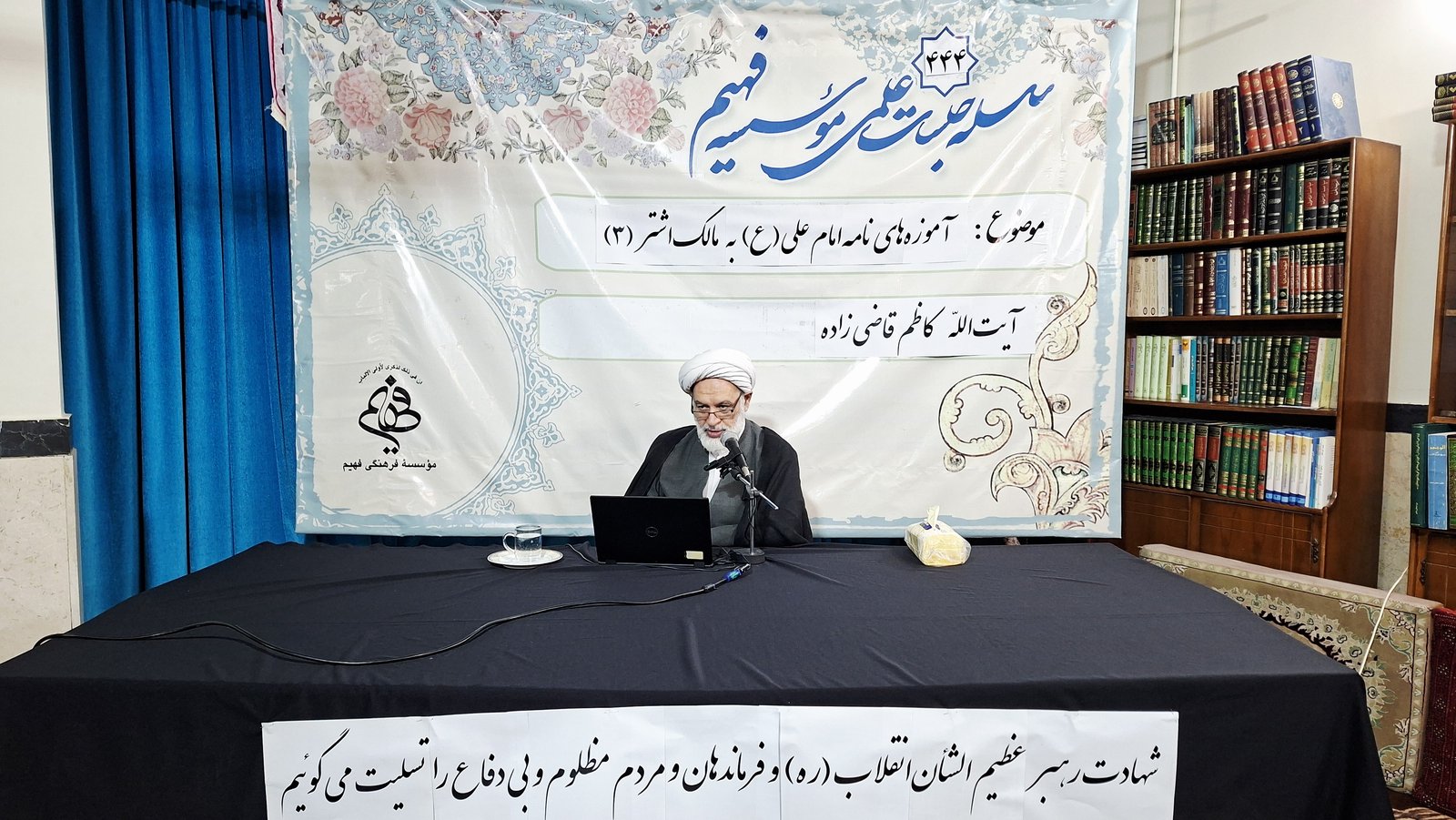
The topic that you, dear masters and scholars, have set for these days is an examination of "good governance" in the light of the noble Qur'an and Nahj al-Balagha. It has been arranged that each of the professors speaking in this field will address one of the dimensions and topics falling under this concept.
The discourse of "good governance" essentially emerged at the global level around the year 1995 CE; before that, it was not known by this name. In the past, international organisations recommended policies to countries, the last of which was known as the "structural adjustment policy." In practice, however, they observed that these policies not only failed to improve the condition of countries but also added new problems to the earlier ones. Tracing the roots of this problem, theorists concluded that as long as the political structure of countries is not reformed and they do not attain "good governance," no economic or development policy will succeed. The originator of this thinking at that time was Mr Joseph Stiglitz (then Vice President of the World Bank and a Nobel Prize laureate).
To assess which country enjoys good governance, the World Bank defined indicators that are known as the WGI (Worldwide Governance Indicators):
* Voice and accountability: Citizens must be able to choose their leaders freely and without any repercussions, transfer power in a peaceful atmosphere, and enjoy free media.
* Political stability and absence of violence: The interaction between the people's demands and the government's duties must be such that it does not lead to instability in the country or to recourse to violence to secure rights.
* Government effectiveness: The government (the state) must provide high-quality services; for example, by establishing e-government so that services reach the people with the least waste of time and without corruption such as bribery. Likewise, the independence of the branches of power must be preserved, so that no institution outside the three branches can impose its will on the judiciary, the executive or the legislature.
* Regulatory quality: Laws must pave the way for development, activate the private sector, and help reduce inflation, eliminate unemployment and improve people's livelihoods.
* Rule of law: One must measure to what extent the official laws are effective in the country and whether the application of unwritten rules and the suspension of the law are prevented.
* Control of corruption: How capable is the state of curbing and preventing corruption?
The Nature of Corruption and a Systemic Approach to Combating It
Since "control of corruption" is one of the main pillars of good governance, and these days also belong to the blessed person of the Commander of the Faithful (AS), I shall focus my remarks on this very axis.
First, we must see what is meant by "corruption" in these definitions. Corruption means the abuse of power and position to secure personal, partisan, family or even regional interests. For example, a member of parliament who, through lobbying, unjustly allocates a project to his own city has committed corruption.
We must accept that all governments in the world are exposed to corruption, and no state, even the most sacred of governments, can claim to be completely immune from the danger of corruption. The main issue is not denying that corruption exists, but "how it is confronted." The very nature of power brings with it access to the public treasury, legislative authority and military force, which are prone to abuse. Centuries before the Common Era, an Indian scholar named Kautilya (Chanakya) used a fine expression; he said: just as it is impossible not to taste the honey or the poison that sits on the tip of one's tongue, so it is impossible for one who deals with government funds not to take at least a taste of that wealth! That is, governments, whether the government of the Prophet (PBUH) and the Commander of the Faithful (AS) or otherwise, are always exposed to this affliction; the art lies in what measures we devise to curb it.
It is commonly imagined in the public mind that the way to fight corruption is solely the arrest, execution and confiscation of the property of the corrupt in the harshest manner. But, dear friends, please note that this is the very last stage! In the past it was thought that the root of corruption was merely satanic temptation, the weak capacity of individuals, the lack of moral upbringing and ignorance of the lawful and the unlawful. In the twentieth century, however, the world came to the conclusion that the main problem lies in "corruption-generating systems." When a structure is designed in which billions of tomans of wealth are placed at the disposal of an individual without auditing, the likelihood of his becoming tainted in the long term is very high.
In 1997 CE, the United Nations held a conference in Spain attended by economists, major businesspeople and politicians. The final declaration of that meeting had a clear message: "The most important obstacle to the development of countries is corruption, and until they overcome it, they will never see development."
Corruption in the Mirror of History: From Early Islam to the Contemporary Era
Looking at history, we find that only two decades after the passing of the Messenger of God (PBUH), a government came to power in the name of the successor of the Prophet that was entirely steeped in corruption. Historians such as al-Mas'udi and al-Ya'qubi have reported the astonishing extent of the corruption of the era of the third caliph ('Uthman). He justified all this corruption and the squandering of the public treasury with a self-righteous face.
In Sermon 164 of Nahj al-Balagha, when the people of Kufa, Egypt and Medina had lost all patience and risen up against 'Uthman, they made the Commander of the Faithful (AS) their intermediary. He went to 'Uthman and said:
«إِنَّ النَّاسَ وَرَائِي، وَقَدِ اسْتَسْفَرُونِي بَيْنَكَ وَبَيْنَهُمْ، وَمَا أَدْرِي مَا أَقُولُ لَكَ؟ مَا أَعْرِفُ شَيْئاً تَجْهَلُهُ، وَلَا أَدُلُّكَ عَلَى أَمْرٍ لَا تَعْرِفُهُ.»
(The people are behind me, and they have made me an envoy between you and them. I do not know what to say to you. I know nothing of which you are ignorant, and I cannot guide you to anything with which you are unfamiliar.)
He goes on to stress that you yourself are at the heart of the executive apparatus and are better informed than we are. You were a companion of the Prophet; so what is this state of affairs you have set up?
Interestingly, when 'Uthman was criticised, he would say: «لِمَ تُنْكِرُونَ ذَلِكَ؟ إِنَّمَا وَصَلْتُ رَحِماً» (Why do you consider these acts objectionable? I have only maintained the ties of kinship!). He would grant the land tax of Africa, or the pastures (tuyul) around Medina, which were part of the anfal and public resources, to his son-in-law Marwan and to the Umayyad clan, and call it "maintaining the ties of kinship" or helping needy relatives! Or a figure such as Sa'd ibn Abi Waqqas, who was the governor of Kufa, would take huge sums from the public treasury, trade with them, pocket profits worth billions (in today's terms), and return the principal.
As long as the state does not accept that "widespread corruption has afflicted the country like a cancer," it will not think of a cure. The Commander of the Faithful (AS) told 'Uthman that the people were waiting for practical action. 'Uthman asked for time to think, but he said: reforming the affairs of Medina, such as abolishing the monopoly over the pastures and returning them to the general public, needs no respite or delay; you must issue the order right now! Letters must also be sent immediately to the distant cities so that the governors of Kufa and Egypt begin reforms at once. But 'Uthman had no intention of reform; instead, he secretly bought weapons with the money of the public treasury and ordered Marwan to bring forces from Africa to suppress the protesters. When this deceitful letter was discovered, the angry people who had sought reform returned, matters led to the killing of 'Uthman, and the arms depots of the seat of government intended for suppressing the people were exposed.
If we look at the contemporary era and the former regime as well, in the Harvard Oral History collection the very economic officials of the Shah's time have confessed to the enormous extent of corruption. There were factories whose assets at that time were worth about sixty million tomans but which owed more than eighty-seven million tomans to the banking system! One of the major reasons for the confiscations in the early years of the Revolution was precisely these astronomical debts and the plundering of the public treasury.
We made a revolution to build a government based on the justice of Ali. The intentions in the early days of the Revolution were so pure that the late Ayatollah Taleqani, in the Assembly of Experts for the Constitution (which was held in the former Senate building), did not sit on the chairs and said: "I will not sit on these chairs, which are a reminder of the corrupt figures of the Shah's era," and he spread out his cloak and sat on the floor. In the first parliament, the members refused to receive a monthly salary and considered it an insult to their divine intention. In the second year of the second parliament, when it was proposed to give the members a Bahar Azadi gold coin as a gift on the eve of Nowruz, they objected that no New Year gift should be paid to them from the public treasury.
Unfortunately, however, this trend changed; we reached a point where parliamentary candidates spend billions of tomans to enter power. In the course of the development plans (such as the privatisations in the Second Plan), group interests and commercial capitalism prevailed over national interests, and in effect, in their own words, a new plundering of the public treasury took place.
The Consequences of Corruption and the Necessity of Combating It
The first step in fighting corruption is for our statesmen to accept that widespread corruption exists. If this conviction does not take shape, this canker will eat away at the country and have deadly consequences:
* Intensification of inequality and poverty: Statistics presented for the year 2024 CE show that the top one percent of our society holds twenty-nine percent of the country's wealth, and the top ten percent holds sixty-three percent of the wealth! On the other hand, about thirty-five percent of the people live below the poverty line, which indicates an enormous class gap.
* Collapse of legitimacy and public discontent: Crane Brinton, in his book The Anatomy of Revolution, after thirty years of studying documents, concludes that the common factor in the collapse of governments in all four of the world's great revolutions was "corruption." Corruption destroys the legitimacy of the state, polarises society and, in the words of Acemoglu, creates historical critical junctures that are set ablaze by a single spark. In such a situation, either the government inflicts a deep wound on the body of society through repression, or the protesters shatter the system; in either case a vicious cycle begins and there will be no development.
Consider the historic letter of the notables and pious figures of Kufa to the Master of Martyrs (AS). In their letter they did not complain about the suspension of prayer and fasting; rather, their main grievance was "the corruption of the state." They wrote:
«الْحَمْدُ لِلَّهِ الَّذِي قَصَمَ ظَهْرَ الْجَبَّارِ الْعَنِيدِ... الَّذِي ابْتَزَّ هَذِهِ الْأُمَّةَ أَمْرَهَا... وَجَعَلَ مَالَ اللَّهِ دُوَلاً بَيْنَ جَبَابِرَتِهَا وَأَغْنِيَائِهَا.»
(Praise be to God, who broke the back of that stubborn, rancorous tyrant [Mu'awiya]; the one who seized control of this community by force and placed the public wealth and the public treasury in the monopoly of a minority of tyrants and the wealthy.)
They asked Imam al-Husayn (AS) to revive the Sunna of the Prophet (PBUH), to spread justice and to bring political and moral soundness.
God willing, may the day come when, free from corruption, we have a prosperous and moral society, just as the Ahl al-Bayt (AS) expect.
Comments
No comments yet. Be the first.
Write a note, critique or commentShare your view with us and other readers without leaving this page.