


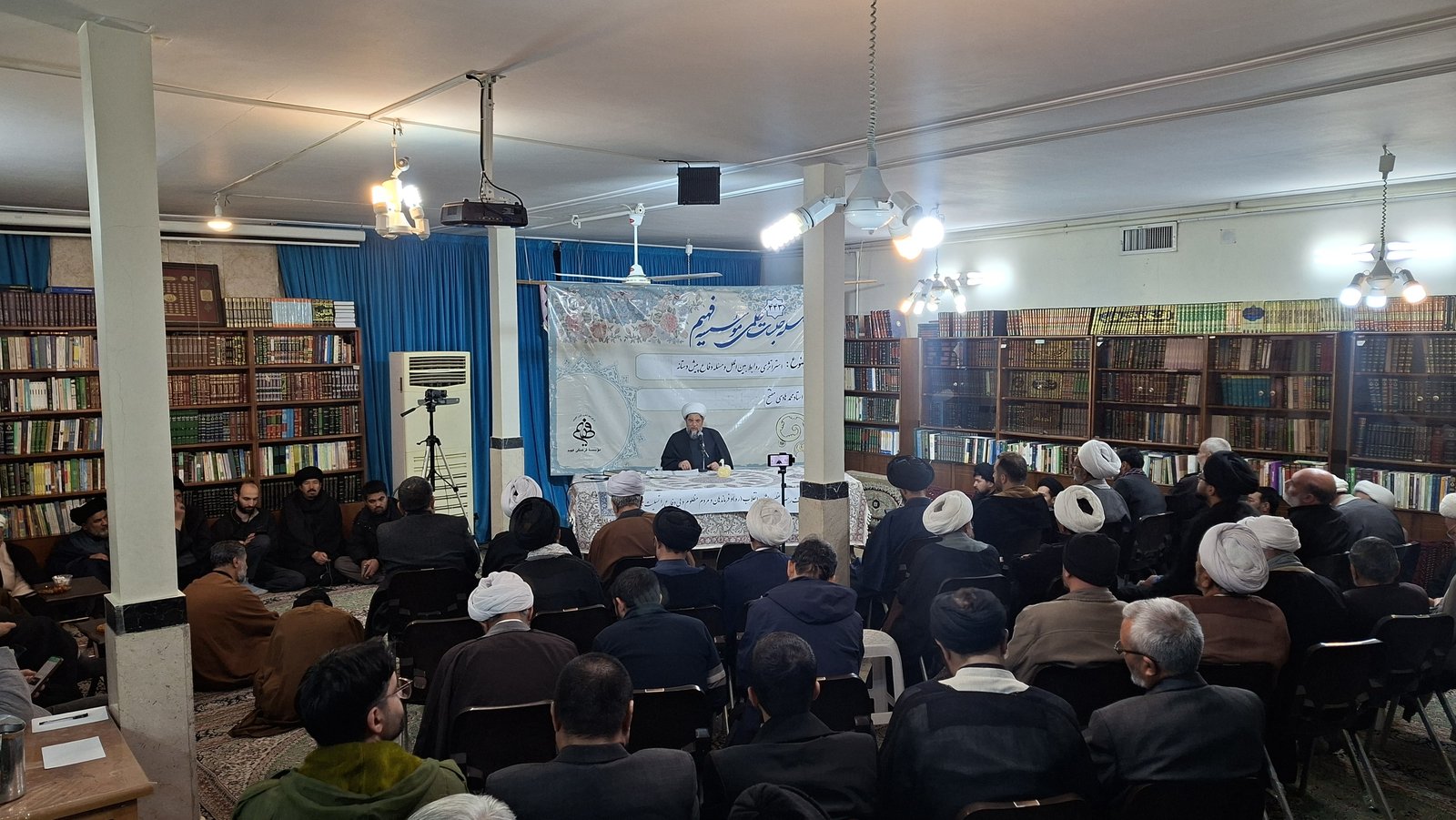
بسم الله الرحمن الرحيم ولا حول ولا قوة إلا بالله العلي العظيم. الحمد لله رب العالمين وصلى الله على محمد وآله الطاهرين.
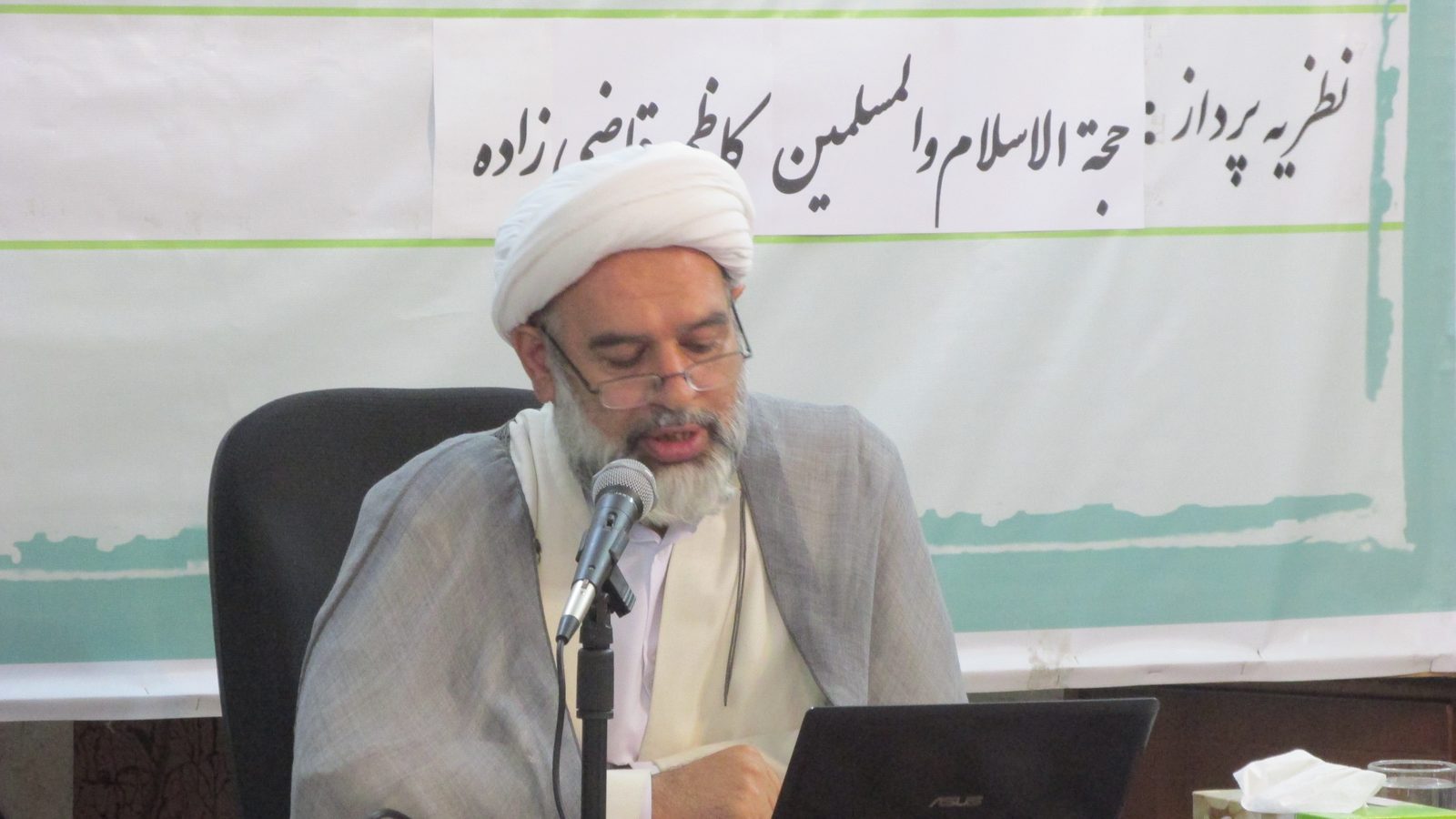
First, I offer my congratulations on the days of the blessed month of Ramadan and on the birth anniversary of Imam al-Mujtaba (AS), which we marked a few days ago, and in particular I offer my condolences on the martyrdom of the eminent marja', His Eminence Grand Ayatollah Khamenei, and on the innocent children who were martyred this week in the city of Minab and in other cities and in neighbourhood schools, and on the oppressed people who fell in dust and blood in this unjust imposed war, which began last Saturday and changed the atmosphere of the country. You yourselves now see it in every city; in this very city of Qom, where we are honoured to reside, you can see people gathering in the streets and squares right now. The atmosphere is one of support for the combatants; it is an atmosphere of war; the atmosphere and the morale of the people are a spirit of defense and a spirit of valour.
Naturally, in such an atmosphere, and with such a state of readiness among the people, one feels that the calm, the composure and the peaceful environment in which theoretical discussions of the kind we had planned to present to you tonight could be put forward, debated and discussed simply do not exist. When I was told, before the blessed month of Ramadan, about tonight and this session, the topic seemed to me an appropriate one; until last Saturday it was the issue of the day, a matter on which everyone was seeking the view of religion and of fiqh. For several months the country had been on the brink of war, and the question being raised was whether pre-emptive defense is also acceptable. Note that the difference between "preventive" and "pre-emptive" is sometimes confused. Pre-emptive defense means that a country exposed to war, on the verge of an enemy attack and about to be attacked by the enemy, initiates the attack by way of self-defense, because it feels that if it waits until the enemy attacks, it will lose the very possibility of defending itself. The enemy will come and destroy the centres that are essential for defense. If it does not take the initiative, if it does not begin this war or attack, it will lose the possibility of defense altogether.
Hence, for some years now an issue has been raised under the title of pre-emptive defense. This is, of course, clearly contrary to Article 51 of the Charter of the United Nations; it is certainly contrary to it, because that article states that every country has the right to defend itself when it comes under attack, whereas here no attack has yet begun. Nevertheless, they eventually got the United Nations to accept the pre-emptive attack as a form of defense by a country that is exposed to attack; this much they finally managed to impose. But the preventive kind, which they also pursued, holding that although the enemy is not yet even preparing to attack, we sense that it has it in mind that perhaps in ten, fifteen or twenty years it may wish to launch an attack, so we should act preventively and destroy its resources so that ten or fifteen years from now it will no longer have the capacity to attack us: this the United Nations did not accept. They said it was contrary to Article 51 and did not accept the preventive kind. The pre-emptive kind, however, they eventually managed to get accepted, for the purposes the powerful had in mind. As you can see, they want to feed the world even this beginning of the war against Iran as pre-emptive defense, and they want to sell it as pre-emptive defense. America officially announced that if we had not attacked, Iran was going to attack, it was on the verge of attacking; as soon as Israel struck Iran, Iran would strike America; and that is why we carried out pre-emptive defense.
Now, the discussion of whether pre-emptive defense is permissible or not, from a religious perspective, from the perspective of fiqh and on the basis of the sources of the religion of Islam, no longer has its proper setting at present. That is, with this war that has begun and been imposed on our country, which all of you are now experiencing first-hand, it is no longer really fitting for us to discuss and debate, as a scholarly question, whether the strategy of international relations is founded on war or on peace, and then, once the strategy has been determined, whether pre-emptive defense becomes permissible or not. We shall leave this discussion, God willing, for another time, when this situation has passed and, God willing, with the victory of the warriors of Islam, calm once again prevails over the country, and we can once more sit together, talk and hold scholarly discussions together, and Mr. Qazi invites us again for a session with you, and we will take up this discussion then, God willing.
There is, however, a point that I will mention only briefly before moving on to the discussion I would like to present to you tonight. Islam is peace-seeking in its very essence, and we have a great deal of evidence for this in the verses, in the narrations, in the conduct of the Prophet, in the Prophet's sirah, and in the words and conduct of the Commander of the Faithful. We have abundant evidence of the peace-seeking nature of the religion of Islam; there is no doubt about this. In fact, I have noted something here to read to you. The exegesis Nur al-Thaqalayn relates, under the verse «فَإِنْ حَاجُّوكَ فَقُلْ أَسْلَمْتُ وَجْهِيَ لِلَّهِ» and «وَعَلَيْهِ فَتَوَكَّلُوا», that this verse was revealed at the time of the Battle of Badr. As you know, the Battle of Badr was defensive in character: the Most Noble Prophet was on a military manoeuvre when news arrived that the armies of the polytheists were coming to fight. Right there the Prophet gathered his Companions and consulted with them. This very consultation shows that the Prophet had not left Medina for war. The expedition of the Great Battle of Badr was not undertaken for war; at that time it was a military manoeuvre, an exercise in military preparedness for the Muslims. Therefore, when news arrives, while the Muslims are in the region of Badr, that the polytheists have mobilised an army and are coming, the Prophet gathers his Companions and says: such news has arrived; the army of the polytheists is coming and we have no choice but to fight; what is your view? Miqdad rises and says: Yes, O Prophet, we are with you. The Prophet prays for him. Then, according to the reports, Abu Bakr rises and says: We are with you. The Prophet prays for him. Again the Prophet says: What is your view? Clearly Miqdad and Abu Bakr were both from the Muhajirun; the Prophet was looking for the answer of the Ansar. Ibn Hisham also records this, saying that in the Pledge of 'Aqabah that the Ansar had concluded with the Prophet, they had undertaken to support the Muslims within the city of Medina, so that if the Muslims were attacked, the Ansar would support them there. Now they were outside the city of Medina, and the Prophet asks the Ansar about this there. This in itself shows that the Prophet had not come with the intention of war. By God, had he come with the intention of war, he would have put this question to the Ansar in Medina: our agreement, our pact, the commitment we made to one another at 'Aqabah, concerns the inside of the city of Medina; we want to go and fight outside the city; what is your position? Had the Prophet undertaken the Badr expedition with the intention of war, he would have raised this discussion and consultation with the Ansar in the city of Medina; but instead he asks the Ansar there. From the Ansar, apparently it was Sa'd ibn 'Ubadah who rose and said to the Prophet: It seems you mean us? The Prophet said: Yes. And he said: No, we are with you; we are not like those who said «اذهب أنت وربك فقاتلا»; we are with you, and we will stand by you. The Prophet prayed for them, and the event of Badr took place.
History further records, as this narration of Nur al-Thaqalayn relates, that when the polytheists arrived with the vast multitude of their army, and some fear fell into the hearts of the Muslims, a small number facing a vast multitude with abundant numbers and equipment, this verse was revealed there: «إِنْ يَكُنْ مِنْكُمْ مِائَةٌ صَابِرَةٌ يَغْلِبُوا مِائَتَيْنِ». If they offered peace, then it is clear that you will be in a position of strength, you will gain the upper hand, and they will fall into a position of weakness. This was a reassurance. This narration, which 'Abd Allah ibn Salam relates, says that this verse was in fact revealed here to reassure the Muslims.
In any case, the Prophet here sends a man: «بَعَثَ رَسُولُ اللَّهِ إِلَى قُرَيْشٍ», the Prophet sent someone. This is at a time when the armies have been mobilised and the ranks are ready for battle. I want to point out the Prophet's peace-seeking at this very last moment. At this last moment, when the Muslims have drawn up their ranks and the polytheists have arrayed their lines, and two armies are ready for battle, the Prophet again sends someone to Quraysh, saying: O company of Quraysh, «إِنَّا أَجْدَرُ مِنَ الْعَرَبِ أَنْ لَا نَبْغِيَ الْعَيْبَ»; you will find no one among you, among the Arabs, whose aversion to starting war is greater than mine; I am more displeased and more averse than anyone to the outbreak of war. «تَخَلُّوا بَيْنَنَا وَبَيْنَ الْعَرَبِ»: leave us alone with the rest. If I am truthful and they accept me and believe in me, then I too am, after all, of Quraysh, and you will in fact be honoured; and if I am a liar, if I am false, they will crush me and you will be spared war; so let it be. In this way the Prophet sought to prevent the outbreak of war. Then 'Utbah says: «والله ما أفلح قومٌ قطُّ وردّوا»; there is no people who hear such words, reject them and attain success. It is then related that 'Utbah mounted a red camel and rode about among their own army, the army of the polytheists, saying: Do not enter the battle; the Prophet is saying this; he does not want to fight. And about him the Prophet said: «إِنَّ فِيكَ لَخُلُقًا يُحِبُّهُ اللَّهُ», «صَاحِبَ الْجَمَلِ الْأَحْمَرِ»; if there is good in anyone among this people, it is the one seated on this red camel. «إِنْ يُطِيعُوهُ يَهْتَدُوا»: if they listen to him, they will indeed find the right path, be released and be saved. Such is the peace-seeking nature of Islam.
Yet this same Noble Qur'an, when an attack is launched by the enemy, when the Muslims find themselves in a position where the enemy has attacked, says in numerous verses, one of which I have noted here: «يَا أَيُّهَا الَّذِينَ آمَنُوا» or «يَا أَيُّهَا النَّبِيُّ حَرِّضِ الْمُؤْمِنِينَ عَلَى الْقِتَالِ» (O Prophet, urge the believers to fight): encourage the Muslims to go to battle. «إِنْ يَكُنْ مِنْكُمْ عِشْرُونَ صَابِرُونَ يَغْلِبُوا مِائَتَيْنِ»: if you are twenty, you will overcome two hundred; if you are a hundred, a thousand; one against ten, you will prevail. That same Islam, that same Qur'an, that same Prophet who is so peace-seeking, when in a position of defense, in a position where war has been imposed on him and the enemy has attacked him, resists valiantly and fights valiantly. And there is no contradiction between this heroic, courageous fighting and the peace-seeking that lies in the very essence of Islam. We shall leave this discussion, God willing, for another time.
The point to which I wish to devote a few minutes tonight is that we are now in a special historical situation. If you look at what analysts have been saying this past week, they say that this war will bring about a fundamental change in international relations. The conditions of the world before and after this war, whether Iran wins this war or not, are changing. This is a historical turning point. The present conditions are special conditions. The image they use is that history is a river in motion, and society at any given time is a cross-section of this history; that is, the moment ten years ago, for example, is one cross-section of this history; history has moved on and has not remained there. History is a river. Sometimes this river flows across a desert plain. Hence you see that for two or three hundred years no particular change occurs in people's lives, in their way of life, in social relations, in their culture, customs and traditions. The son does the same work and lives in the same conditions as his father, in the same city as his grandfather and his forebears. No particular difference, no particular change takes place. This is what they call history moving across a plain. Sometimes there are ups and downs; events occur. Sometimes this river is flowing through mountains: constant changes, constant transformations. At present the speed at which conditions are changing is such that one simply cannot adjust oneself; conditions are changing rapidly. Therefore, the study of history and of what befell those who came before, up to the present day, is necessary for a person to understand what his role is now and where he stands now. Hence all the emphasis we find in the Qur'an. Sometimes the Qur'an says in the imperative: «قُلْ سِيرُوا فِي الْأَرْضِ» (Say: travel through the earth); go and examine, go and see, travel through the earth, look at the history of those who came before. Sometimes it says reproachfully: «أَفَلَمْ يَسِيرُوا فِي الْأَرْضِ» (Have they not travelled through the earth?); let them travel through the earth and see what became of those before them. In fact, the Qur'an's emphasis is this: study the conditions of those who came before, read history, see what precedents there were, what events took place, what stages your predecessors passed through. The Commander of the Faithful places very great emphasis on this. In the famous letter that he wrote to Imam al-Mujtaba, «وَلْيَكُنْ نَظَرُكَ فِي عِبَادِ اللَّهِ», addressed to Imam al-Mujtaba, he lays great stress on the study of history, saying: I studied the history of those who came before so much that «كَأَنِّي بِأَحَدِهِمْ», as though I had become one of them, living in that atmosphere, breathing that atmosphere, touching its very setting. In short, the study of history is emphasised by the Qur'an and by the Commander of the Faithful, and our great scholars have also laid great emphasis on it.
This is also something that has been studied extensively over the last two centuries: the discussions of the philosophy of history as a field of study that treats history as a living entity that can be studied, asking what stages it has passed through and what states it has known, and on that basis making predictions about the future. One of the most famous discussions in this field, which all of you may have heard of to some extent, is that of Marx. Marx divides history into historical periods, four past periods, and on this basis predicts a fifth period. He says that at the beginning, when human beings first began their life, there was a primitive commune. Human beings had no means of production; they were cave-dwellers and made use of the fruit of trees. Perhaps they also killed and ate animals. None had any superiority over another; all lived alike; no one was higher; they were all cave-dwellers and would come and eat from the fruit of trees and from plants. They might also kill an animal and eat it. In that state, in fact, there was no ownership and no superiority of anyone over another.
Then, in the next period, the second period that Marx puts forward, comes the age of slavery: the time when someone, by virtue of his greater strength, takes another into his service, puts him to work and exploits him. In short, it is the period of ownership, in which some individuals take others into their service and exploit them. The third period is the one in which the agricultural revolution has taken place. Humankind has learned that it can sow and farm. The agricultural revolution took place a very long time after the appearance of humankind on earth. In the beginning, when humans were on the earth, they made use of plants, of trees, of the fruit of trees and the like, but they did not know how to sow and cultivate plants themselves. As it is put, the agricultural revolution is a transformation that occurs in human life: man discovers that one can sow, that one can plant trees, sow wheat, have agricultural produce and make use of it, rather than waiting for a tree or a plant to grow somewhere and bear fruit for us to use. It is after the agricultural revolution that the feudal period begins; that is, wealthy individuals put others to work and exploit them in order to cultivate more land. And this is something that may still exist to some extent in Iran itself, in Afghanistan and in the lands of this region.
The fourth stage comes after the Industrial Revolution, when a great transformation takes place in human life and factories are established. Before that, in the feudal period, a person had numerous slaves, a great many slaves; he provided for their livelihood and they worked for him; the agricultural estates were large and had to be kept running, and he was the master and in fact the guardian. In the industrial period, the burden of carrying this great multitude of slaves weighed heavily on the shoulders of the wealthy; they had factories, and workers came to work there, far fewer in number and far more productive. Hence, as regards the wars between North and South in America: the Northerners were mostly industrialists, bourgeois, while the Southerners were mostly feudal and on the side of agriculture. This opposition to slavery, and the revolution that took place in America as an anti-slavery movement, did not arise because their hearts ached for those slaves; since they were mostly industrialists and factory owners, they wanted to lift the burden of supporting these slaves from their own shoulders. So this stage, the industrial stage, came about.
And these four periods through which humanity has passed, according to what Marx argues, each advance and arrive at the next stage through the contradiction that takes shape between two poles within society. Marx then says: we have come this far, and we are now in the industrial and, in fact, the bourgeois stage. Then, between the factory owner and the worker: because factory owners and capitalists, in competition with one another to lower the cost and price of goods so as to win a better market, are compelled to increase the pressure on the worker, to work him harder and pay him less, so that the product comes out cheaper and they can compete with one another in the market and capture it, the pressure on the worker constantly increases; they extract more work from him and pay him less. This pressure on the worker will ultimately lead to a workers' revolution: the workers will rise up, overthrow the capitalist system, cast it aside and take over the countries. This is the prediction Marx makes regarding the future: that the revolution of the "proletariat" will take place and power will fall into the hands of the proletarian class, the workers. This is the model of the philosophy of history based on the historical periods that Marx sets out.
Until some years ago, when these discussions were set aside with the collapse of the Soviet Union, this had a great deal of currency. Those who are somewhat older will remember how, in our own countries, these Marxist discussions and their intellectual debates outwardly appeared very justice-seeking and appealing. After the demise of Marxism and the failure of Marx's theory in the prediction it had made about the future (a lengthy discussion which I do not wish to enter, namely that the analysis Marx had made, that such a course of events would occur and produce such a result, was not a rational analysis in the face of those very capitalists), the other side came and counter-attacked. In what way? We do not wish to enter these lengthy discussions now. In any case, Marx's theory did not succeed and bore no fruit, and the world did not enter that fifth period of which he spoke, the workers' revolution and the rule of the proletariat; and we all saw that it ended in the collapse of the Soviet Union.
After the collapse of the Soviet Union, theories were again put forward as to where the world would now go. Two of the most famous of them: one was that of Fukuyama, who wrote the book "The End of History and the Last Man" in 1992. In this book, which was published, he said: now, with the demise of Marxism, history has come to an end, because the driving engine of history is war; what moves history forward and brings about its various stages is war. And now, with the demise of Marxism, there is no longer any rival to the system of liberal democracy; naturally there is no war, and when there is no war, history will come to an end: the end of history. This is the theory that Fukuyama put forward, which is a lengthy one. In opposition, Huntington, first in a lecture refuting Fukuyama's theory and then in the form of an article and perhaps also a book, argued that no, there will be a "clash of civilizations": an encounter of civilizations, a battle and war of civilizations. It is true that ideologies have now disappeared, but civilizations will now fight one another; therefore there will be no end of history; history will not reach its end; there will still be wars, and history will indeed continue to move forward. These, in effect, form a very brief and quick account of how others have analysed history and how they have interpreted the historical periods.
Many Muslim thinkers, too, when they want to discuss history, discuss it within these same historical periods of Marx; these are several accepted points. These four stages through which humanity has passed: they accept that framework and want to present the discussion from the perspective of Islam within that framework. Now we want to survey the Qur'an to see how the Qur'an analyses history, how the Qur'an presents these historical periods, and what periods humanity has passed through according to the Qur'anic accounts. The Qur'an states, first: «كَانَ النَّاسُ أُمَّةً وَاحِدَةً». That primitive commune which Marx puts forward, the Qur'an too, in essence, accepts. At first, human beings were a single community (ummah wahidah); there was no superiority, no difference and no dispute among them, in keeping with what Marx also puts forward. I have brought this here, though there may not be time for it: the late Allamah Tabataba'i in al-Mizan also presents almost the same analysis as Marx; that is, regarding the single community the Qur'an speaks of and the departure from that single community into the subsequent stages found in the Qur'an, what Marx says and what the late Allamah Tabataba'i says are similar in many respects. That is, Allamah Tabataba'i also raises the discussion of «اسْتِخْدَامُ النَّاسِ» (employing others), that man by nature seeks to employ and exploit others. This is a human trait, and it is precisely what caused humanity to leave the state of being a single community and enter the next stage.
The Qur'an speaks of the single community in two places. In one place, in Surah Yunus, it says: «وَمَا كَانَ النَّاسُ إِلَّا أُمَّةً وَاحِدَةً فَاخْتَلَفُوا» (Mankind was but one community, then they differed); people were a single community, then they differed with one another. In Surah al-Baqarah it says: «كَانَ النَّاسُ أُمَّةً وَاحِدَةً فَبَعَثَ اللَّهُ النَّبِيِّينَ مُبَشِّرِينَ وَمُنْذِرِينَ وَأَنْزَلَ مَعَهُمُ الْكِتَابَ بِالْحَقِّ لِيَحْكُمَ بَيْنَ النَّاسِ فِيمَا اخْتَلَفُوا فِيهِ»: people, human beings, were a single community; then God sent the prophets as bearers of good tidings and warners, and sent down with them the Book and the divine commands, to judge among people in that wherein they differed. Interestingly, Ibn Kathir relates that Ibn 'Abbas used to read this verse of Surah al-Baqarah thus: «كَانَ النَّاسُ أُمَّةً وَاحِدَةً فَاخْتَلَفُوا فَبَعَثَ اللَّهُ النَّبِيِّينَ»; that is, he combines these two verses with one another. According to what Ibn Kathir says, he read it this way: since the former verse, in Surah Yunus, is «وَمَا كَانَ النَّاسُ إِلَّا أُمَّةً وَاحِدَةً فَاخْتَلَفُوا», and in Surah al-Baqarah «كَانَ النَّاسُ أُمَّةً وَاحِدَةً فَبَعَثَ اللَّهُ النَّبِيِّينَ», he read them in this order: «كَانَ النَّاسُ أُمَّةً وَاحِدَةً فَاخْتَلَفُوا فَبَعَثَ اللَّهُ النَّبِيِّينَ». So it is clear that the beginning of the mission of the prophets came at the time when human beings left the state of being a single community and differences arose among them.
Now, how long was the interval between the beginning of humanity's presence on earth, Adam the father of mankind, and the time of the mission of the prophets, the time when they left the state of being a single community? How long was it? The Qur'an has not stated anywhere how long this interval was, for how long humanity lived on earth as a single community until the second stage, the mission of the prophets, began. The mission of the prophets begins with Noah. In Surah al-Shura it says: «شَرَعَ لَكُمْ مِنَ الدِّينِ مَا وَصَّى بِهِ نُوحًا وَالَّذِي أَوْحَيْنَا إِلَيْكَ وَمَا وَصَّيْنَا بِهِ إِبْرَاهِيمَ وَمُوسَى وَعِيسَى أَنْ أَقِيمُوا الدِّينَ وَلَا تَتَفَرَّقُوا فِيهِ»: this religion that has been revealed to you, O Prophet, was revealed to Noah, to Abraham, Moses and Jesus, down to the Most Noble Prophet. That is, from the time of Noah came the shari'ah, as rulings, as laws that humanity needed; because it had left the state of being a single community and differences had arisen among humankind, it needed law, it needed rules to regulate the social relations of human beings with one another. The shari'ah began with Noah. How long was the interval between Adam and Noah? This is not stated anywhere in the Qur'an, although there are estimates; I have seen somewhere, from Ibn 'Abbas, that there were, for example, ten thousand years between Adam and Noah. In any case, this stage, the second stage of human history, which is the mission of the prophets, begins with Noah and continues until the twenty-eighth of Safar in the year 11 AH, when it comes to its end. The religion is one: «إِنَّ الدِّينَ عِنْدَ اللَّهِ الْإِسْلَامُ» (Indeed, the religion with God is Islam). Noah was a Muslim, Abraham was a Muslim, and so were Moses, Jesus and the Most Noble Prophet: one religion. In today's terms, they were different versions of one religion. According to this verse, the religion of Islam began with Noah; with Abraham, Moses and Jesus it developed, and with the Most Noble Prophet it reached its final perfection. Then in that verse He said: «الْيَوْمَ أَكْمَلْتُ لَكُمْ دِينَكُمْ وَأَتْمَمْتُ عَلَيْكُمْ نِعْمَتِي». So in the Qur'an (I have not noted the places here, but search and you will find them precisely) we find the description of being a Muslim applied to Noah, to Abraham, to Moses and to Jesus. The gentlemen say in their translations that it means submissive to God's command; no, he was a Muslim. The religion of Islam is the religion of Islam. The religion of Islam is not the exclusive religion of the Most Noble Prophet; the religion of Noah too was Islam. The shari'ahs differed while the religion was one; the religion was one, the shari'ahs differed. One version is the Islam of Noah, one version the Islam of Abraham, the version of Moses, the version of the Islam of Jesus, and the complete and final version, which is the Islam of the Most Noble Prophet. Thus, after this second stage of human history, the period of the mission of the prophets, with the passing of the Most Noble Prophet we enter the third period of human history, about which the Commander of the Faithful said at the time of the Prophet's passing: «انْقَطَعَ السَّمَاعُ»; so momentous was it that with your death, O Messenger of God, something was cut off that had not been cut off with the death of anyone else: that very connection of revelation from heaven to earth. The connection between heaven and earth was severed with the passing of the Most Noble Prophet. That is, this period of human life, the period of the mission of the prophets, came to an end, and humanity entered the next period, the period in which humankind is left to itself in the expanse of the world, to manage its own affairs on the basis of the teachings that reached it from the prophets. Had the deviation that occurred at the Saqifah not taken place, the Commander of the Faithful would naturally have lived out his natural life, followed by the other Imams, down to His Holiness al-Mahdi (AJ), who too would have lived out his natural life, and it would have come to an end. Well, what would have happened after that? That is, had the deviation of the Saqifah not occurred, the Imams too would have lived their natural lives one after another until the fourth century, and thereafter humanity would again have had to pursue its own path by drawing on the very teachings it had received from the prophets.
One objection that may arise against this theory of Qur'anic historical periods that I have described is the matter of Abel and Cain (Habil and Qabil), which also needs to be properly addressed. For according to the picture we have drawn from the Qur'an, from the time of Adam, the father of mankind, until the time of Noah, people were a single community and there were no differences among them: «كَانَ النَّاسُ أُمَّةً وَاحِدَةً فَاخْتَلَفُوا فَبَعَثَ اللَّهُ النَّبِيِّينَ». So in this period, whether it lasted ten thousand years, or less, or more, however long it was, from the time of Adam to the time of Noah, there should have been no differences, let alone fratricide; yet we have the story of Abel and Cain, for which some solution must also be found within this theory. There is the Qur'anic verse «وَاتْلُ عَلَيْهِمْ نَبَأَ ابْنَيْ آدَمَ بِالْحَقِّ إِذْ قَرَّبَا قُرْبَانًا فَتُقُبِّلَ مِنْ أَحَدِهِمَا وَلَمْ يُتَقَبَّلْ مِنَ الْآخَرِ»; then he said «لَأَقْتُلَنَّكَ», and in the end it came to pass; whereas according to the picture we have drawn from the Qur'an, until the time of Noah there should not have been any particular or significant differences among human beings, let alone fratricide, which is the very peak of conflict.
When we go and study this matter in the views of the exegetes, we see that the late Allamah Tabataba'i says in al-Mizan: some exegetes have said that what is meant by Adam in «ابْنَيْ آدَمَ», «ابْنَيْ آدَمَ», is a man from the Children of Israel who had two sons; his two sons quarrelled over an offering they had presented to God, and in the end one of them killed the other. The killer was named Qabil or Qa'il, and the one killed was named Habil. And the evidence for this meaning, Tabataba'i says, is the latter part of the verse, which says: «مِنْ أَجْلِ ذَلِكَ كَتَبْنَا عَلَى بَنِي إِسْرَائِيلَ», to the end of the verse. That is, this Adam is not Adam the father of mankind but an individual from the Children of Israel. This story belongs to the period after Jacob, since the Children of Israel are the descendants of Jacob. So this episode of the dispute of «ابْنَيْ آدَمَ», in which one killed the other, concerns not the sons of Adam the father of mankind, the children of Adam and Eve, but two individuals among the Children of Israel, belonging, say, to the period after Jacob. The late Allamah Tabataba'i does not, of course, name the exegete who holds this view. Among the exegetes, Rashid Rida in Tafsir al-Manar attributes it to al-Hasan al-Basri, saying that al-Hasan al-Basri held this belief. Shaykh al-Tusi in al-Tibyan regards Muhammad ibn Bahr and al-Zajjaj as sharing the view of al-Hasan al-Basri. On the other side, he regards Ibn 'Abbas, 'Abd Allah ibn 'Abbas, Mujahid and Qatadah as sharing the view of most exegetes, who say that this Adam is the very Adam, the father of mankind, and that these two were the sons of that very Adam. The late Allamah Tabataba'i and Rashid Rida regard as weak this interpretation of al-Hasan al-Basri, that this Adam is not that Adam but someone from the Children of Israel. Shaykh al-Tusi, too, takes no clear position, but the course of his discussion shows that he does not accept this interpretation and inclines instead towards the well-known view. When Rashid Rida relates this story, he says that it has been taken from the Bible. Let us look at the Bible. In the Book of Genesis, Genesis 4, verses 1 to 8, it says: Adam knew Eve his wife, and she conceived and bore Cain, and said, "I have gotten a man with the help of the Lord." And again she bore his brother Abel. Abel was a keeper of flocks and Cain a tiller of the ground; that is, one was a herdsman and the other a farmer. After some time Cain brought to the Lord an offering of the fruit of the ground, but Abel brought an offering of the firstborn of his flock and of their best portions. And the Lord had regard for Abel and his offering, but for Cain and his offering He had no regard. So Cain was very angry, and his heart was grieved. Then the Lord said to Cain, "Why are you angry, and why is your heart grieved? If you do what is good, will you not be accepted? But if you do not do what is good, know that sin is crouching at the door and its desire is for you, but you must master it." Cain said to his brother Abel, "Let us go out to the field." And when they were in the field, Cain rose up against his brother Abel and killed him. Cain rose up against his brother Abel and killed him. This is the same well-known story that we see in all our exegeses; it is exactly this. Now, whether it is Qa'il, as you saw in the late Allamah Tabataba'i, Qabil or Qa'il: the Bible says Qa'il and Habil, while the form that has become well known among us is Qabil and Habil. That is, as Rashid Rida says, you can see that the core of the story is exactly what is found in the Book of Genesis, Genesis 4, verses 1 to 8; exactly this has been carried over into our exegeses.
This story has several problems. First, the elements of this story: one, the brothers, the killer and the killed, in this story as the Bible tells it, were the children of Adam and Eve; it says explicitly that Adam knew his wife Eve, and she conceived and bore Cain, and so on. So these two, the killer and the killed, were the children of Adam and Eve. Two, Abel was a herdsman and Cain a farmer. Three, the non-acceptance: the reason the offering of Cain was not accepted was his being a sinner, just as the Qur'an says: «إِنَّمَا يَتَقَبَّلُ اللَّهُ مِنَ الْمُتَّقِينَ», «إِنَّمَا يَتَقَبَّلُ اللَّهُ مِنَ الْمُتَّقِينَ»; in short, this is the expression it used. And four, Cain quarrelled with Abel and killed him. Well, these elements do not fit together. First, one and two do not fit together. That is, on the earth there were Adam, Eve, Cain and Abel, one a farmer and the other a herdsman; whereas what is now virtually certain is that the agricultural revolution came about tens of thousands of years later, as a revolution, and mankind learned it. Human beings learned that one can sow and make plants grow. It is not the case that with four people on earth (Adam was on the earth; let us say they also had a few daughters, five or six people) one was a herdsman and one a farmer. Hence some, like the late Dr. Shari'ati, regard the story of Abel and Cain as a legend, that is, a myth, which cannot have any reality. At a time when there were as many human beings on earth as the fingers of one hand, that one should have been a farmer and one a herdsman is simply not acceptable. Many theses, doctoral dissertations and master's theses, have been written on this subject, on the myth of Abel and Cain as a myth; that is, it cannot be a true story that at that time, at the very beginning of humanity's arrival on earth, they knew farming and herding, and one was a farmer and the other a herdsman. We carried out a study of how long the interval was between the time of humanity's presence on earth, that is, how long humans were present on earth, until they knew herding, let alone farming. Various views have been given on this, ranging from two and a half million years to ten thousand years. That is, this much time passed over humanity until human beings learned that animals could in fact be kept in herds and raised as livestock, and that one could sow and cultivate and farm. Excuse me, what is the interruption? No, they made use of plants, of trees, of fruits and the like. Why, yes? Yes; even now, in all these forests, did human beings plant all of these in the first place? No; and also, yes, it is certain; that is, for human beings to learn that one can sow a seed, that one can cultivate it in this way, requires training and requires work. It is not something one simply knows. We will come to that; for now let us look at the story. Please go ahead.
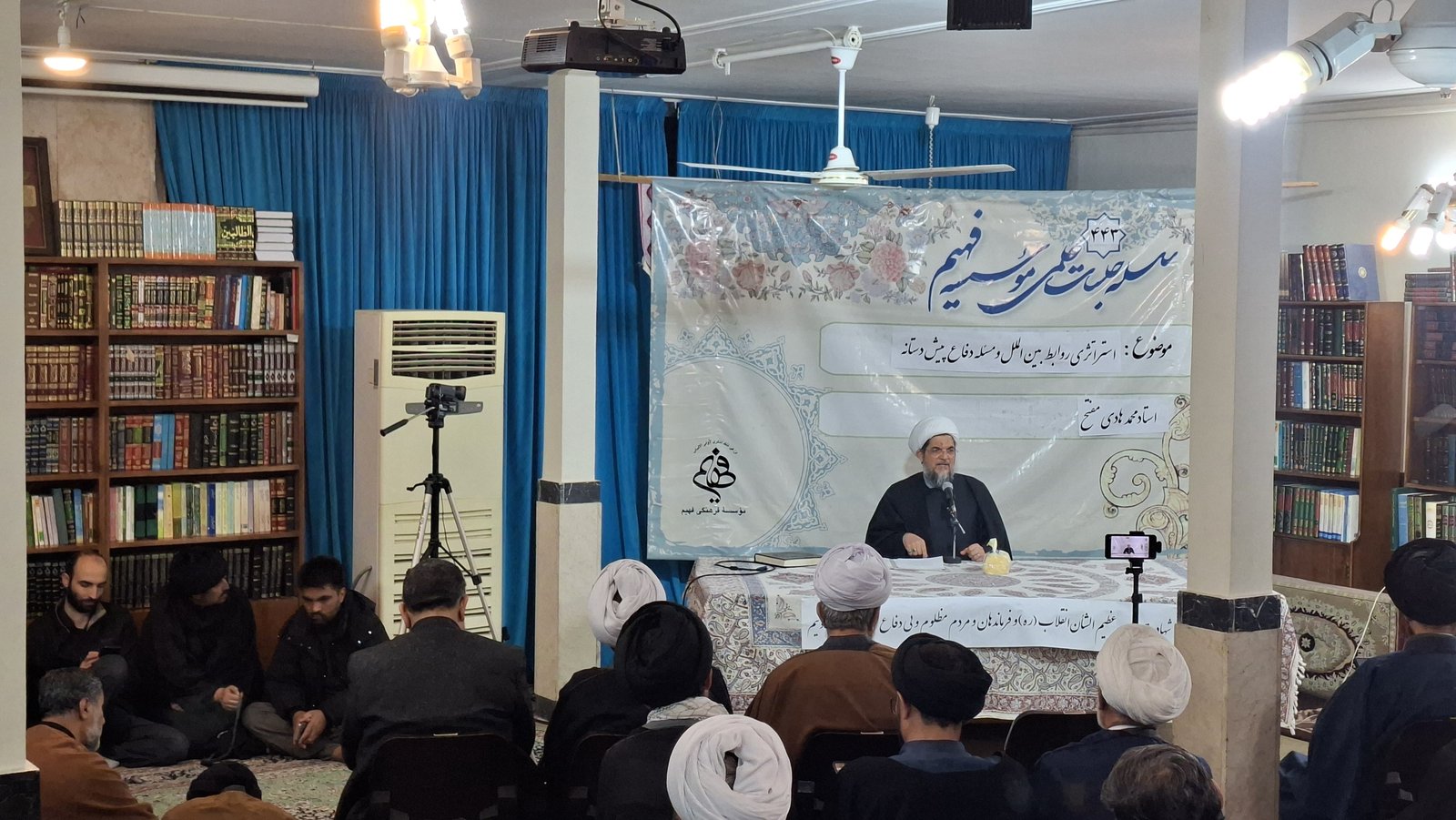
Very well, I say: in this interval, which they say was ten thousand years between Adam and Noah, in this interval, very well, they learned it, they learned a great deal. No; look, as for this story, to say that right at the beginning, when there were four human beings on earth, they knew farming and herding: from whom, after all, had they learned it? There is no basis whatsoever for anyone to accept this. Please go ahead; which of the prophets did you mention? Adam? A good point. The late Mutahhari, if I am not mistaken, in "Religious Teachings in Islam" or in one of Mr. Mutahhari's other books, makes a point similar to what you said: regarding the time when, under Yazid, Medina was attacked, and the many infants who were supposedly in golden cradles and so on, Mr. Mutahhari says: is this acceptable at all? Can such things be accepted? Then there is the point we also have on the scholarly level, supporting what Mr. Mutahhari says: in the hadith sciences we have the discussion of «نقد الحديث» (hadith criticism). That is, you must critically examine a hadith: could this hadith have been issued by the Imam? One kind is criticism of the chain of transmission; that is, you examine the chains to determine, as regards the chain, the characteristics of the narrators, whether the chain is broken, and so forth; this is the discipline of rijal. The other is criticism of the text. You weigh the hadith against reason, against the definitive judgement of reason, against established historical facts and the criteria of dirayah. If a narration came to you, even with a sound chain, saying that Aba 'Abd Allah (AS), in Medina, when he was departing this world, made such and such a bequest in his final moments, would you accept it? You would not; you would say that Imam Husayn was martyred in Karbala; this is an established fact of history. For a hadith to say that His Holiness, in Medina, on his deathbed, said such and such is certainly false, because it contradicts established history. Therefore hadiths must be evaluated.
I have examples, but time is passing, so I cannot recount them all to you. I will mention just one example. Go and look in Tafsir al-Burhan under the verse «وَالنَّجْمِ إِذَا هَوَى», «مَا ضَلَّ صَاحِبُكُمْ وَمَا غَوَى»; it brings seven, eight, ten narrations. There the late al-Bahrani says: in the last days of the Prophet's life, when the Prophet lay on his deathbed, the Ahl al-Bayt came to the Prophet and asked: will you not appoint a successor for yourself, will you not designate a guardian for us? On the first day the Prophet did not answer. The next day the Ahl al-Bayt came again; on the second day the Prophet did not answer. On the third day the Ahl al-Bayt came to the Prophet: a successor, a guardian, and so on. The Prophet said: tonight, near dawn, a star will detach itself from the sky and come and fall into the house of one of you; whoever's house it falls into, he is my successor. Some of these narrations are related from Ibn 'Abbas, who says: that night my father 'Abbas, being after all the elder of Banu Hashim, was more hopeful than anyone that this star would fall into his house. All the Companions watched the sky all night until morning to see when this star would detach itself from the sky and into whose house it would fall. Near dawn, this star detached itself from the sky, came, came, came and fell into the house, into the courtyard of the house of the Commander [Ali] ibn Abi Talib, and the Commander of the Faithful became the successor. Is this acceptable? Two months earlier we have the event of Ghadir. That right up to the last day the Ahl al-Bayt, the Prophet's own Ahl al-Bayt, should have been in doubt about the successor, and that the Prophet, by means of this star from the sky... First, historically this is false. Second, scientifically it is false. A star detaching itself from the sky and coming down would be something that strikes the earth and shatters it! It is not a piece of paper that comes loose from the ceiling and falls to the ground... And there are some seven or eight such narrations; go and look in al-Burhan, it has brought them. Please allow the Professor to finish his discussion; then you may have questions and answers.
Yes, very well. Let us return to our own discussion. These questions are good questions; God willing, we will be at your service afterwards. In any case, the first point is not compatible with the second, nor is it compatible with the third. Look, the Qur'an also says: «إِنَّمَا يَتَقَبَّلُ اللَّهُ مِنَ الْمُتَّقِينَ». What does taqwa mean? Taqwa is defined as carrying out the divine commands, performing the obligations and abandoning the prohibitions. When there is as yet no shari'ah, what meaning can taqwa have? So it is clear that this episode came after the sending of a messenger, after a shari'ah had come; only then do "sinner" and "sinless" acquire meaning. Otherwise, if there are as yet no obligations and prohibitions, being a sinner has no meaning either. So the fact that both in the account of the Torah, the Bible, and in the account of the Qur'an the discussion is about taqwa, and that the offering was not accepted because he was a sinner, means clearly that he had violated the shari'ah and disobeyed God's commands. And this must, as a rule, have been after Noah, belonging to the period after Noah, when divine commands had come at all. Therefore all of this supports our accepting that very view of al-Hasan al-Basri and those who agree with him: that this Adam was not Adam the father of mankind, that this Adam was not that Adam; or else «ابْنَيْ آدَمَ», as it is said; we all say "children of Adam"; we are all the children of Adam; all human beings are called Bani Adam. These two were of the Bani Adam, two human beings, all human beings being children of Adam. Or we say that this Habil and Qabil were the sons of an Adam who was not Adam the father of mankind but a man from the Children of Israel, as al-Hasan al-Basri and others said. Even today we have people whose name is Adam. It is a name that is still widely found. We ourselves had someone in Hamburg, a very fine young man, named Adam. It is a name that people still give. The father of Sana'i Ghaznavi was also named Adam. So there was an Adam other than Adam the father of mankind, and his two sons. In this way, it may be said that, well, as for these historical periods, let us go to the final discussion, where we want in fact to derive from the Qur'an the end of history and the philosophy of history. Regarding the historical periods, we said that these three periods emerge from the Qur'an. The theory of the Qur'anic philosophy of history lies in this verse: «كَتَبَ اللَّهُ لَأَغْلِبَنَّ أَنَا وَرُسُلِي», «إِنَّا لَنَنْصُرُ رُسُلَنَا وَالَّذِينَ آمَنُوا فِي الْحَيَاةِ الدُّنْيَا وَيَوْمَ يَقُومُ الْأَشْهَادُ». The final victory will belong to God and the prophets. This is something we are all witnessing throughout history. Look at any prophet: the Qur'an reports that all of them were denied, killed and opposed. Throughout history there was so much hostility towards religiosity and towards God, yet ultimately the majority of the world's people today have a religion. This is the victory of God and the prophets, despite all this confrontation and all this hostility that has been directed in history against religion, against the worship of God and against the prophets. So this account of the Qur'an, this theory, is correct: «كَتَبَ اللَّهُ لَأَغْلِبَنَّ»; victory has belonged to God and the prophets. Today the majority of people... At the time, yes, Abraham was cast into the fire, other prophets were killed, Jesus, according to the belief of the Christians, was crucified, and other prophets endured various afflictions, were killed and were denied; but ultimately victory belonged to the prophets. The same holds in the story of Aba 'Abd Allah: His Holiness was martyred in that manner and his family were taken captive, but who ultimately prevailed? If you look on the scale of history, does victory belong to Aba 'Abd Allah or to the enemies of Aba 'Abd Allah? Today, is it the call of Aba 'Abd Allah that resounds more in the world, or that of his enemies? So victory belongs to the front of truth, even if outwardly, like Aba 'Abd Allah, like the prophets, like the Commander of the Faithful, they are not victorious; in reality the victory is theirs; in reality the victor is Aba 'Abd Allah, in reality the victors are the prophets.
So this is the course of history, and this is the end of history, which the Qur'an also states explicitly in Surah al-A'raf: «قَالَ مُوسَى لِقَوْمِهِ اسْتَعِينُوا بِاللَّهِ وَاصْبِرُوا إِنَّ الْأَرْضَ لِلَّهِ يُورِثُهَا مَنْ يَشَاءُ مِنْ عِبَادِهِ وَالْعَاقِبَةُ لِلْمُتَّقِينَ»: Moses said to his people: seek help from God and be patient; God will give the earth to His sincere servants, and ultimately the God-fearing will prevail. Or that famous verse of Surah al-Qasas, which you all know: «وَنُرِيدُ أَنْ نَمُنَّ عَلَى الَّذِينَ اسْتُضْعِفُوا فِي الْأَرْضِ وَنَجْعَلَهُمْ أَئِمَّةً وَنَجْعَلَهُمُ الْوَارِثِينَ». So, ultimately: it is often asked which side one should be on in order to stand on the right side of history. The right side of history is the side of truth. The battle between truth and falsehood has existed throughout history, exists now and will continue to exist. If a person stands on the side of truth, he stands on the right side of history, and victory will ultimately belong to the truth, even if outwardly, at the time, like Aba 'Abd Allah, like the prophets, like the Commander of the Faithful, it appears to meet with defeat; in reality victory will belong to the truth, and ultimately history will move in that direction. We hope that God grants all of us the success to discern well the right side of history and the side of truth and to remain steadfast upon it, and that, God willing, outward victory in addition to real victory will be granted to all the believers.
والسلام عليكم ورحمة الله.
Comments
No comments yet. Be the first.
Write a note, critique or commentShare your view with us and other readers without leaving this page.