


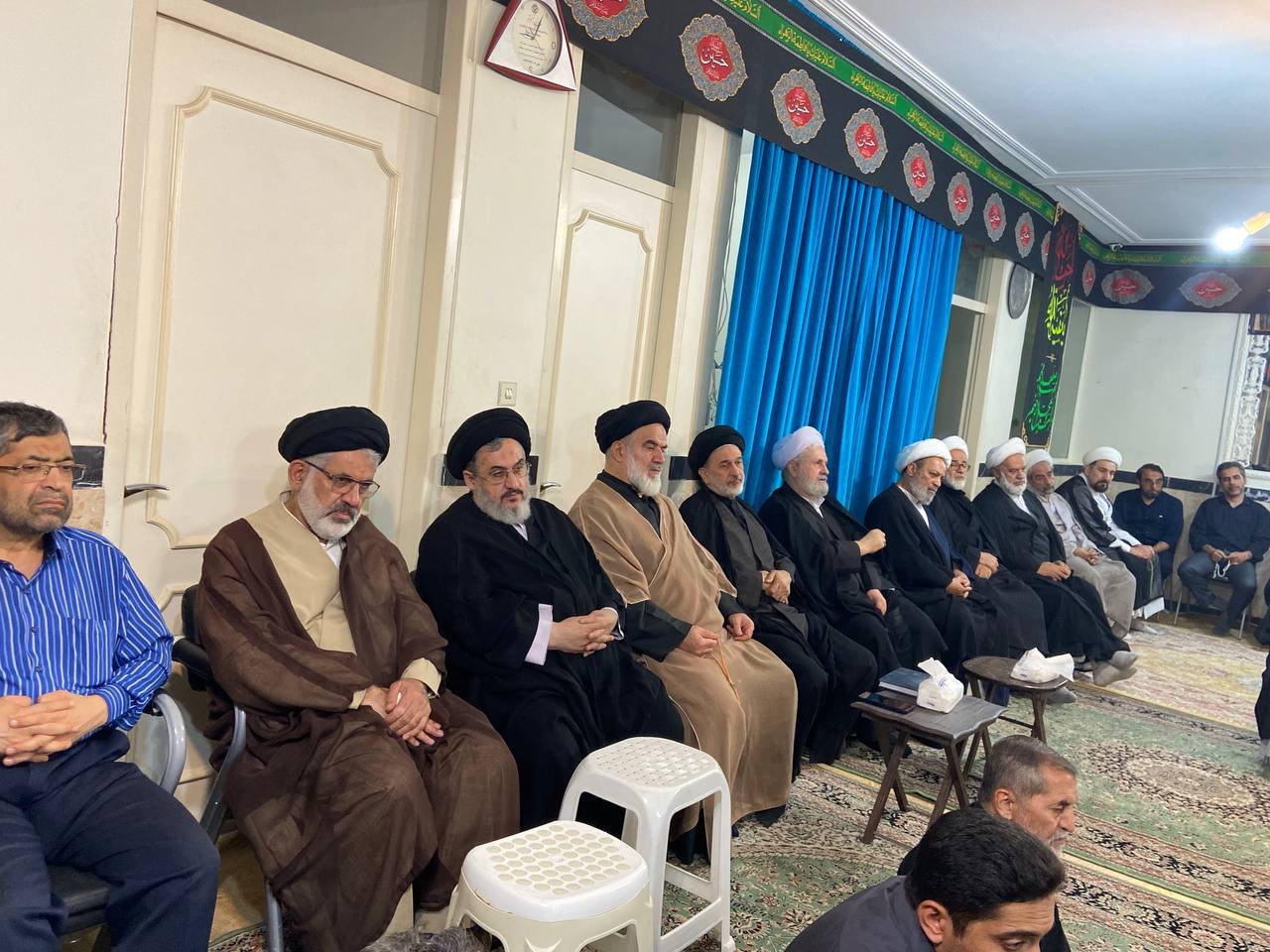
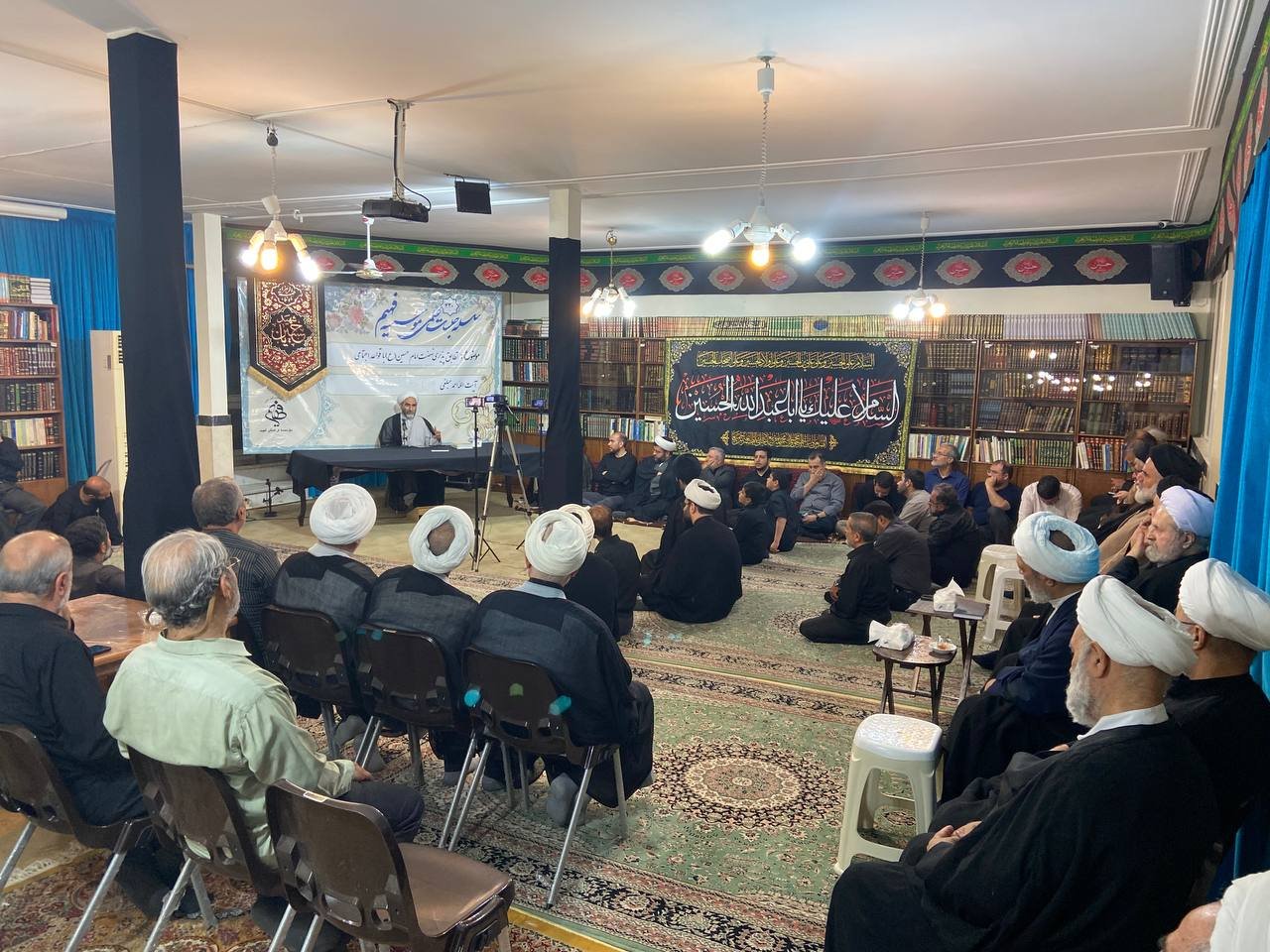
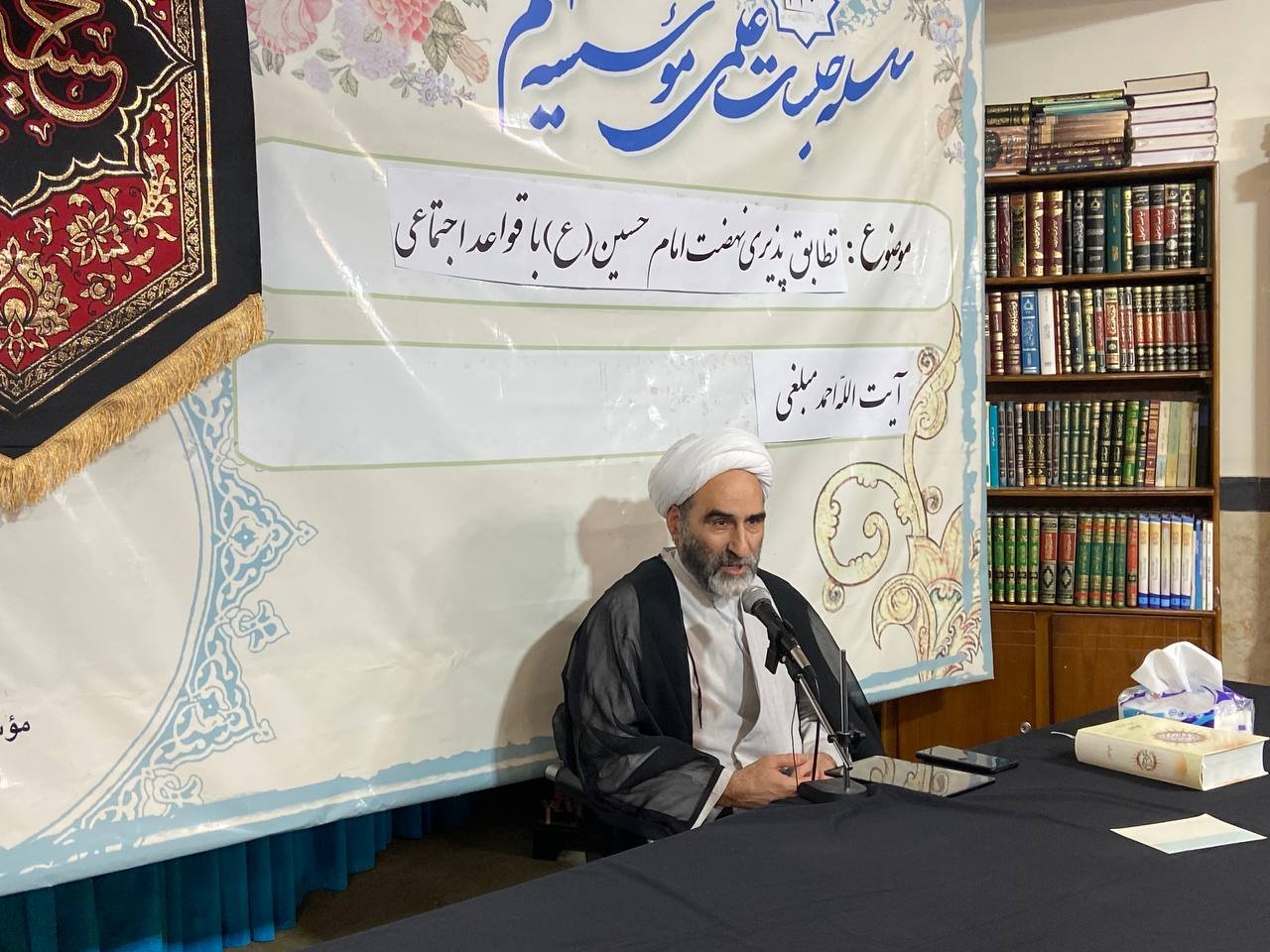
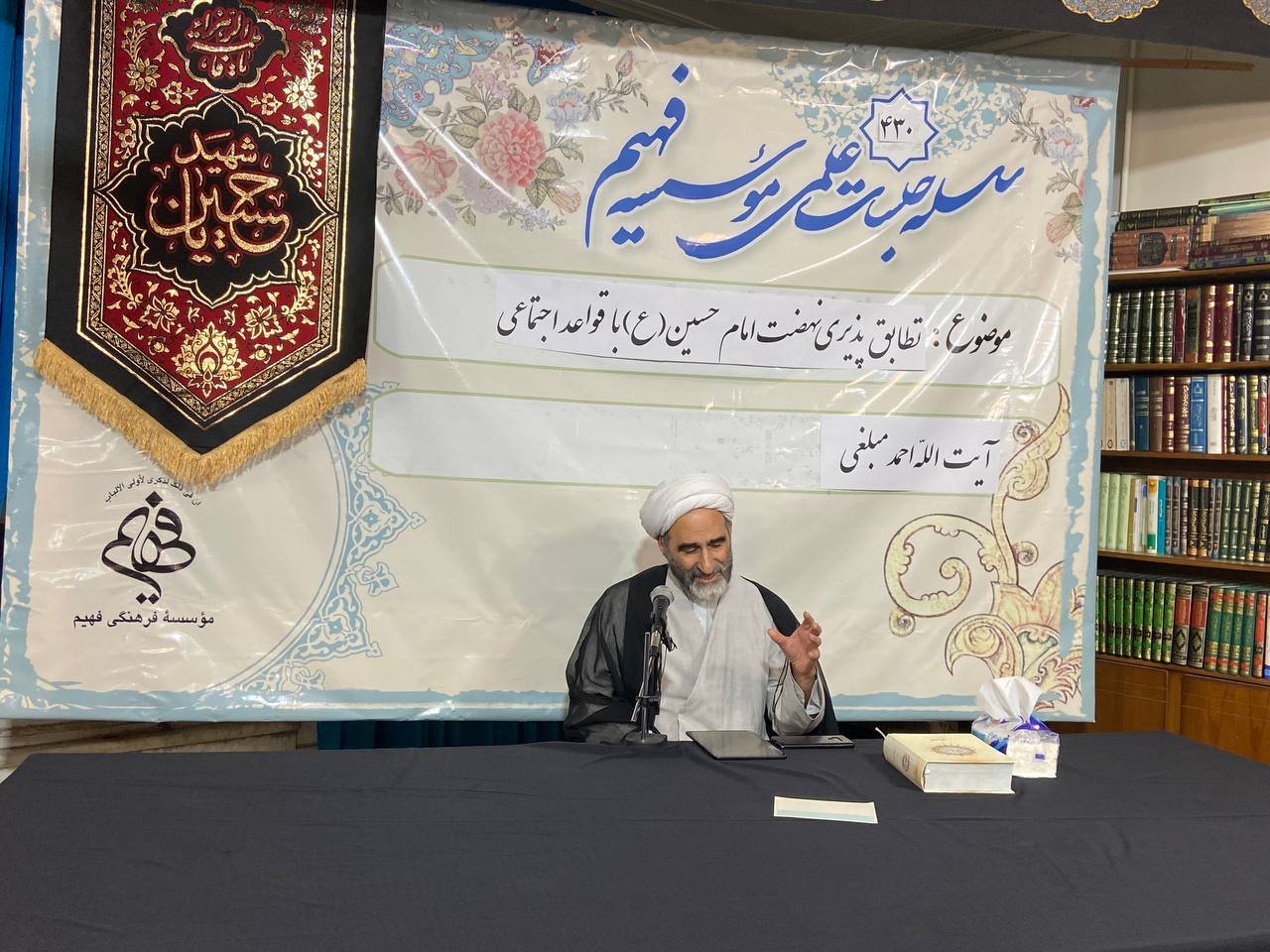
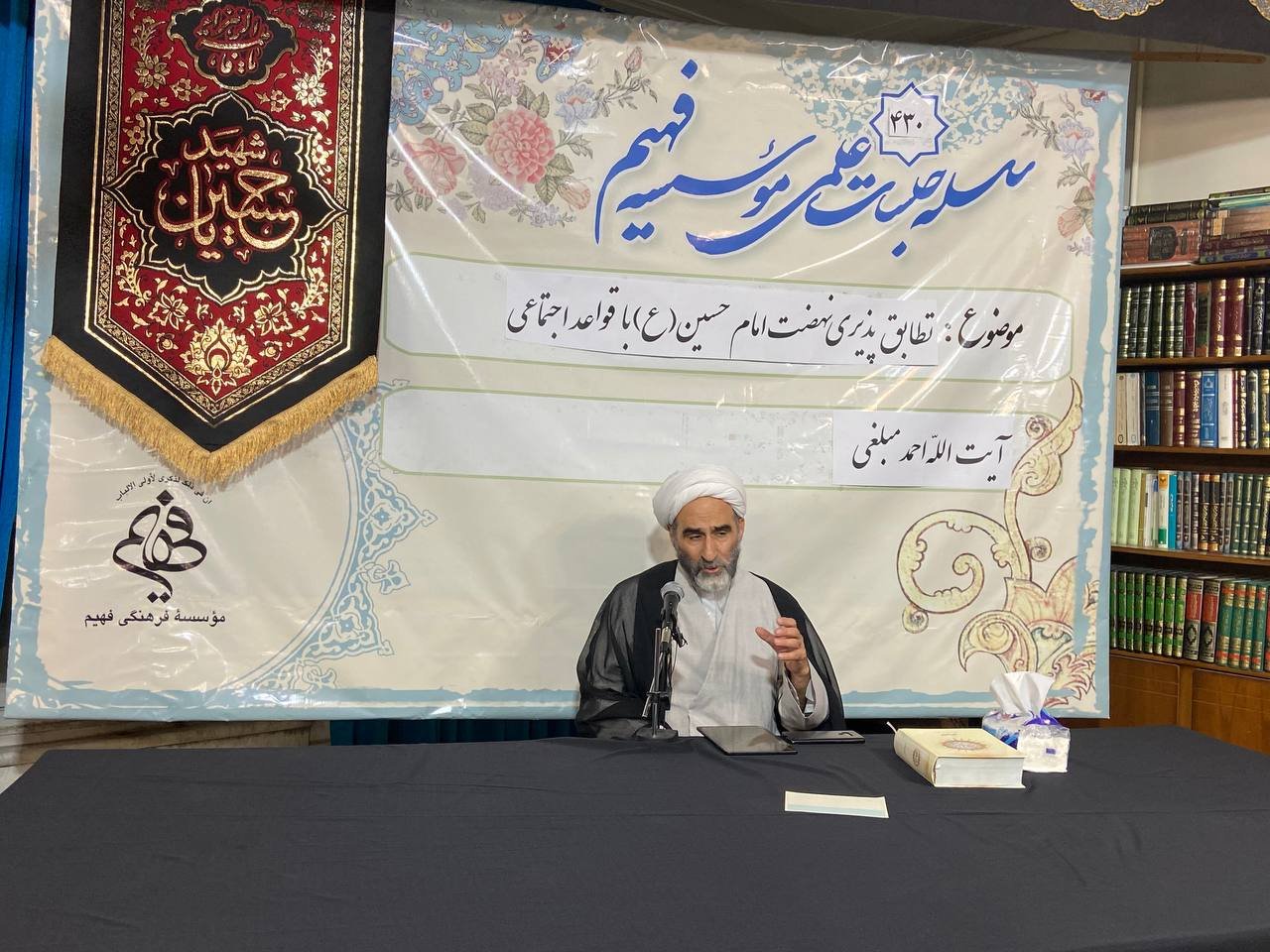
Introduction: The Ashura Movement and Social Rules
بسم الله الرحمن الرحیم. الحمدلله رب العالمین, and blessings and peace be upon our master and our prophet, al-Qasim al-Mustafa Muhammad, and his pure and guiding Household.
The Husayni movement of Ashura can be examined from many angles, and what is remarkable is that each angle draws its own particular ideas and teachings from this movement. One of the most important angles from which to examine this movement is that of social rules. This angle is of very great importance, because the possibility of benefiting from and learning lessons from the movement on the basis of this reading is very great. Perhaps, as we know,
the science of society (sociology) is the mother of all sciences1. Therefore, a sociological reading of the Ashura movement, as the root, the context, the moderator and the enabler of the other readings, is of special importance2. If we do not address the Husayni revolution and movement from this perspective, there is no guarantee that our other readings will be carried out correctly3. This reading is the mother of all readings and will be a sounder, better and more illuminating point of departure towards guiding ideas for the other readings of this movement4. One may even claim that if we do not examine this movement from the angle of social rules, we will certainly fall into unacceptable errors and misuses in various spheres, contexts and from other angles; that is, falling into error is certain5.
By social rules is meant the rules that are repeatable in social behaviour and on the basis of which one can predict the future6. On the basis of these rules, one can analyse emerging situations, and the relations and interactions of human beings rest upon them7. These rules are naturally defined in sociology, but the view presented in this gathering takes rules in a general sense that
also encompasses the divine sunnahs8. The divine sunnahs are in fact empirical and supra-empirical social rules; empirical in the sense that one can observe their realisation, verify their soundness and truth, and see how these sunnahs hold sway over society and history, and how everything is taking place and being realised under these sunnahs9.
The Divine Sunnahs and Sociology
Naturally, the language of sociology differs in certain respects from the language of the Qur'an10. But if we carry out a precise and profound analysis (an analysis that is still lacking), we can find approaches towards reaching points of commonality, or of agreement and convergence11. Of course, the Qur'an contains rules that have not yet been raised in sociology12.
The divine sunnahs are immutable, and their realisation is certain and inevitable13. Unfortunately, in the Islamic seminaries (hawzas), the discussion of the divine sunnahs is in an extremely weak state, and only one or two people have addressed it14.
Among these figures one may mention the late Allamah Tabataba'i and, to some extent, the late Shahid Mutahhari (as a student and follower of the Allamah's ideas), and Shahid Sadr15. The late Allamah Tabataba'i has a statement which I shall first relate and then enter the main discussion16. He holds that we can find three layers in Islamic thought: social matters (ijtima'iyyat), devotional matters ('ibadiyyat) and cognitive matters (ma'rifiyyat, i.e. ideas and teachings)17. He holds that if we do not begin with social matters, we will reach neither devotional matters nor cognitive matters18. This runs contrary to the notion that dominates our mindset, in which we imagine that we must first concentrate on ideas or on devotional matters19.
The Allamah holds that we must concentrate on social laws, build society on the basis of law, establish the rule of these divine sunnahs and move under them20. If these social matters are realised, they open the way for devotional matters, and devotional matters open the way for cognitive matters21. Of course, cognition here means the higher levels of cognition; otherwise, social matters themselves are founded on cognitive matters22. What he means by cognitive matters is those elevated forms of cognition that we regard as necessary for society23.
It is very interesting that our philosopher of society, namely Allamah Tabataba'i 24, tells us that if the Prophet had not established the society of Medina on the basis of rules and sunnahs, faith would not have come into being in that society25. The phrase "و لما یدخل الایمان فی قلوبکم" 26came after the realisation of the Madinat al-Nabi (the City of the Prophet) 27; that is, the City of the Prophet, which had been formed on the basis of social matters, was on its way to bringing about faith, cognition and devotional matters28. This is exactly the point the Allamah makes: we must always accord to social matters, sociology, social analyses, social sunnahs and readings based on social rules a definite and first rank of priority, so that we may be placed on the right path and course29. This helps us to be able to interpret, to move and to advance, both in practice and in thought30. Social matters take precedence; first, society must be formed on the basis of the sunnahs31. Then this society can attain values and transcendence32, provided that the rules and laws of society are realised as God wills and as the divine social sunnahs are33. That part of it to which sociologists have paid attention must be realised34. If it is realised, this process will begin and move forward, and it is then that we can have devotional matters35. The Qur'an itself even says: "اُمّتَکُمْ اُمّةً واحِدَة" 36; first it speaks of a social matter (the ummah) and the realisation of this ummah, and after that it speaks of worship: "و اَن ربَّکم فَاعبُدون"37. Even attention to Lordship comes after this society and this ummah take shape, and after the rules that establish the ummah take shape38. Then we arrive at worship, and worship naturally brings us to high levels of cognition39. This was an introduction, lengthy though it was, but there was no avoiding it40.
Social Sunnahs in the Husayni Movement
Now I shall try, on the basis of a few rules, to explain the Ashura movement according to my own deficient and inadequate understanding. Of course, this discussion calls for a long treatment, and its themes thirst for further discussion.
1. The Divine Sunnah of Inner Change (ان الله لا یغیر ما بقوم حتی یغیروا ما بانفسهم)
The first rule is the divine social sunnah of change41, the well-known sunnah: "ان الله لا یغیر ما بقوم حتی یغیروا ما بانفسهم"42. Without seeking to expound this sunnah, I shall pass over it in a coded fashion so that we may reach the other sunnahs as well. Did the Husayni movement observe exactly this rule? 43
Consider: Imam Husayn (AS) could have taken one of two courses44. One was to pay attention to "swelling the ranks" and, like all the politicians of the world, to gather individuals and groups around himself as much as he could in order to create an aura of power45, to penetrate by various routes and seize power46. Well, naturally this too would lead to change, but it would not be a positive change47. It is not a change that could be in the direction of righteousness and salvation48.
Imam Husayn (AS) wanted to bring about a fundamental change, one that, in a positive, constructive, radical and foundational manner, could eliminate the corruption and the abnormal condition of society49. A movement based on abnormality cannot eliminate an abnormal condition50. Hence, many have raised the question: why did Imam Husayn not observe political rules? 51 The answer is that Imam Husayn wanted to observe social rules; political rules come after social rules52.
Imam Husayn (AS) could have somehow kept and brought along all of the six thousand people who set out with him from Mecca53. But he wanted to bring about an inner change54. "ان الله لا یغیر ما بقوم حتی یغیروا ما بانفسهم"55. He wanted to change people's inner selves, and therefore he had a strategy, an approach and a precise, capillary-level focus on this inner change56. Even on the eve of Ashura, those who remained did so in order that this inner change might crystallise in them and become prominent and manifest57, and that they might incline towards Imam Husayn (AS) from within, with their inner selves, not out of being constrained by shame, nor for any other reason58. For with this inner change one can change history; with this inner change one can change society59.
Hence, once again he said: "It is night, it is dark; whoever wishes to leave, let him leave"60. This caused the loyalties that rose from the depths of their souls and affected the depths of their souls not only to create resolve in them but also to bring about sincerity61. So inner change is the pivot. Look at Imam Husayn's (AS) sermon on Ashura; from beginning to end this sermon is focused on the inner change of that society62. All the movements, pauses, rajaz verses, slogans, each and every one of them, were directed at bringing about a transformation63. Although this transformation did not leave its effect on that day, it endured and later changed societies and changed history64, because Imam Husayn was seeking a fundamental change for all time65. Well, this is a social rule that received complete attention and serious, intense focus in the Husayni movement66.
2. The Sunnah of Returning to Oneself (the Public Conscience)
The second sunnah is the sunnah of returning to oneself (ruju' ila al-anfus)67. The sunnah of returning to oneself is a divine sunnah whereby, when a crisis or a landmark event occurs, the populace turns back to its own inner self68. We can describe it as "returning to the public conscience", which is also discussed in the social sciences today69. Naturally, returning to the conscience differs from a change in public opinion70. Public opinion sometimes undergoes change, but in a particular moment, in a short-term and immediate manner71. And at times, under certain conditions, this public opinion gives way to another public opinion, and when public opinion takes shape, it is not necessarily the case that one can be confident of its permanence or convinced of its correctness72. Yet in some cases, public opinion, to be sure, does take shape correctly73. But alongside public opinion, we have something called "returning to the public conscience"74. Returning to the public conscience is more infrastructural, more fundamental, more enduring, more grounded in beliefs and ideas, and more precise75. And sometimes this public conscience becomes the source from which sound public opinion is born76. The public conscience is a very important matter if it takes shape. "رجعوا الی انفسهم" relates to recourse to the public conscience77. "انفسهم" means their selves78. Typically, three sides must come about for this recourse to the public conscience to be realised at their centre79:
<w:rPr><w:rFonts w:ascii="Arial" w:eastAsia="Times New Roman" w:hAnsi="Arial" w:cs="B Nazanin"/></w:rPr></w:pPr><w:r w:rsidRPr="006E3C49"><w:rPr><w:rFonts w:ascii="Arial" w:eastAsia="Times New Roman" w:hAnsi="Arial" w:cs="B Nazanin"/><w:b/><w:bCs/><w:rtl/></w:rPr><w:t>A special, landmark and symbolic event must take place80, as the Prophet Abraham did: he brought about an event that was exceptional, special and attention-grabbing, with the symbolic dimensions it possessed81.
<w:rPr><w:rFonts w:ascii="Arial" w:eastAsia="Times New Roman" w:hAnsi="Arial" w:cs="B Nazanin"/><w:rtl/></w:rPr></w:pPr><w:r w:rsidRPr="006E3C49"><w:rPr><w:rFonts w:ascii="Arial" w:eastAsia="Times New Roman" w:hAnsi="Arial" w:cs="B Nazanin"/><w:b/><w:bCs/><w:rtl/></w:rPr><w:t>A crowd of people82, whether people who are present or people who are observing. People may read that event wrongly, but typically it is the people present83.
<w:rPr><w:rFonts w:ascii="Times New Roman" w:eastAsia="Times New Roman" w:hAnsi="Times New Roman" w:cs="B Nazanin"/><w:sz w:val="24"/><w:szCs w:val="24"/><w:rtl/></w:rPr></w:pPr><w:r w:rsidRPr="006E3C49"><w:rPr><w:rFonts w:ascii="Arial" w:eastAsia="Times New Roman" w:hAnsi="Arial" w:cs="B Nazanin"/><w:b/><w:bCs/><w:rtl/></w:rPr><w:t>Sound and precise management and sound guidance84. This management must come into play85. If these three sides come about, "رجعوا الی انفسهم"86. Now, this return to oneself is sometimes immediate and instantaneous, occurring at that very moment, as happened in the story of the Prophet Abraham (AS)87. And sometimes it occurs later; that is, a return to the conscience such as the Ashura uprising, which was followed by a return to the conscience88. But this return to the conscience did not take place on the day of Ashura; perhaps it was set in motion, perhaps some were awakened, perhaps some took notice, but the return to the conscience began after the event of Ashura as a powerful socio-historical process, and it is still in motion to this day89.
Imam Husayn (AS) himself said this very thing on the day of Ashura: return to your conscience90. In the sermon he delivered, at its very beginning, he says: return to your conscience91. First he introduced himself so that, in the mirror of this introduction, the people would see themselves, see their own condition, and return to their conscience92. Therefore, the sunnah of returning to oneself, which today also has a place and standing in the social sciences (both its public-opinion aspect and its aspect of recourse to, or change in, the public conscience), exists in the Qur'an as a sunnah, and Imam Husayn (AS) made use of this sunnah93.
He created the loftiest and most exceptional event94. Exceptional, exceptional, exceptional! For the event of Imam Husayn was not only for that time; it was for history95. Since history was turning to a new page in a different form, it had to be the most exceptional event of history, and it did indeed become the most exceptional96. All the episodes, all the rajaz verses, all the pronouncements, all the stagings (bringing the women and children, pitching the tents, the confrontations, the dialogues and the slogans, and everything that took place, including the martyrdoms), each and every one of them was exceptional97. And the climax of this exceptionality was the martyrdom of the infant98. Before the eyes of history, this was the most exceptional event taking place99. And it was here that the side of the symbolic event, the side of the exceptional event, came about100. The Imam's guidance and management were also active as another side101. The crowd facing the Imam was large, and the crowd of history larger still102. Hence the return to the conscience: had the Imam not rectified the conscience, we would now be in different circumstances, history would be in different circumstances, and humanity in the Islamic world would be in different circumstances103. These are matters that must be studied104.
3. The Sunnah of Arousing Identity (Activating Identity)
The next sunnah on the basis of which the Ashura movement took shape is the sunnah of arousing identity, of activating identity105. In the scholarly literature this sunnah is referred to as "collective identity", "identity mobilisation" and "identity activation"106. The Imam wanted to arouse identity107. Sometimes, when identity falls under an abnormal social condition, it becomes less active and less functional108. The identity that ought to be decisive goes into eclipse and is pushed to the margins109.
The Prophet (PBUH) had shaped Islamic identity in its highest version and level110. But this identity had gradually been pushed to the margins111. "Clouds of ugliness" set against this identity had concealed it112. The Imam wants to revive this identity113. They told him to go to Yemen; Yemen would not have brought about the expression, manifestation and strengthening of identity and of the ummah114. He said: "I am setting out to reform the ummah of my grandfather"115. He wants to revive this identity of the ummah116. He does not want to go to a region where there are devotees and believers117. And so he moved within the ummah118.
Look: by what is identity aroused? Identity is aroused by symbols119. Imam Husayn (AS) made excellent use of symbols120. Why did he evoke the era of the Prophet? Why did he bring the Prophet's sword? Why did he display the garments that were in the House of Prophethood? 121 Why did he bring the Ahl al-Bayt? Why did he bring the women and children into that centre of danger, where the mind simply cannot conceive of tribulations such as those that befell those women? 122Why did he bring the family of God (Al Allah)? 123All of this was in order to set this identity in motion124.
Why did he say: "Have you not heard that the Prophet said that al-Hasan and al-Husayn are the two masters of the youth of the people of Paradise?" 125 Why in word, why in symbol, why in action? Each and every one of them; even when the Imam recited rajaz, his rajaz verses were directed to the people of the haram126, the people of the haram meaning the haram of the Prophet, that is, the women and children connected to the exalted Prophet of Islam127. Why does he repeatedly mention the name of the Messenger of God? 128In order to revive and bring to life this dormant identity, this dead identity, this marginalised identity, so that this identity would not be lost129.
If identity is lost, everything is lost130. So arousing identity is a very important subject131. Take note: even when the Imam stood facing the people, he said:
" سللتم علينا سيفا لنا في ايمانكم، و حششتم علينا نارا اقتدحناها على عدوّنا و عدوّكم "132. He spoke with them in such a way as though they were not enemies133.فَأَصبَحتُم إِلباً لِأَعدائِكُم عَلى أَولِیائِكُم». That is, the Imam regarded himself and that good and pure company as the awliya' (friends and guardians) of those very enemies. He was not willing to count them as enemies136, because identity was present in them, though dormant137. If identity is present, even if dormant, they are not enemies138. An enemy involves a line of demarcation; one is an enemy when identities have separated139. Some ask why the Imam spoke with them in this way, with those bloodthirsty people, with those enemies, with that merciless army? 140No, it is not like that141. First of all, not all of them were thirsting for the Imam's blood142. Social conditions had marginalised their identity143. The Imam wants to revive identity; he wants to revive the ummah144. He does not want to come and create, against one another, the kind of battle lines that we understand; he did not want to create that145. The Imam wants to revive identity; one must focus on identity146. These are among the most beautiful chapters of the Husayni movement147.
4. The Sunnah of Confrontation or Drawing of Battle Lines
Another rule is the social rule of confrontation or the drawing of battle lines148. Consider: under certain conditions, if confrontation is not created, if lines of demarcation are not drawn, it is fundamentally impossible to guide society towards values149. And the Imam saw that all the boundaries had become blurred150. He saw that if this blurring continued, it would not be clear who was righteous and who was wrongdoing, who was an oppressor and who was just151. A drawing of lines had to take place152. Of course, in an Islamic society, if this drawing of lines turns into polarisation and the formation of opposing poles, as in our own society, it is dangerous153.
The point is that in a society of that kind, the Imam had to create confrontation154. This confrontation is a Qur'anic principle: "خَصمانِ اِختَصَموا فی رَبِّهِم"155. Indeed, the Qur'an is a showcase of confrontations; from Moses and Pharaoh to Abraham and Nimrod, from Saul (Talut) and Goliath (Jalut) to all of these, they are confrontations156. The Qur'an, of course, does not prescribe these confrontations for every situation157. In an Islamic society, one must be sensitive towards confrontations; confrontations must not be permitted lightly158. But in an Umayyad society, a society in disarray, a society that has been utterly turned upside down, this confrontation must be created159. And you see that in the Islamic literature we have: "بَرَزَ الإیمانُ کُلُّهُ إلی الشِّرکِ کُلِّهِ"160. On Ashura the matter went further: "بَرَزَتِ الإنسانیةُ کُلُّها إلی اللاإنسانیةِ کُلِّها"161. Indeed, the matter went further still: "بَرَزَتِ الأنبیاءُ کُلُّها إلی الطاغیةِ کُلِّها"162. Some histories had been altogether changed163. Ashura is something else, and there Imam Husayn (AS) made this confrontation against them ever more prominent164. They made an assault on the tents of the haram165. Imam Husayn (AS) in his rajaz verses, and his companions in theirs, put forward the element of defending the Ahl al-Bayt166. Now, the Imam himself is the head, yet this head is defending the haram of the Messenger of God167. All of these are confrontations of values168. This too is an element and a rule169.
5. The Sunnah of the Oppressors Being Made Guardians over One Another
Another rule that is again observed in the movement of Imam Husayn (AS), and which may offer us a better interpretation of this movement, is the divine sunnah of "تولیت ظالمین بعضهم ببعض" (the oppressors' aiding one another)170. If we interpret tawliyah (being made guardians) as follows: that if oppression becomes structural in a society, in such a way that there is oppressor above oppressor and it is all oppression, that is, if a formed structure, a fully structural, formed corruption, comes about in society, then this is the divine sunnah that says: "بما کانو یَکسِبُون" 171; that is, as a result of our own doing, as a result of our own doing, or the indifference of that society (the Husayni society, or the one before Imam Husayn) or their shortcomings172. In any society; well, here this is the sunnah of the guardianship of the oppressor, the structural guardianship of some oppressors over others173.
Well, why did Imam Husayn (AS) not carry out a small revolution? Why not a temporary movement? Why not set one place right and then take the next step? 174 No! The structure itself had fallen apart, and there was no choice but to launch an assault on this structure175. And this makes clear what goal Imam Husayn (AS) was pursuing176. Even had Imam Husayn (AS) established a government, even with a government better than his father's, he could not have administered society177. It was here that this sunnah had become entrenched178. In the face of this sunnah, that element of "بما کانوا یَکسِبُون" had to be changed and altered179. And so another acquisition took place, another movement took place, another motion took place, so as to be able to destroy that structure180. This too is one of the sunnahs that can be traced in the Husayni movement181.
6. The Sunnah of Objectification by the Oppressors and Humanisation by the Just
Let me state the final sunnah as well and bring this discussion to a close: it is the sunnah of objectification by the oppressors and humanisation by the just182. Of course, these two fall under change and the sunnah of change183183, because the sunnah of change is the mother sunnah184184. Many of these sunnahs fall under it185185. We have not established any hierarchical relationship among these sunnahs, because we have not discussed at all what these social sunnahs are, which of them stands at the top, which has wider coverage, and which falls under another186186186. But in any case, in an unrighteous society human beings are regarded as "objects"187. Human beings are regarded as non-human and are seen as nothing more than an object188. And the Imam seeks to make those "objectified" individuals human189. Why is the Husayni movement also a humane one? 190Why, among all the movements we have throughout history, are the human dimensions of none as prominent as those of the Husayni movement? 191It is as though he is a leader striving to strengthen and create humanity192. And at the same time, he is a leader who wants to steer society towards faith193. He is the leader of humanity, the leader of spirituality and the leader of religion194. Why? And why? Because humanity had perished in that society195. "کونوا احراراً فی دنیاکم" 196; if you have no religion, at least return to your free-spiritedness197. Your past, where has that manliness gone? 198All of this is humanity199. Return to freedom; freedom is a human matter200. He raises the issue of water because it is a human matter201. He places the child before them so that they may understand that they are not human, so that history may understand that they are not human202. For the killing of a child, just as the whole world has now risen up against the Zionists203. Why? Because they are child-killers204. Not once, not twice, not ten, not twenty, not a thousand, not two thousand205. Their very method, their outlook, their passion and their inclination are directed towards killing children206. They take pleasure in killing children, they take pleasure in killing journalists, they take pleasure in committing genocide, they take pleasure in killing the hungry; they both starve people and kill the starving207. This is something you witness today208. Why have the world and its public opinion risen up? Because it is a human matter209. Imam Husayn (AS) did everything he could to strengthen this humanity.
Faith does not take shape without humanity211. The source of faith and religion is humanity212. If humanity takes shape, and the seed of faith is sown on the soil of humanity, this becomes faith213. Otherwise, "فِطرتَ اللهِ الَّتی فُطِرَ النّاسَ عَلَیها"214. Until the primordial nature (fitrah), which is the human being, is realised, if faith comes, that faith ends up in the Kharijites; it ends up in the formation of the Kharijites and ISIS215. Humanity is the necessary condition and necessary prerequisite for the realisation of faith216. And the Husayni movement was for the purpose of first establishing humanity217. Once humanity was established and normalised, the possibility of turning to faith would arise218.
Conclusion: The Importance of Understanding Social Rules
These are lessons we must take from Ashura219. If we take this lesson of the rule-based character (in the social sense) of the Ashura movement, then we will align our own actions, our own activities, our own society, our presence in society and our presence in social and cultural spheres, all of them, on the basis of these rules220. We will no longer act contrary to the rules221. For if you act contrary to the rules, it is like moving against the course of a flood222. We cannot move; and even if we do move, it is of no use, we get nowhere223.
The rules must be established; the rules must be understood224. These are matters of creation (takwin), these are the divine sunnahs, these are divine ordinances225, not something we might imagine we can circumvent226. The rules cannot be circumvented227. We must move under the sunnahs; we must move on the basis of the rules228. And therefore the Islamic seminaries, and in my view the hawza of Qom, must concentrate on the divine sunnahs229, and understand what society is230. Allamah Tabataba'i, Shahid Mutahhari and other great figures we have in the hawzas came and spoke of this231. Let us say more, understand more and open up more232. For if we do not understand the sunnahs, then even if we engage in fiqh, this fiqh cannot come into society233, because we build fiqh on the basis of a rule that is not a social rule234. When it is not based on a social rule, this fiqh cannot move235. Everything must be built and take shape through the lens of these social rules and divine social sunnahs236. If yesterday's society needed these movements, today changes under these sunnahs are taking place far more intensely and rapidly237. And we must, and have no choice: now that we have carried out a revolution, now that this grandeur, this outlook, this atmosphere, this context and this opportunity are at our disposal historically, let us return to the divine sunnahs, let us have a precise recourse to the divine sunnahs238.
The Husayni Arba'in and Social Structure
Well, it is the eve of the Husayni Arba'in239. The Husayni Arba'in is itself a social structure240. Look at it with a social eye241. It is itself a structure, and it changes structures too242. It is a social campaign, a social capital, a social movement243. But humanity must constantly be infused into it244, just as Imam Husayn (AS) infused humanity into his movement245. And humanity is at its peak in the Arba'in; you yourselves know this, we all know it246. But if we want to be Husayni, we must constantly, moment by moment, infuse into this Arba'in further dimensions of this humanity and religiosity and of this ummah-centredness and devotion to the ummah (and not sectarianism)247. و صلی الله علی سیدنا محمد250.
Comments
No comments yet. Be the first.
Write a note, critique or commentShare your view with us and other readers without leaving this page.