


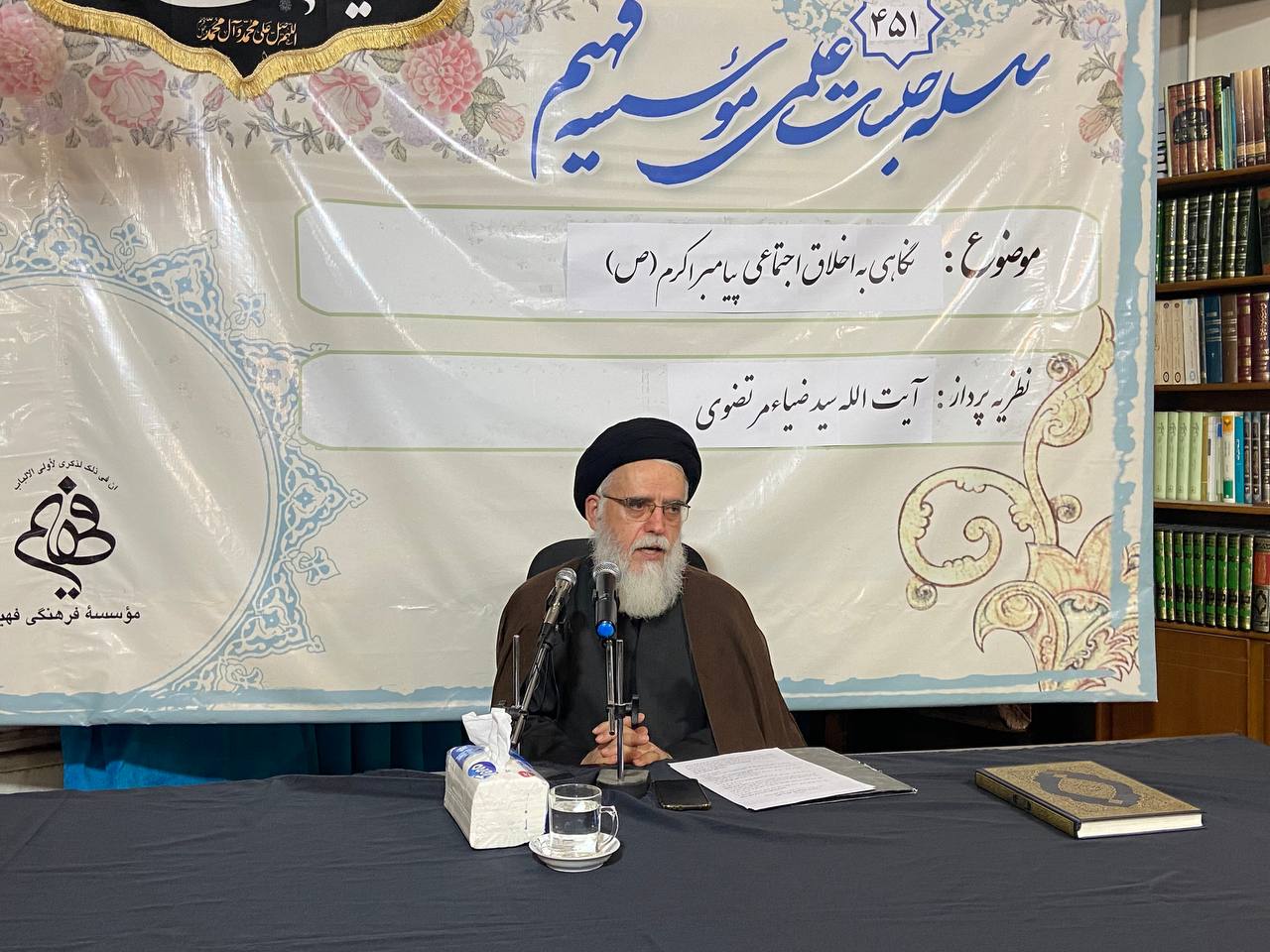
The Educational Conduct and Social Ethics of the Holy Prophet (PBUH)
When a family who have brought their infant child to the Prophet (PBUH) see that his garment has become impure, they break into a sweat of embarrassment; but he says: leave him be, let him finish what he is doing and do not interrupt him. He would say: «لَا تُزْرِمُوا الصَّبِيَّ» (Do not interrupt the child's urination) and he would wait patiently: «فَمَا يَفْرُغُ مِنْ دُعَائِهِ...» He would recite the supplication right there and would not have the child washed. Purity of clothing was not, after all, a condition of supplication; when he had finished his supplication, with congratulations and a fine name that he chose: «فَيَبْلُغُ سُرُورُ أَهْلِهِ...», he would bring the child's family to the height of joy and delight; «وَ لَا يَجِدُونَ أَنَّهُ تَأَذَّى بِبَوْلِ صَبِيِّهِمْ» (and they did not sense that he had been troubled by their child's urine): that family felt not in the least that the Prophet was now upset and was holding himself in check; no such feeling ever came over them.
He would say to himself: he is only a child, after all; he would not even leave their presence to purify his garment, lest they feel embarrassed, but would wash his garment later at his leisure. This conduct has also been narrated many times with regard to Imam Hasan and Imam Husayn (AS): such things sometimes happened with those two noble ones too, and the Prophet showed forbearance.
The Necessity of Forbearance and Broad-Mindedness in Social Matters
If we look at the semantic extension of this very instruction «لَا تُزْرِمُوا» and apply it to social issues and to the problems and behaviour of young people, especially our daughters and sons, we realise that we must bear with them and show them forbearance. Of course, forbearance does not mean compromising on the rulings of the Shari'ah or disregarding them; rather, it means that if we do not preserve the capacity of this generation, we will no longer be able to guide even the few per cent that remain. If we drive these young people away from us, they will become the share and portion of those desert ghouls, the corrupters, and those who are counting the moments until our harsh treatment and rejection of them.
Had the Holy Prophet (PBUH) not tolerated these circumstances, tomorrow no family would bring their child to him. Who, then, would recite the call to prayer in the child's ear and give it a name? Tomorrow they would give the child a name of their own choosing, one that neither you nor the Prophet would approve of. The Prophet makes use of this very opportunity; to reach that lofty goal, namely the prayer of blessing and the giving of a good name, he even tolerates the child's urinating, because otherwise the opportunity for guidance would be lost.
I do not wish to defend the anomalies we see in society; like all of you, I too am pained to the heart. But we must accept that part of this situation is due to our own behaviour. Because we did not tolerate, we did not attract properly and did not guide correctly. We thought that because we had power, our word would always prevail; but it has now become clear that not everything proceeds through power and coercion. The Holy Prophet (PBUH) had such authority that he would take the child into his arms, hold back the hot-headed and say: let him finish what he is doing; we will wash the garment later.
No one defends anyone who breaks norms or causes harm; we are opposed to such things. But broken glass can be replaced; the great loss that cannot be made good is the loss of these young people, a portion of whom, unfortunately, have already been lost.
Sometimes our esteemed jurists raise juristic discussions in defining the "child" (sabi); but at other times a physician defines it from a biological perspective, a sociologist from a social perspective, or a legislator from a legal standpoint (for instance, who has the right to vote, or upon whom a hadd punishment may be carried out). At other times we assess how much social understanding the individual has and how he comprehends matters. Now, if we do not regard a society as capable of analysing and understanding social issues in the first place, what do we expect: that they will be entirely on our path?
Complete Faithfulness to Promises and Commitments
One of the important moral and social principles is keeping one's appointments. Please consider the following examples:
The late Tabrisi narrates in Makarim al-Akhlaq from one of the Companions:
«وَاعَدْتُ النَّبِيَّ (صَلَّى اللَّهُ عَلَيْهِ وَ آلِهِ) قَبْلَ أَنْ يُبْعَثَ، فَوَاعَدْتُهُ مَكَاناً فَنَسِيتُ يَوْمِي... فَأَتَيْتُ الْيَوْمَ الثَّالِثَ، فَوَجَدْتُهُ فِي ذَلِكَ الْمَكَانِ، فَقَالَ (عَلَيْهِ السَّلَامُ): يَا فَتَى! لَقَدْ شَقَقْتَ عَلَيَّ، أَنَا هَاهُنَا مُنْذُ ثَلَاثَةِ أَيَّامٍ.»
Before the Prophetic mission, I made an appointment with the Prophet at a certain place, but I forgot the day and hour of the appointment. On the third day I remembered and went to that place.
The subtle point here is that this person knew the Prophet's character so well that he thought it likely the Prophet would still be at the appointed place even on the third day! The Prophet said: O young man, you have made things hard for me; for three days I have been here waiting for you.
The late al-Saduq (may God have mercy on him) narrates in 'Ilal al-Shara'i' from Imam al-Sadiq (AS):
«أَنَّ رَسُولَ اللَّهِ (صَلَّى اللَّهُ عَلَيْهِ وَ آلِهِ) وَاعَدَ رَجُلًا إِلَى الصَّخْرَةِ فَقَالَ: أَنَا هَاهُنَا حَتَّى تَأْتِيَ... فَاشْتَدَّتِ الشَّمْسُ عَلَيْهِ فَقَالَ أَصْحَابُهُ: يَا رَسُولَ اللَّهِ! لَوْ أَنَّكَ تَحَوَّلْتَ إِلَى الظِّلِّ؟ فَقَالَ: قَدْ وَعَدْتُهُ هَاهُنَا، وَ إِنْ لَمْ يَجِئْ كَانَ الْمَحْشَرُ...»
The Prophet made an appointment with a man beside a rock. The man was late, and the sun rose and beat down fiercely upon the Prophet. His Companions said: O Messenger of God! If only you would move a little further over into the shade. He said: I made the appointment with him right here. If he does not come, it is he who has broken his promise. (Had the Prophet changed his place, the man might have come and not seen him.)
This correct understanding of society and of responsibility is a fundamental need of those who hold the position of guidance at the head of Islamic societies.
Consider, again, the narration that the late Majlisi (may God have mercy on him) relates from Abu Ubaydah, one of the descendants of Ammar ibn Yasir:
«كُنْتُ أَرْعَى غُنَيْمَةً لِأَهْلِي... وَ كَانَ مُحَمَّدٌ (صَلَّى اللَّهُ عَلَيْهِ وَ آلِهِ) يَرْعَى غُنَيْمَةً... فَقُلْتُ: يَا مُحَمَّدُ! هَلْ لَكَ فِي فَخٍّ؟ فَإِنِّي تَرَكْتُ رَوْضَةً بَرِحَةً... فَقَالَ: نَعَمْ. فَغَدَوْتُ، فَسَبَقَنِي مُحَمَّدٌ وَ هُوَ قَائِمٌ يَذُودُ غَنَمَهُ عَنِ الرَّوْضَةِ... فَقَالَ: إِنِّي كُنْتُ وَاعَدْتُكَ فَكَرِهْتُ أَنْ أَرْعَاهَا قَبْلَكَ.»
In our youth, before the Prophetic mission, Muhammad (PBUH) and I used to graze sheep. I said to him: tomorrow let us go to such-and-such a valley, which has a very fine pasture. He agreed. The next day, when I arrived there, I saw that he had arrived earlier but was standing and continually driving his hungry sheep away from the pasture («يَذُودُ غَنَمَهُ»). He said: since I had made an appointment with you, I did not like my sheep to graze in this pasture before yours!
As Sa'di says:
If the sultan permits injustice over half an egg,
His soldiers will put a thousand fowls upon the spit;
And if the king eats a single apple from a subject's orchard,
His servants will tear the tree out by its roots.
Avoiding Demagoguery and the Exploitation of People's Ignorance
The late Majlisi narrates from Husayn ibn Khalid, who narrates from Imam al-Kazim (AS):
«لَمَّا قُبِضَ إِبْرَاهِيمُ ابْنُ رَسُولِ اللَّهِ (صَلَّى اللَّهُ عَلَيْهِ وَ آلِهِ)... انْكَسَفَتِ الشَّمْسُ، فَقَالَ النَّاسُ: إِنَّمَا انْكَسَفَتِ الشَّمْسُ لِمَوْتِ ابْنِ رَسُولِ اللَّهِ.»
When Ibrahim, the son of the Holy Prophet, passed away, there was an eclipse of the sun. The people said that the sun had been eclipsed because of the death of the Prophet's son!
Had it been us, we might perhaps have counted this among our own miracles, and those around us would have added several layers to it. But as soon as the Prophet heard these words, not only did he not remain silent or go along with them, but rather:
«فَصَعِدَ الْمِنْبَرَ فَحَمِدَ اللَّهَ وَ أَثْنَى عَلَيْهِ، ثُمَّ فَقَالَ: أَيُّهَا النَّاسُ! إِنَّ الشَّمْسَ وَ الْقَمَرَ آيَتَانِ مِنْ آيَاتِ اللَّهِ، يَجْرِيَانِ بِأَمْرِهِ، لَا يَنْكَسِفَانِ لِمَوْتِ أَحَدٍ وَ لَا لِحَيَاتِهِ، فَإِذَا انْكَسَفَا فَافْزَعُوا إِلَى الصَّلَاةِ... ثُمَّ نَزَلَ عَنِ الْمِنْبَرِ فَصَلَّى بِالنَّاسِ، فَلَمَّا سَلَّمَ قَالَ: يَا عَلِيُّ قُمْ فَجَهِّزِ ابْنِي.»
He ascended the pulpit and said: O people! The sun and the moon are two of the signs of God, and they are not eclipsed for the death or life of anyone. He ordered the prayer of the signs (salat al-ayat) to be performed, and after the prayer he told the Commander of the Faithful (AS) to prepare his son for burial.
It is interesting to know that the late Kulayni (may God have mercy on him) narrates that inside the Prophet's house, one of his wives (from the tribe of Kindah), who did not possess lofty spiritual insight, said when Ibrahim passed away:
«لَوْ كَانَ نَبِيّاً مَا مَاتَ ابْنُهُ»
If he were truly a prophet, his son would not have died!
See how, outside the house, the Prophet struggles against the ignorance and superstition arising from the people's love, while inside the house he is faced with such taunts and lack of insight.
Preventing and Removing Intellectual and Practical Doubts
Doubts in society are of two kinds: intellectual and practical. What matters is that the governing authority and the leading figures of society allow questions and doubts to be raised and respond with transparency. Consider three outstanding examples:
The first example (financial transparency): the late Kulayni narrates from Imam al-Sadiq (AS):
«أُتِيَ النَّبِيُّ (صَلَّى اللَّهُ عَلَيْهِ وَ آلِهِ) بِشَيْءٍ فَقَسَمَهُ فَلَمْ يَسَعْ أَهْلَ الصُّفَّةِ جَمِيعاً، فَخَصَّ بِهِ أُنَاساً مِنْهُمْ... فَخَافَ رَسُولُ اللَّهِ أَنْ يَكُونَ قَدْ دَخَلَ قُلُوبَ الْآخَرِينَ شَيْءٌ... فَقَالَ: مَعْذِرَةً إِلَى اللَّهِ عَزَّ وَ جَلَّ وَ إِلَيْكُمْ يَا أَهْلَ الصُّفَّةِ! إِنَّا أُوتِينَا بِشَيْءٍ فَأَرَدْنَا قِسْمَتَهُ بَيْنَكُمْ فَلَمْ يَعُمَّكُمْ، فَخَصَصْتُ بِهِ أُنَاساً مِنْكُمْ خَشِينَا جَزَعَهُمْ.»
Some property (from the public treasury) reached the Prophet. He divided it among the poor (the People of the Suffah), but the property was small and did not reach everyone; so he gave it to the neediest among them. In the hearts of those who had been left out, a murmur arose: why did he not give to us? The Prophet, who divided even his glances equally among his Companions, sensed that a question might have arisen in their minds. He did not say, "I am the Prophet, I am connected to revelation, I am answerable to no one!" Rather, he came out with humility and apologised: «مَعْذِرَةً إِلَى اللَّهِ... وَ إِلَيْكُمْ» (my apology to God... and to you), and said that the property was little and that he had given it to those who would have perished had they not received it.
• The second example (removing social suspicion): numerous sources (including the Second Martyr in Munyat al-Murid) narrate from Safiyyah (the wife of the Prophet):
«كَانَ رَسُولُ اللَّهِ (صَلَّى اللَّهُ عَلَيْهِ وَ آلِهِ) مُعْتَكِفاً، فَأَتَيْتُهُ لَيْلًا فَحَدَّثْتُهُ، ثُمَّ قُمْتُ فَانْقَلَبْتُ، فَقَامَ رَسُولُ اللَّهِ لِيَقْلِبَنِي [لِيَرُدَّنِي]... فَمَرَّ رَجُلَانِ مِنَ الْأَنْصَارِ فَلَمَّا رَأَيَا رَسُولَ اللَّهِ أَسْرَعَا، فَقَالَ رَسُولُ اللَّهِ: عَلَى رِسْلِكُمَا! إِنَّهَا صَفِيَّةُ بِنْتُ حُيَيٍّ. فَقَالَا: سُبْحَانَ اللَّهِ يَا رَسُولَ اللَّهِ! فَقَالَ: إِنَّ الشَّيْطَانَ يَجْرِي مِنِ ابْنِ آدَمَ مَجْرَى الدَّمِ، وَ إِنِّي خَشِيتُ أَنْ يَقْذِفَ فِي قُلُوبِكُمَا شَرّاً.»
The Prophet was in i'tikaf (spiritual retreat) in the mosque. At night I went to visit him. When I was returning, since it was dark, the Prophet came to accompany me home. Two men of the Ansar were passing by; as soon as they saw the Prophet with a woman, they quickened their pace so as not to intrude. The Prophet immediately called them and said: do not hurry! This woman is my wife Safiyyah. They said: Glory be to God! O Messenger of God, do we have any doubt about you? The Prophet said: Satan runs through man like blood in his veins; I feared he might cast a suspicion into your hearts. (Had the Prophet remained silent, the hypocrites of Medina – «وَ الْمُرْجِفُونَ فِي الْمَدِينَةِ» (and the scaremongers in the city) – might well have exploited this very matter the next day.)
• The third example (preventing a negative impression):
«أَنَّ رَجُلًا مَرَّ عَلَى النَّبِيِّ (صَلَّى اللَّهُ عَلَيْهِ وَ آلِهِ) وَ هُوَ يَبُولُ، فَسَلَّمَ عَلَيْهِ، فَرَدَّ عَلَيْهِ السَّلَامَ. فَلَمَّا جَاوَزَهُ نَادَاهُ النَّبِيُّ فَقَالَ: إِنَّمَا حَمَلَنِي عَلَى الرَّدِّ عَلَيْكَ خَشْيَةُ أَنْ تَذْهَبَ فَتَقُولَ: سَلَّمْتُ عَلَى رَسُولِ اللَّهِ فَلَمْ يَرُدَّ عَلَيَّ... فَإِذَا رَأَيْتَنِي عَلَى هَذِهِ الْحَالَةِ فَلَا تُسَلِّمْ عَلَيَّ، فَإِنَّكَ إِنْ تَفْعَلْ لَا أَرُدَّ عَلَيْكَ.»
A man with no sense of timing greeted the Prophet while he was relieving himself. The Prophet returned the greeting. Then he called him and said: do you know why I answered you in this state? I feared you would go and tell people that you greeted the Prophet but he did not answer you! But from now on, do not greet me in such a state, for I will not answer you. The Prophet forestalled even this illusion and mistaken impression on the part of an ordinary individual.
It is for this reason that the Commander of the Faithful (upon him be blessings and peace) says in his covenant to Malik al-Ashtar:
«وَ إِنْ ظَنَّتِ الرَّعِيَّةُ بِكَ حَيْفاً، فَأَصْحِرْ لَهُمْ بِعُذْرِكَ، وَ اعْدِلْ عَنْكَ ظُنُونَهُمْ بِإِصْحَارِكَ؛ فَإِنَّ فِي ذَلِكَ رِيَاضَةً مِنْكَ لِنَفْسِكَ، وَ رِفْقاً بِرَعِيَّتِكَ، وَ إِعْذَاراً تَبْلُغُ بِهِ حَاجَتَكَ مِنْ تَقْوِيمِهِمْ عَلَى الْحَقِّ.»
If the people suspect you of wrongdoing (that some injustice or misappropriation has occurred), bring your excuse out into the open and make it transparent to them («فَأَصْحِرْ» from the root of sahra', "open desert"; that is, make the matter clear and open) and dispel their suspicions.
An official should not say, "My conscience is clear and I have prepared my answer for the Hereafter"; rather, society must understand and accept. The Imam says that this transparency is both a discipline and self-cultivation for you, in which you trample upon the desires of your ego, and also forbearance and companionship with the people. Its further benefit is that tomorrow, when you wish to keep these people steadfast on the path of truth in times of crisis («تَقْوِيمِهِمْ عَلَى الْحَقِّ»), they will accompany you heart and soul.
We ask God, Blessed and Exalted, for the sake of the venerable Prophet and his elder grandson, Imam Hasan al-Mujtaba (AS), and Ali ibn Musa al-Rida (AS), to protect us, our nation and this country from the harm of external and intellectual afflictions, and to hasten the relief of the Master of the Age (AJ).
Recitation of the Tragedy and Rawdah of the Holy Prophet (PBUH)
Let us take our hearts to Medina, beside the radiant tomb of the Messenger of God; God willing, may it very soon be granted to us all.
السَّلَامُ عَلَيْكَ يَا رَسُولَ اللَّهِ...
السَّلَامُ عَلَيْكَ يَا خَلِيلَ اللَّهِ...
السَّلَامُ عَلَيْكَ يَا نَبِيَّ اللَّهِ...
السَّلَامُ عَلَيْكَ يَا صَفِيَّ اللَّهِ...
السَّلَامُ عَلَيْكَ يَا رَحْمَةَ اللَّهِ...
We are offering our salutations, but tears are flowing from the corners of some eyes. What did they do to the «رَحْمَةٌ لِلْعَالَمِين» (mercy to all the worlds)?
السَّلَامُ عَلَيْكَ يَا نَجِيبُ...
May God bring the day when we stand before the Green Dome of the Prophet, offer our salutations and shed tears.
السَّلَامُ عَلَيْكَ يَا سَيِّدَ الْمُرْسَلِينَ...
السَّلَامُ عَلَيْكَ يَا مُبَشِّرُ...
السَّلَامُ عَلَيْكَ يَا نَذِيرُ...
The verse of the Qur'an was revealed: «يَا رَسُولَ اللَّهِ، قُلْ لا أَسْئَلُكُمْ عَلَيْهِ أَجْراً إِلاَّ الْمَوَدَّةَ فِي الْقُرْبى»; say: I ask of you no reward or wage for my mission, except that you love my Household. But O Messenger of God! What a reward they gave for your prophethood and mission!
Imam al-Sajjad (AS) says: By God, had the Prophet said, "O people, wrong my family as much as you can," they could not have wronged them more than this; they left nothing undone!
Come, let me take your hearts to the corner of the ruin. This three-year-old girl poured out her heart to the severed head of her father thus:
Father... a Syrian behaved drunkenly, Father...
Father... they struck my aunt, Father...
Father... they ran after me, Father...
Father... they pulled my hair, Father...
Allow me to recite for you the rawdah of the Prophet and the grief of his heart from the tongue of this three-year-old; weep aloud for the tragedy of the Prophet...
The voice of this girl's state was saying:
Father, do you remember how you used to recite rawdah for us? You said, "I had an eighteen-year-old mother; whenever she wanted to rise from her place, she held one hand to the wall and one to her side..."?
Father... come and see: your three-year-old daughter has become like your eighteen-year-old mother!
O Messenger of God!
From the burning of the fever we had no strength left in our body;
We had no thought in our mind other than Fatimah.
You remember Khadijah and you sigh,
Meaning: we could not bear the separation from our wife.
Tonight, if you weep for the Prophet, the heart of Lady Zahra is consoled; may God have mercy on whoever sheds tears for my father, the Prophet. She called out:
Father! It is too soon, O lone traveller, do not depart;
I beg you by Fatimah's life, Father, do not depart.
Speak no more of night, my dawn is on its way;
Stay a little, Father, my son is on his way.
Alas... what befell Zahra al-Mardiyyah tonight? La ilaha illa Allah...
Aishah says: «دَخَلْتُ عَلَيْهِ فِي مَرَضِهِ فَسَارَّنِي فَبَكَيْتُ...» I saw that, like tonight, Fatimah (SA) came into the presence of the Prophet. The Prophet whispered something into his daughter's ear; I saw Fatimah shedding tears. Again the Prophet whispered, and I saw Zahra al-Mardiyyah smiling!
After she returned, I asked: «فَسَأَلْتُهَا: مَا الَّذِي سَارَّكِ بِهِ رَسُولُ اللَّهِ؟» You went to the Prophet; once you wept and once you smiled? The Truthful and Pure One (al-Siddiqah al-Tahirah) said: I will not answer you now.
When the Prophet passed away, I asked her again. She said:
«أَخْبَرَنِي أَنَّهُ يَمُوتُ فِي مَرَضِهِ هَذَا، فَبَكَيْتُ... ثُمَّ أَخْبَرَنِي أَنِّي أَوَّلُ أَهْلِهِ لُحُوقاً بِهِ، فَضَحِكْتُ...»
The first time, when I wept, the Prophet said: my dear Zahra! Soon I will depart from among you. As soon as I heard this I wept... but then he said: my dear Zahra! I cannot bear to see your tears; you are the first of my Household to join me; it was then that a smile came to my lips.
My daughter, your weeping breaks my back;
Weep no more than this, for the heart of God breaks.
O Messenger of God... you could not bear to see Fatimah's tears, but when, between the door and the wall, Fatimah cried out: «يَا أَبَتَاهْ يَا رَسُولَ اللَّهِ... هَكَذَا يُفْعَلُ بِحَبِيبَتِكَ» (O Father, O Messenger of God... is this how your beloved is treated?), what passed over your heart then? Lament aloud: Ya Zahra!
Write upon the margin of the anemone's petal:
The flower cannot bear the pressure of the door and the wall.
By the tears of the lament of al-Siddiqah al-Tahirah in mourning for her father, the Messenger of God; Ya Allah...
Comments
No comments yet. Be the first.
Write a note, critique or commentShare your view with us and other readers without leaving this page.