


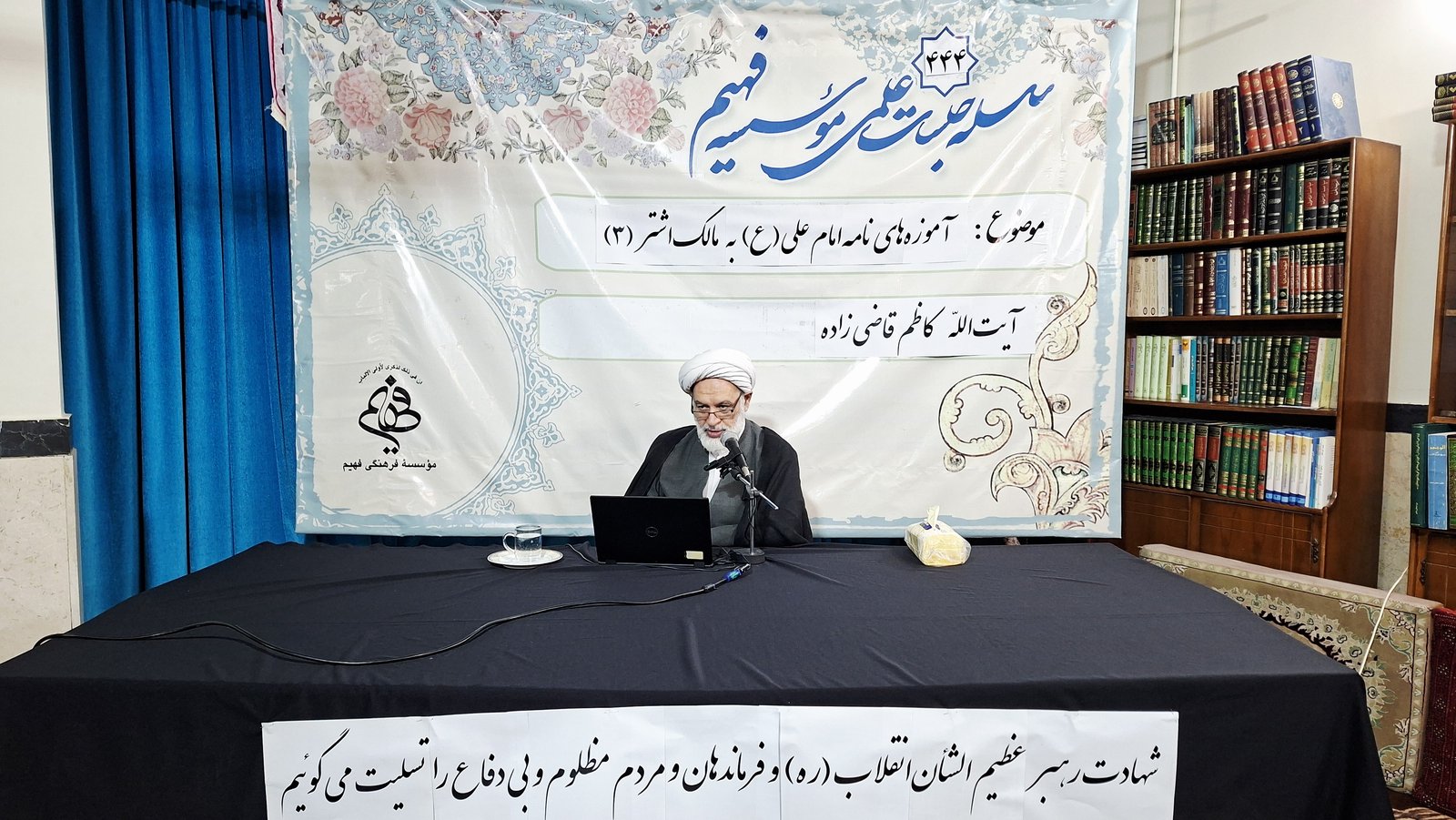
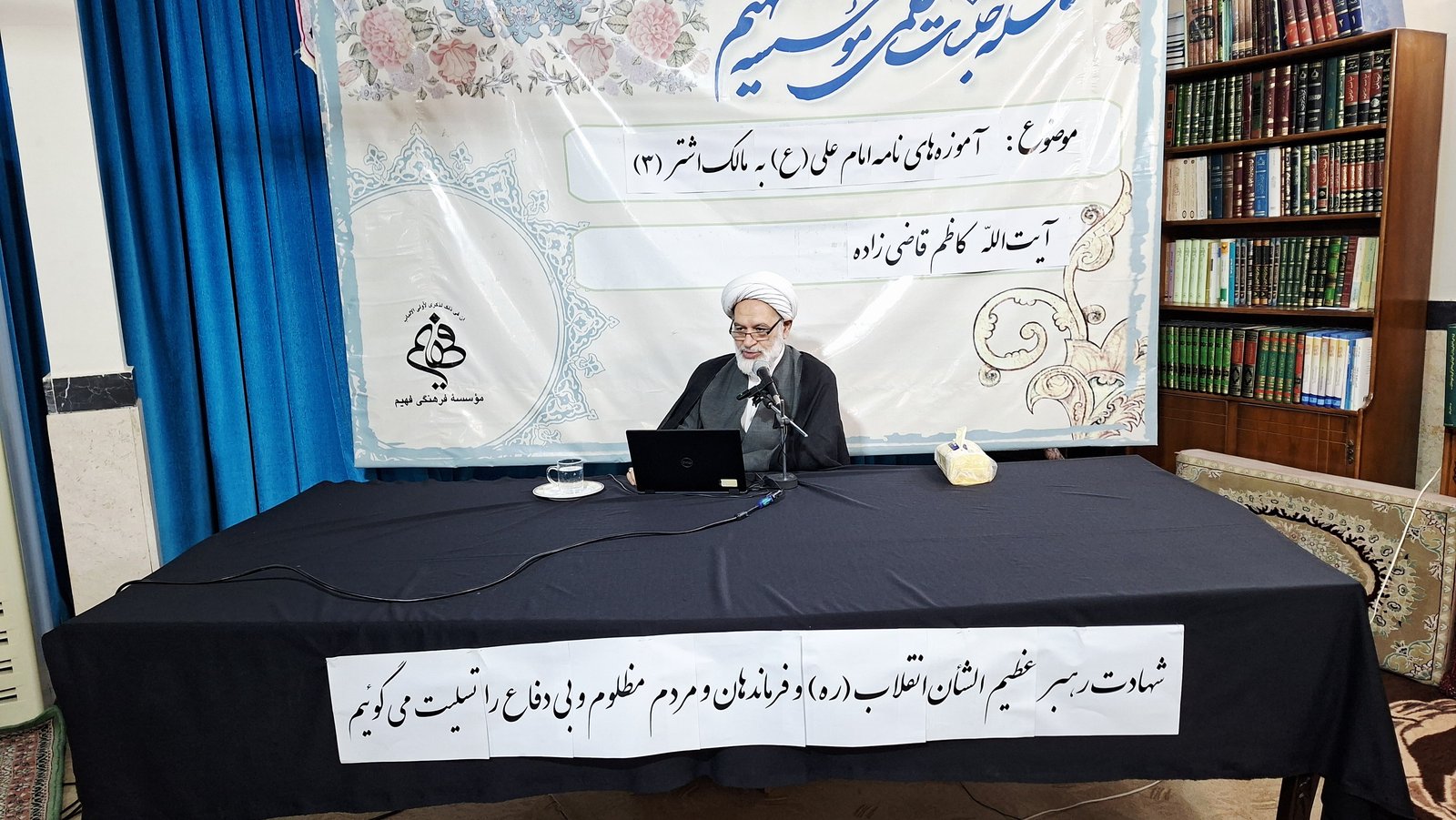
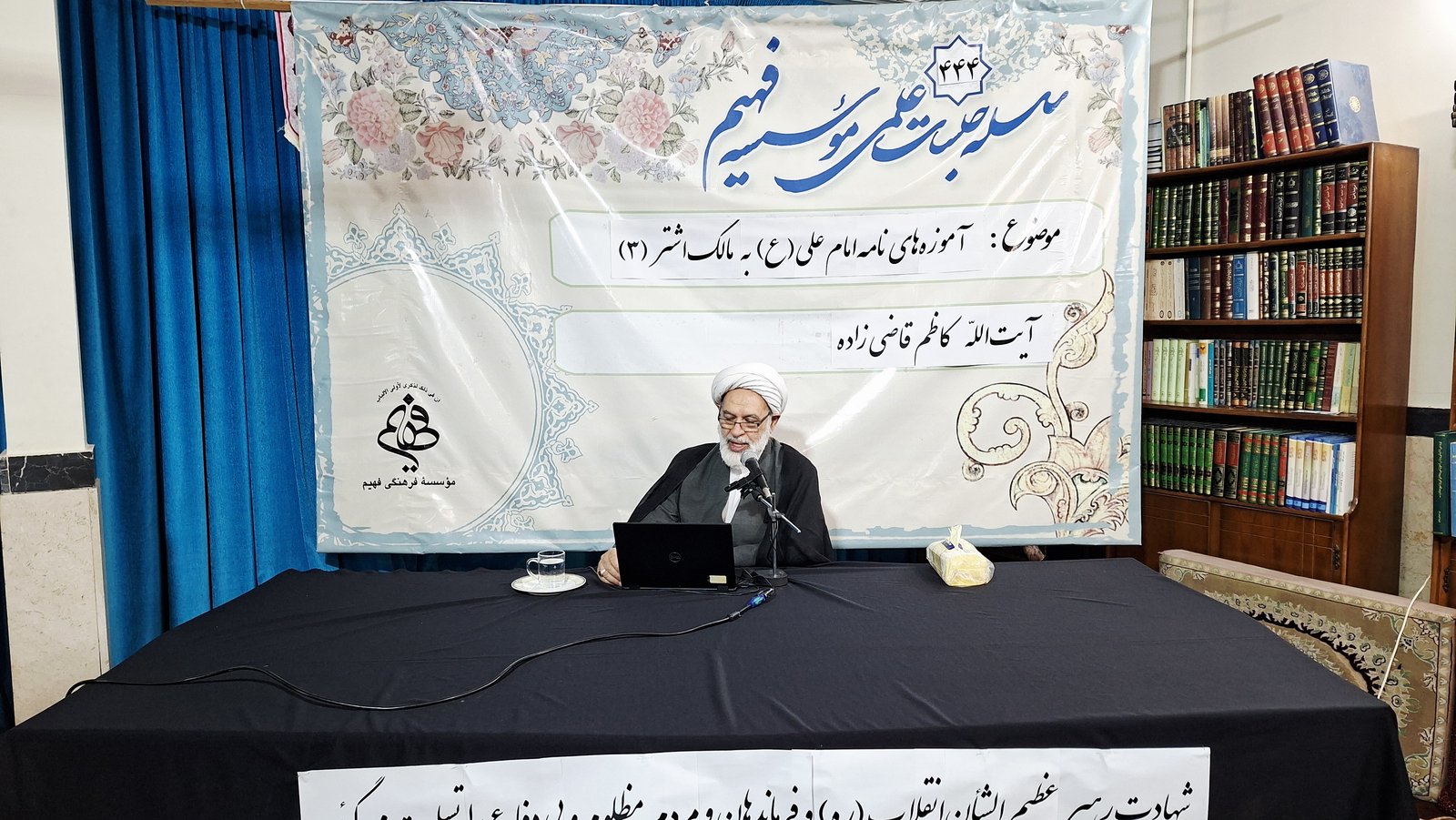
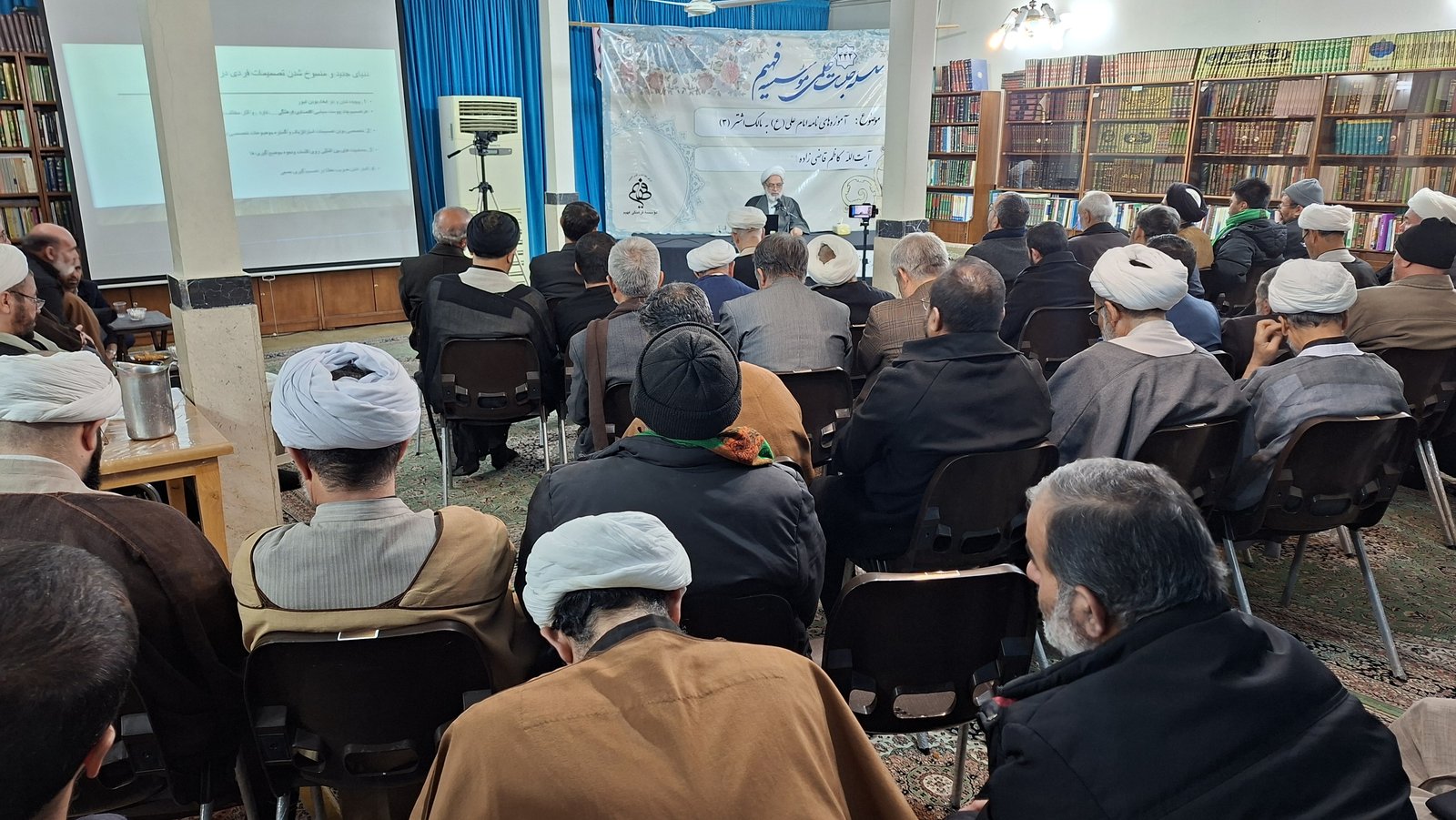
The Four Hundred and Forty-Fourth Session of Professor Ghazizadeh
أعوذ بالله من الشيطان الرجيم بسم الله الرحمن الرحيم الحمد لله رب العالمين، وصلى الله على محمد وآله الطاهرين، سيما بقية الله في الأرضين، أرواحنا وأرواح العالمين له الفداء.
First of all, we give thanks to God Almighty that, in critical circumstances and in conditions of war, the question of the third Leadership was settled by the Assembly of Experts. As is being discussed on social media, on television and in the foreign media, this choice has been regarded as an advance in confronting the enemy. We hope that God Almighty will grant His favour and success to the third Leader of the Islamic Republic, so that he may succeed in reforming the affairs of society, struggling against the enemy, achieving victory over the enemies, and fostering genuine concord, unity and solidarity, as well as in winning the satisfaction of all strata of the Islamic society. We also hope that, with the youthfulness of the third Leader, greater strides will be taken towards the general satisfaction of the people and the development and progress of the Islamic society.
Our discussion concerned the teachings of Imam Ali (AS) to Malik al-Ashtar. We now turn to the next part of these teachings, whose subject is "consultation". In this letter, the Imam (AS) advises against consulting three groups: «لا تُدْخِلَنَّ فِي مَشُورَتِكَ بَخِيلًا…، وَلَا جَبَانًا…، وَلَا حَرِيصًا…» The Imam says: do not consult three groups, the miserly, the cowardly and the greedy; for each of these three groups inflicts serious harm upon government, and what unites all these harms is thinking ill of God.
It can be inferred from this expression that the very principle of "consultation" in government is accepted and desirable; for the Imam does not say "do not consult", but rather "do not consult these three groups". That is, one must consult others. This shows that "consultation" occupies a fundamental place in the very process of governmental decision-making.
The Holy Qur'an also emphasises this matter, including in two important verses on consultation:
The verse «وَشاوِرْهُمْ فِي الأَمْرِ» in Surat Al 'Imran
The verse «وَأَمْرُهُمْ شُورى بَيْنَهُمْ» in Surat al-Shura
The first verse was revealed after the episode of the Battle of Uhud, when the Muslims disagreed about where the battle should be fought. Although the Prophet's own view was to remain in Medina, he accepted, on the basis of the majority opinion, to go out of Medina. In this battle the Muslims were, outwardly, defeated. After the battle, some might have said, "Why did the Prophet consult them?"; yet the Qur'an said:
«وَشاوِرْهُمْ فِي الأَمْرِ»: not only was the Prophet not asked to set consultation aside, but he was told to continue doing so.
Qur'anic exegetes have mentioned several underlying wisdoms for this:
First: although the Infallible himself is the most knowledgeable, he was commanded to consult, so that non-infallible rulers would be bound to consult a fortiori.
Second: consultation is not merely "instrumental" (tariqi) but has "intrinsic" (mawdu'i) value; that is, since the ruler's decision affects the lives of the people, the people must be given a share in the decision-making process, even if the final view is not the one the Prophet had initially discerned.
Third: consultation fosters the growth of the people and confers dignity and standing upon them. When people feel that they participate in decisions, they come closer to social maturity.
Alongside these, there is also the possibility that «عَزْم» (resolve) in the verse means deciding on the basis of the outcome of the consultation and then placing one's trust in God; not that consultation takes place while the final decision is made independently of it.
The second verse, «وَأَمْرُهُمْ شُورى بَيْنَهُمْ», likewise stresses that the social affairs of the believers must be managed on the basis of consultation.
The narrations also place great emphasis on consultation, including:
«من استبدّ برأيه هلك، ومن شاور الرجال شاركهم في عقولهم»
That is, whoever insists on his own opinion perishes, and whoever consults others shares in their intellects.
And: «عَظِّمُوا آراءَ الرِّجالِ بِبَعْضِها بَعْضًا…» Moreover, at the present time, the complexity of the affairs of government, the specialised nature of issues, the vast scope of political, economic, cultural and security matters, and the consequences of major decisions all show that consultation is more necessary than ever before. Major decisions today are usually accompanied by cultural, social and economic impact assessments, and they are not possible without consulting numerous experts.
Thus, the principle of consultation in government is definitive and irreplaceable.
We now turn to the advice of the Commander of the Faithful (AS) concerning the three groups who are unsuitable for consultation:
1. The Miserly
The Imam states that the miserly person is one who obstructs generosity and bounty and constantly holds the government back from spending for the welfare of the people. In major decisions, such people extinguish the spirit of development, construction and responsibility. 2. The Cowardly
The coward is one who makes a person fearful of undertaking great endeavours. Fear stands in the way of courage in vital decisions, such as confronting the enemy and carrying out serious reforms.
3. The Greedy
The greedy person is one who makes greed and worldliness appear attractive and drives the ruler towards amassing wealth and privileges. The result is a departure from justice and a fall into the trap of corruption.
The Imam explains the root of these three traits as follows:
«فإنّ البخل والجبن والحرص غرائز شتّى يجمعها سوء الظنّ بالله»
That is, the source of miserliness, cowardice and greed is thinking ill of God.
The Commander of the Faithful (AS) then points to the criteria for selecting officials. The three important criteria are:
1. Having No Record of Wrongdoing
The Imam says: do not employ those who were ministers of previous tyrannical governments or who shared in their sins, for they have grown accustomed to oppression. He says: choose from among the people those who possess the same ability and skill but have no record of corruption and oppression.
2. Speaking the Truth and Avoiding Flattery
An official must not be a flatterer or a mere yes-man. He must be able to speak bitter truths and must not go along with the ruler in actions with which God is not pleased.
3. Truthfulness and Piety (Wara')
An official must be a person of wara' (avoidance of doubtful matters) and truthfulness. The Imam says: take care that there do not gather around you those who constantly praise you and credit you with merit even for things you have not done; for this breeds vanity and arrogance and diverts the ruler from the path of truth.
In conclusion, we ask God Almighty to grant all of us the success of benefiting from the Nights of Qadr, especially the twenty-third night. We also pray that the current problems and threats be lifted from the Islamic Ummah, and that security, tranquillity and goodness be granted to the Islamic society.
والسلام عليكم ورحمة الله وبركاته.
Comments
No comments yet. Be the first.
Write a note, critique or commentShare your view with us and other readers without leaving this page.