


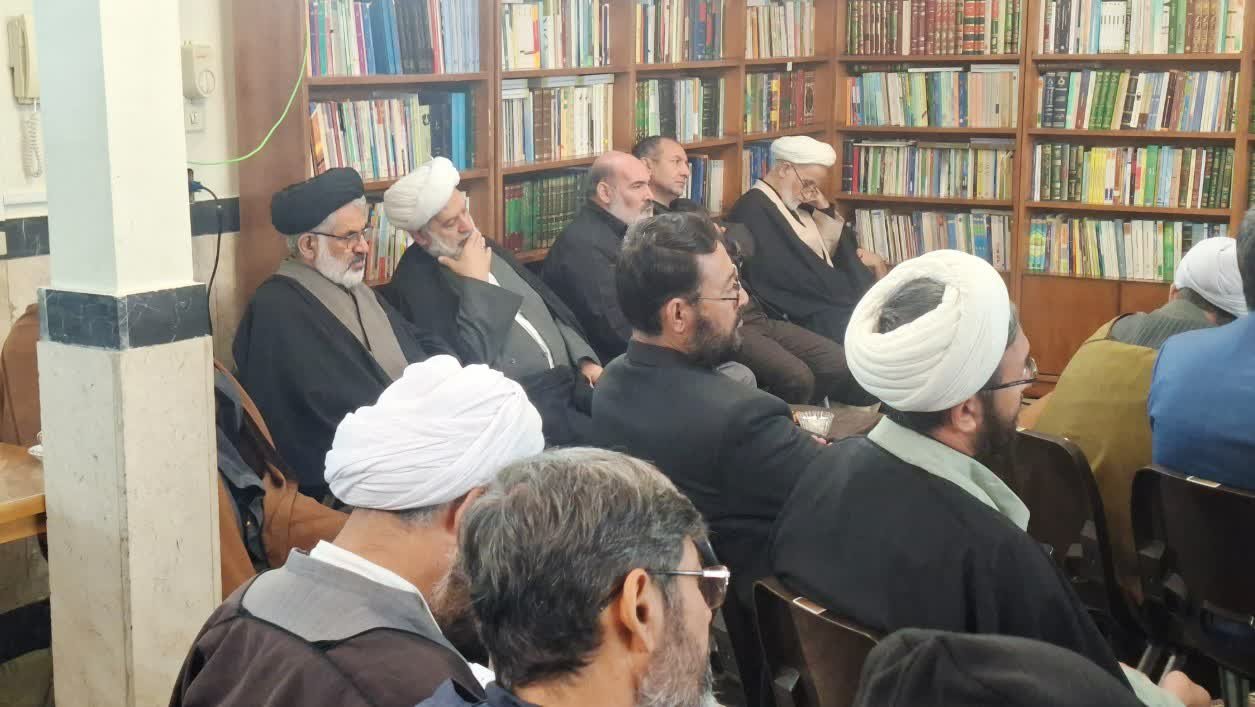
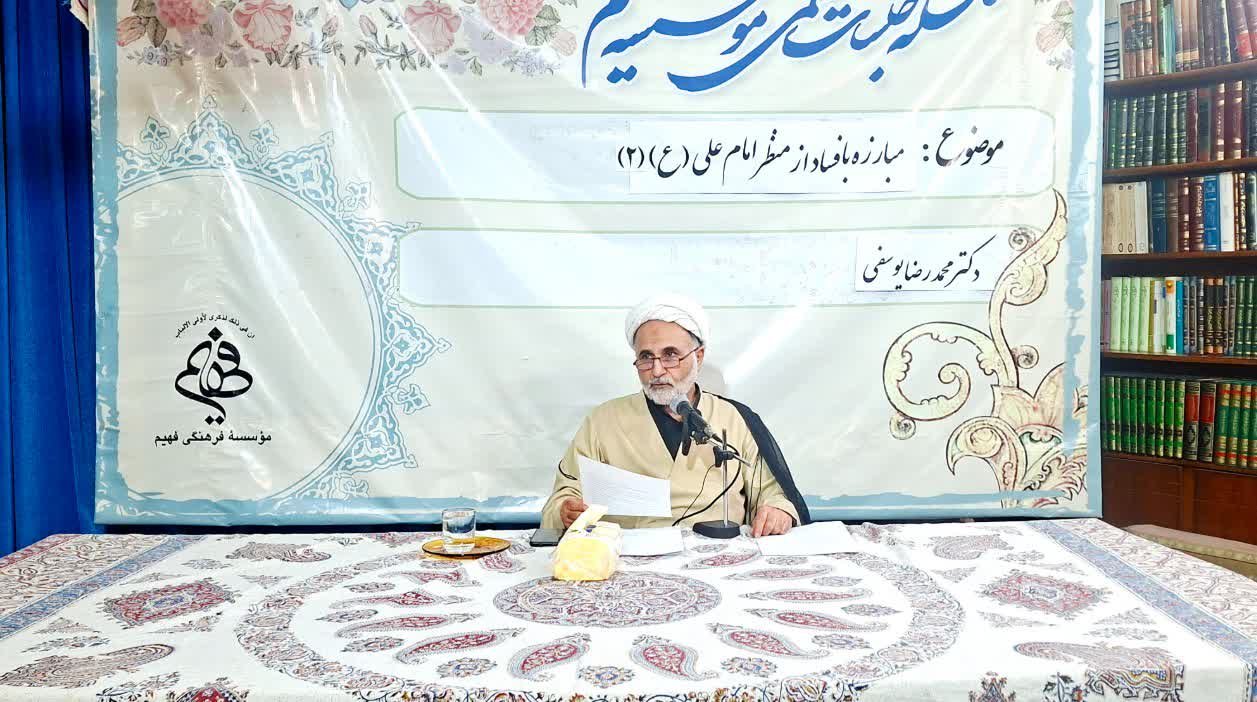
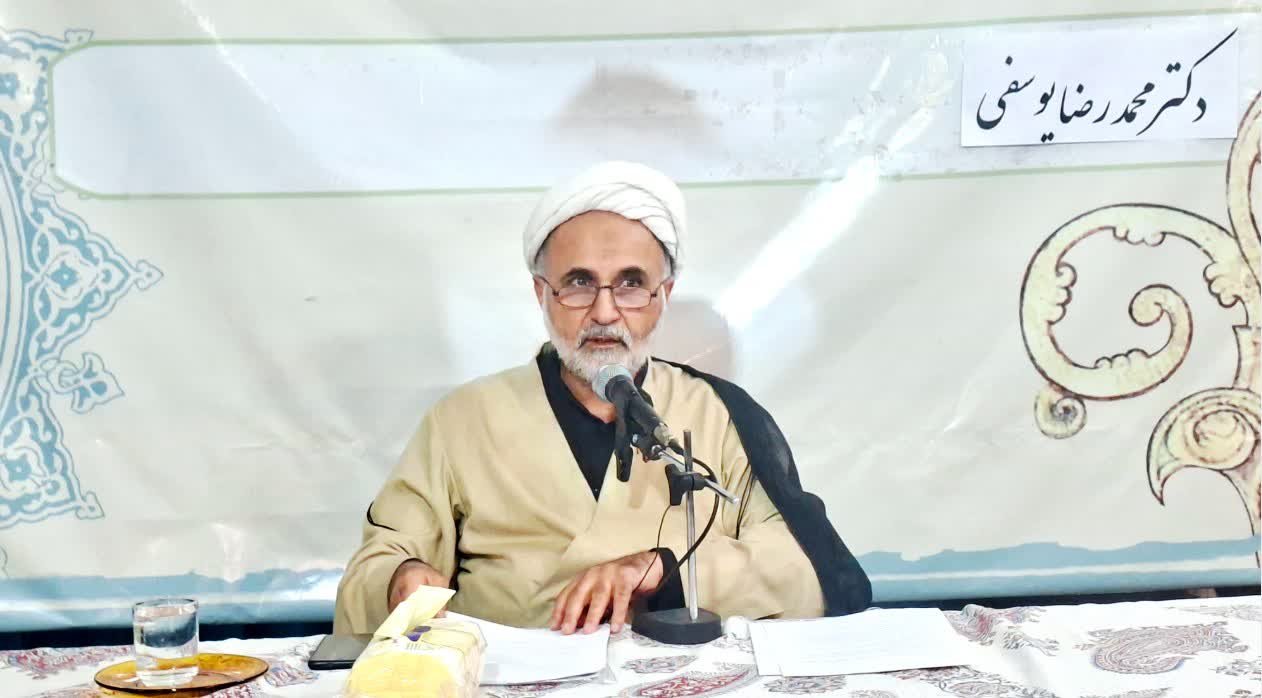
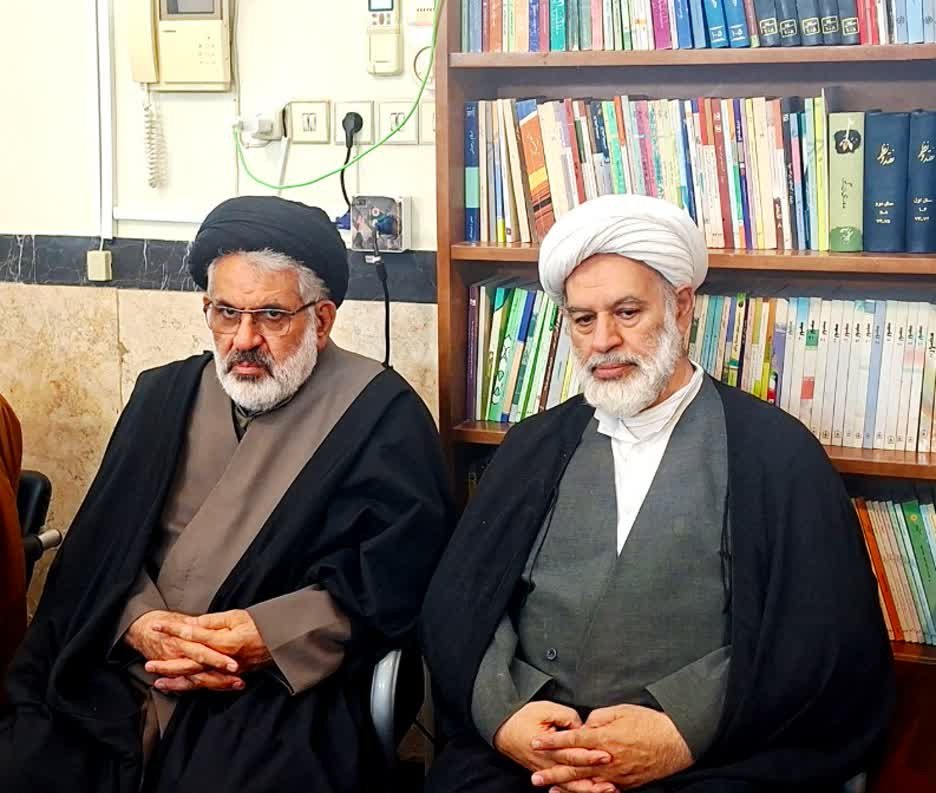
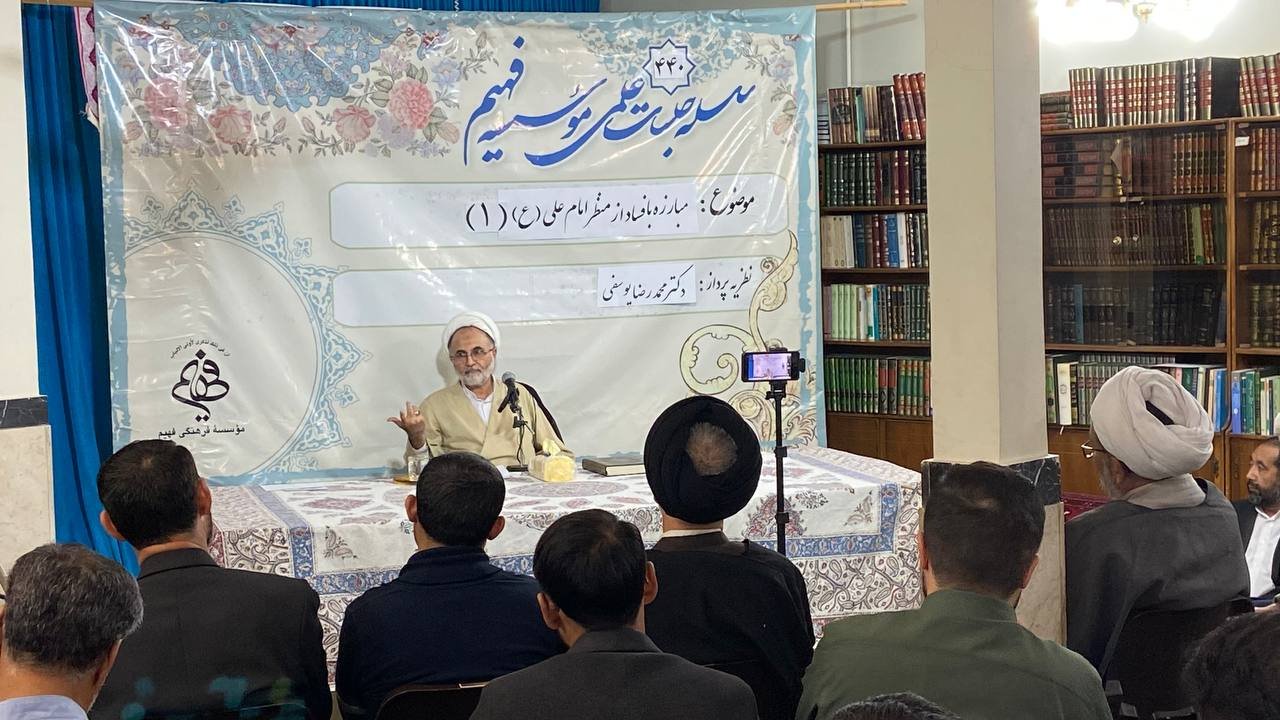
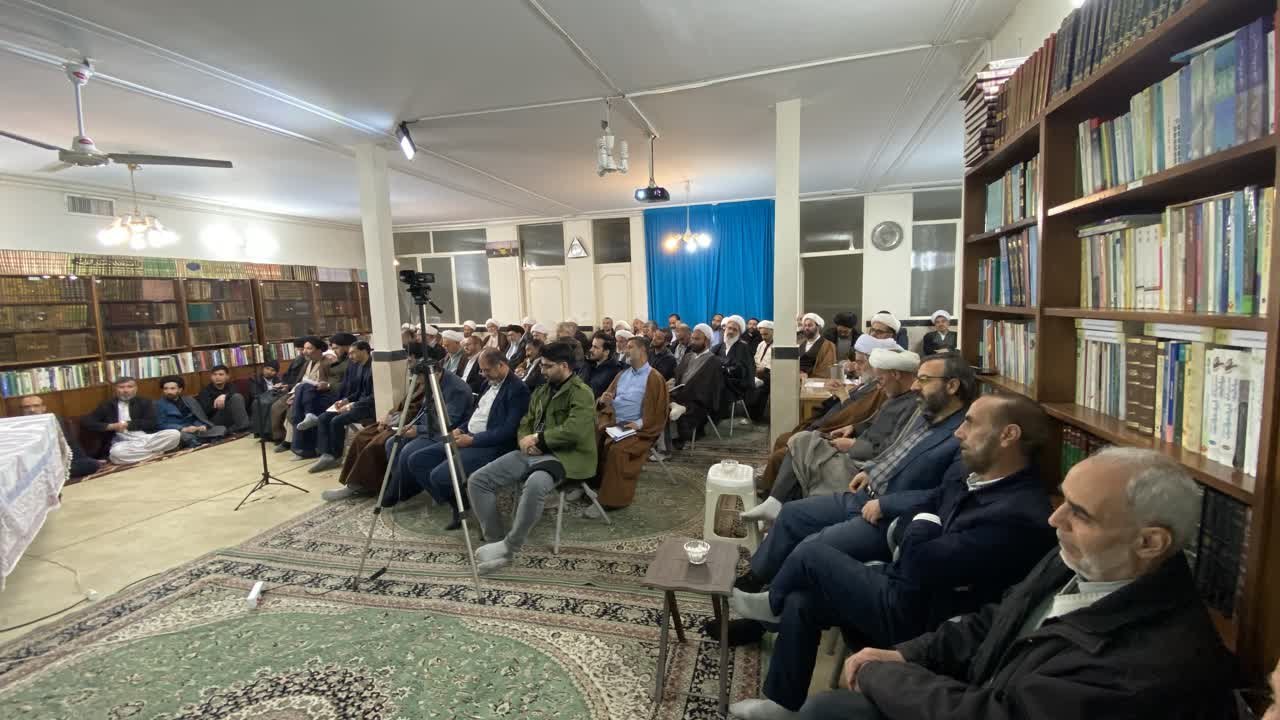
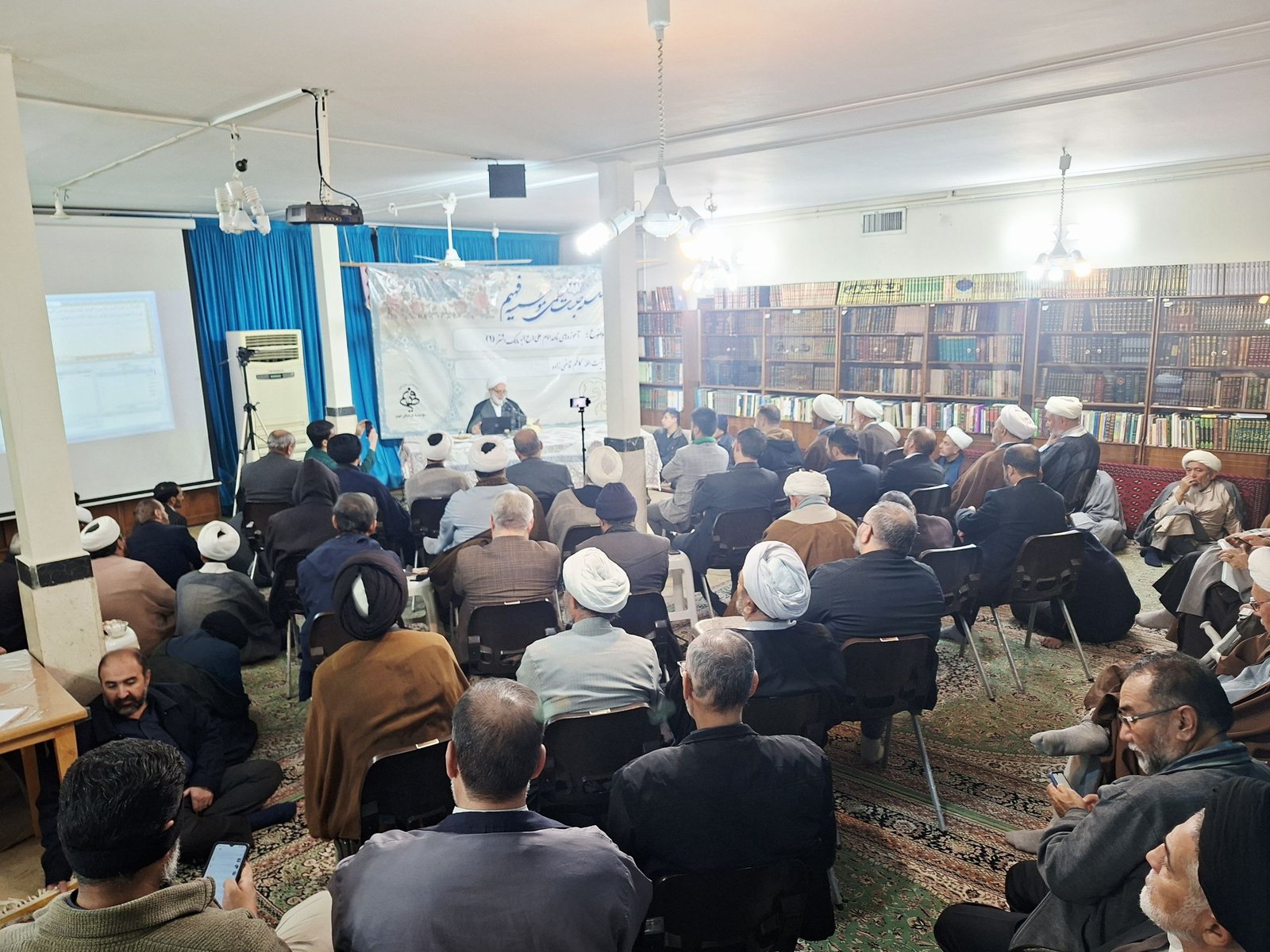
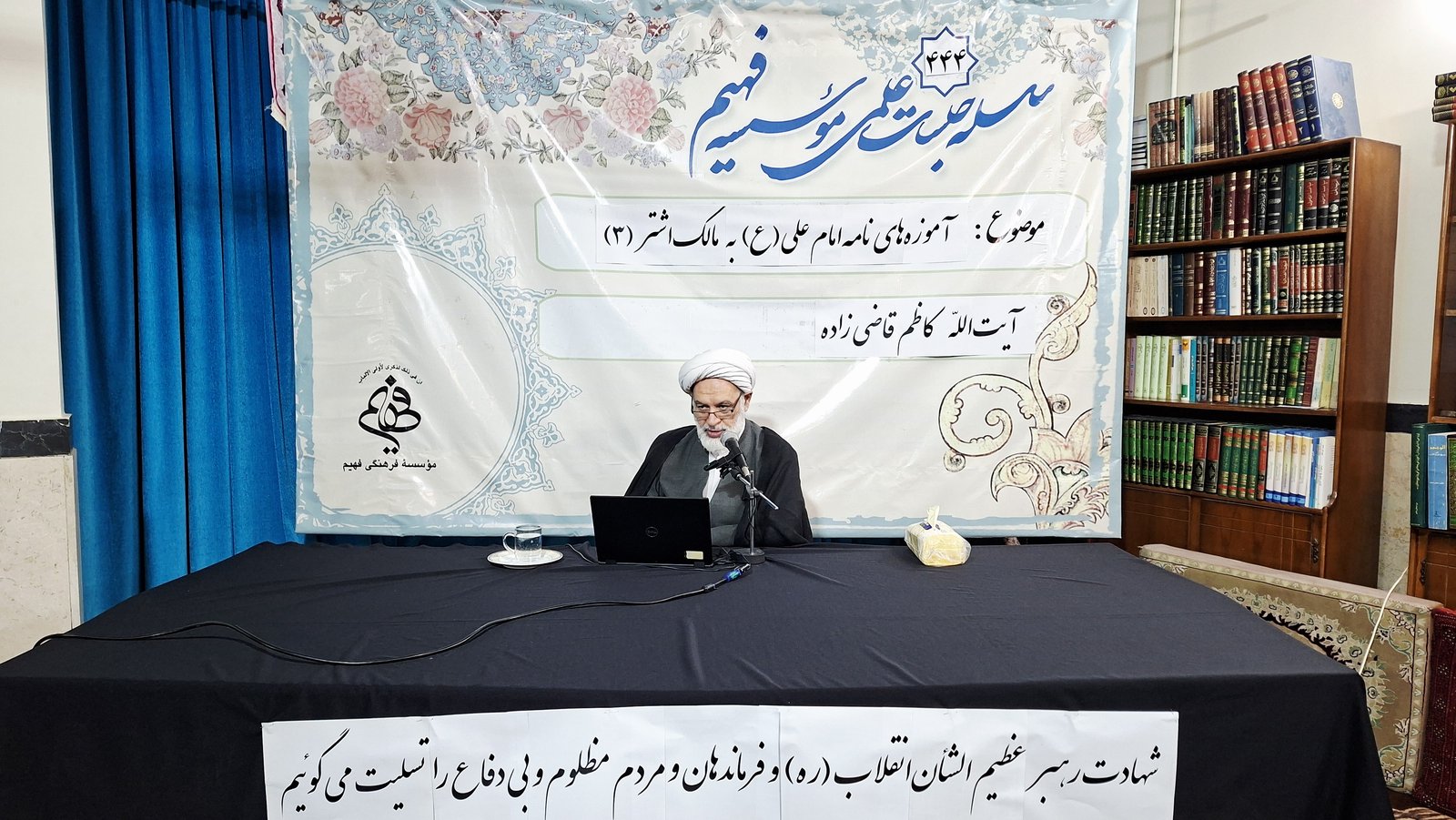
Lecture by Dr. Mohammad Reza Yousefi
الحمدُ للهِ ربِّ العالمین، و الصلوةُ و السلامُ علی سیدِ الأنبیاء و المرسلین، ابیالقاسم محمد، و علی آله الطیبین الطاهرین، و اللعنُ الدائمُ علی أعدائهم أجمعین.
In the days we are living through, we are unfortunately witnessing a criminal attack on our country, and in the very first days the Leader was martyred. God willing, all the sinister aims that the enemies harboured will come to nothing, and our country will emerge with its head held high from this predicament that has been created. For the joy of the souls of all the departed, especially the martyred Leader of the Revolution, please recite a Fatiha.
The subject on which we are at the service of our esteemed audience in these sessions is "Combating Corruption from the Perspective of Amir al-Mu'minin (AS)". In the previous session, we set out some issues at the macro level; including when the discussion of "good governance" was raised in the contemporary world and what characteristics this concept has. It was agreed that in this session we would speak specifically about the method by which Amir al-Mu'minin (AS) combated the phenomenon of corruption in his own government.
In today's world, as in many past societies, the issue of corruption and the fight against it is one of the most important issues of governance. Based on the experience gained in the contemporary world, a set of proposals and guidelines for confronting corruption has been put forward. If we wish to state this subject briefly, combating corruption is usually discussed in three stages:
First, "prevention"; second, "transparency and oversight"; and third, "deterrence and punishment"
At the stage of prevention, policies are put forward that reduce the conditions for corruption. One of the most important of these is "the rule of law" and the guarantee of equality in society. The rule of law means that the conduct of the government and its institutions is predictable; in such a way that economic actors and the people know what the laws and regulations are and are not suddenly confronted with changeable and unpredictable decisions.
Another important issue in preventing corruption is "the removal of monopoly" in the spheres of politics and the economy; for monopoly provides the ground for rent-seeking and corruption.
The third issue is the creation of transparent information and electronic systems. In today's world there is great emphasis on transparent information systems. Even in our own country there have been experiences of this kind. For example, in 1394, when the issue of the smuggling of goods and foreign currency was under discussion and it was estimated that there was around twenty billion dollars of smuggling in the country, with the launch of certain electronic systems at border crossings, about five billion dollars of this smuggling was reduced. This shows the extent to which information transparency can reduce the conditions for corruption.
Among the other factors of prevention is "a merit-based system" in the selection and recruitment of officials. If the most competent individuals are placed in positions of responsibility, more rational and more specialised decisions will be made and the conditions for corruption will be reduced.
The second stage is "transparency and oversight". In this part, transparency in financial resources is very important. For example, it must be clear where the financial resources of an election candidate have come from. Likewise, the manner in which government budgets are allocated must be entirely clear and traceable.
Another important issue in this area is "conflict of interest". In many systems a person may be both the executor and the overseer; in such a situation the likelihood of corruption increases greatly. Therefore, mechanisms must be designed to prevent conflicts of interest.
Another important feature of the government of Amir al-Mu'minin (AS) was "the integrity of the ruler himself". He even waived his legal right to receive a share of the public treasury (bayt al-mal) and lived a simple life. He showed the same strictness in dealing with those close to him; as in the episode of his brother Aqil, he refused to give him even an iota of the public treasury unjustly.
In the government of Amir al-Mu'minin, officials were selected on the basis of merit. In the sermons and letters of Nahj al-Balagha it is repeatedly emphasised that people of knowledge, piety and experience must be placed in positions of responsibility.
Alongside this, oversight of officials was also very serious. He would assign individuals, openly and covertly, to monitor the performance of officials, and would examine their reports.
On the other hand, if corruption was proven, it was dealt with very decisively. Amir al-Mu'minin (AS) not only recovered illegitimate property, but also punished the offender so that others might take heed.
The totality of these principles—that is, meritocracy, transparency, oversight and decisive action against corruption—are the very principles that are put forward today in the literature of good governance.
The difference is that Amir al-Mu'minin (AS), in addition to these, also emphasised ethics, trustworthiness and the divine responsibility of rulers.
If these principles are properly implemented in any society, they can lay the ground for reducing corruption and for the formation of sound governance.
Likewise, the existence of independent and effective oversight institutions and an independent judiciary is among the most important factors in confronting corruption. Alongside these, the protection of those who report corruption is also of great importance. In many countries, if a person reports corruption and his report is correct, a percentage of the amount uncovered is awarded to him, so that people are encouraged to expose corruption.
At the third stage, the discussion of "deterrence and punishment" arises; that is, if corruption occurs, it must be dealt with decisively and effectively.
Now, if we look at the conduct of Amir al-Mu'minin (AS), we see that in his government he applied precisely these principles; with the difference that, in addition to these, he also put forward another important principle, namely "a view of government as a trust (amanah)".
Amir al-Mu'minin (AS), in a letter to al-Ash'ath ibn Qays, says: this power that is in your hands is not a morsel to be devoured, but rather a trust upon your neck. That is, the ruler must not regard government as his personal property, but must regard himself as the trustee of the people.
Comments
No comments yet. Be the first.
Write a note, critique or commentShare your view with us and other readers without leaving this page.