


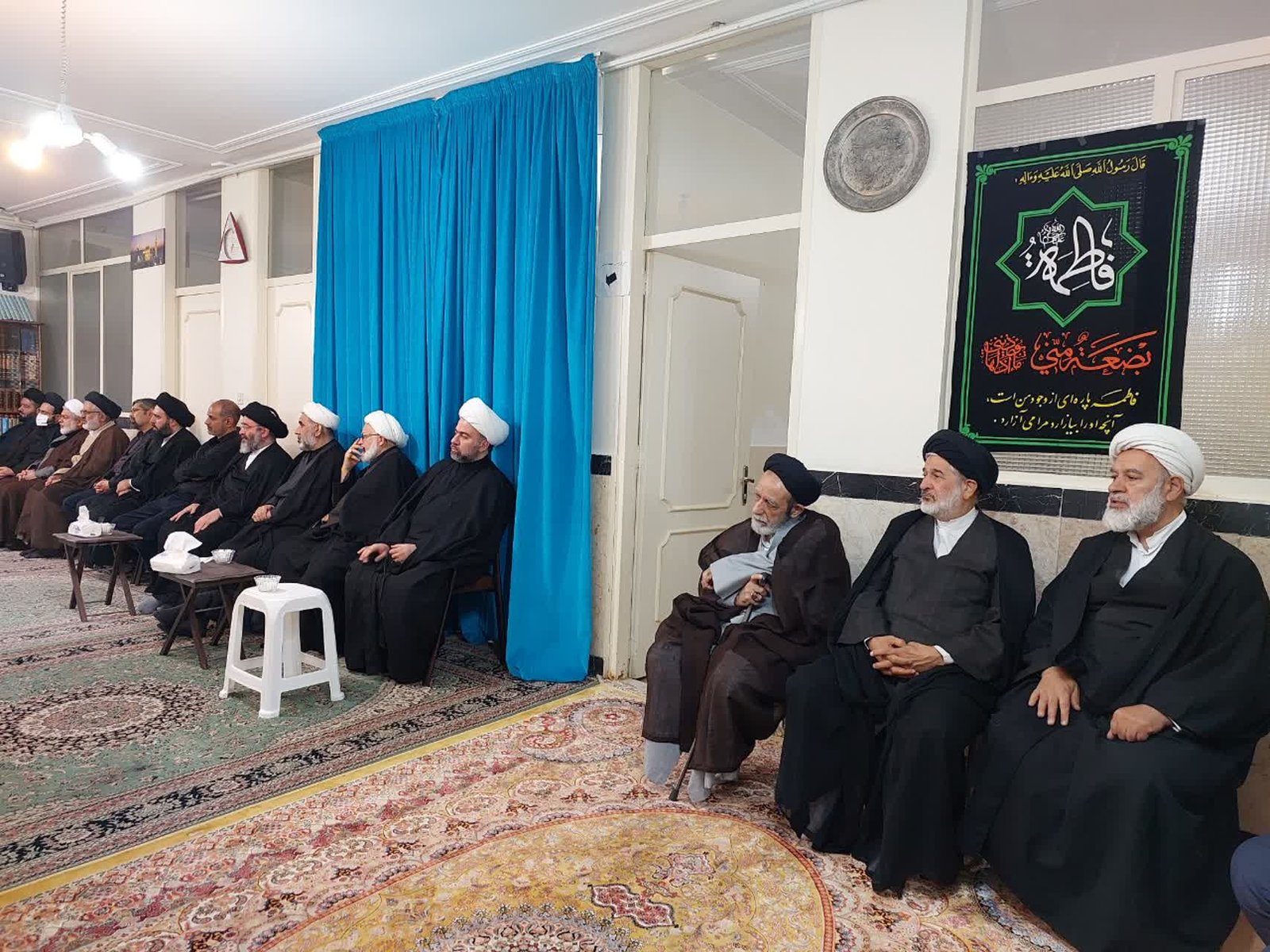
بسم الله الرحمن الرحیم
أعوذُ بِاللهِ مِنَ الشَّیطانِ الرَّجِیم. بِسْمِ اللَّهِ الرَّحْمَنِ الرَّحِیمِ. الْحَمْدُ لِلَّهِ رَبِّ الْعَالَمِینَ وَ الصَّلَاةُ وَ السَّلَامُ عَلَی سَیِّدِنَا وَ نَبِیِّنَا أَبِی الْقَاسِمِ الْمُصْطَفَی مُحَمَّدٍ (صَلَّی اللَّهُ عَلَیْهِ وَ آلِهِ) وَ آلِهِ الطَّیِّبِینَ الطَّاهِرِینَ الْمَعْصُومِینَ، لَاسِیَّمَا بَقِیَّةِ اللَّهِ فِی الْأَرَضِین.
The eve of the martyrdom of the Truthful and Pure Lady, Fatima al-Zahra (SA), the great lady of the history of Islam and of humanity, is a precious opportunity for reflection and contemplation on topics related to her. In past years, on occasions when fortune favoured us, we spoke from various angles; but a certain event led me to reflect and conduct some research on the topic known as the "Mushaf of Lady al-Zahra (SA)," and also to write a brief treatise on the subject. In the course of that research it became clear to me that the path of inquiry in this area is far from smooth and involves complexities, some of which I shall point out on this occasion.
Upon careful investigation, in our narrative sources such as al-Kafi, Basa'ir al-Darajat and Bihar al-Anwar, about twenty-eight narrations in total have been reported concerning the Mushaf, many of which have similar and closely related content. Independent studies, or what today would be called "monographs," on this topic have been rare in recent years. Perhaps the first figure in the present age to open the discussion in this field and to address some of its obscure aspects was the late Ayatollah Sayyid Muhsin al-Amin al-'Amili (may God be pleased with him). Regrettably, in the recent editions of the noble book A'yan al-Shi'a, this discussion has been omitted. Although the World Forum for Proximity of Islamic Schools of Thought and the Ahl al-Bayt (AS) World Assembly have done valuable research on this work, they apparently did not notice that the discussion of the Mushaf of Lady al-Zahra (SA) is not in the main entry but appears in the introduction. The late Sayyid Muhsin al-Amin first quotes two narrations and then proceeds to resolve the apparent conflict between the narrations. The introduction to A'yan al-Shi'a is of great importance with regard to the place of Shi'ism in Islamic civilisation and the written heritage of the Shi'a. In the original copy (the Matba'at al-Insaf edition) that I had, after the end of the section on the Commander of the Faithful (AS), the section on Lady al-Zahra (SA) begins; unfortunately, in the new editions, even in the collection Fi Rihab A'immat Ahl al-Bayt, these sections have been separated, and this problem has arisen.
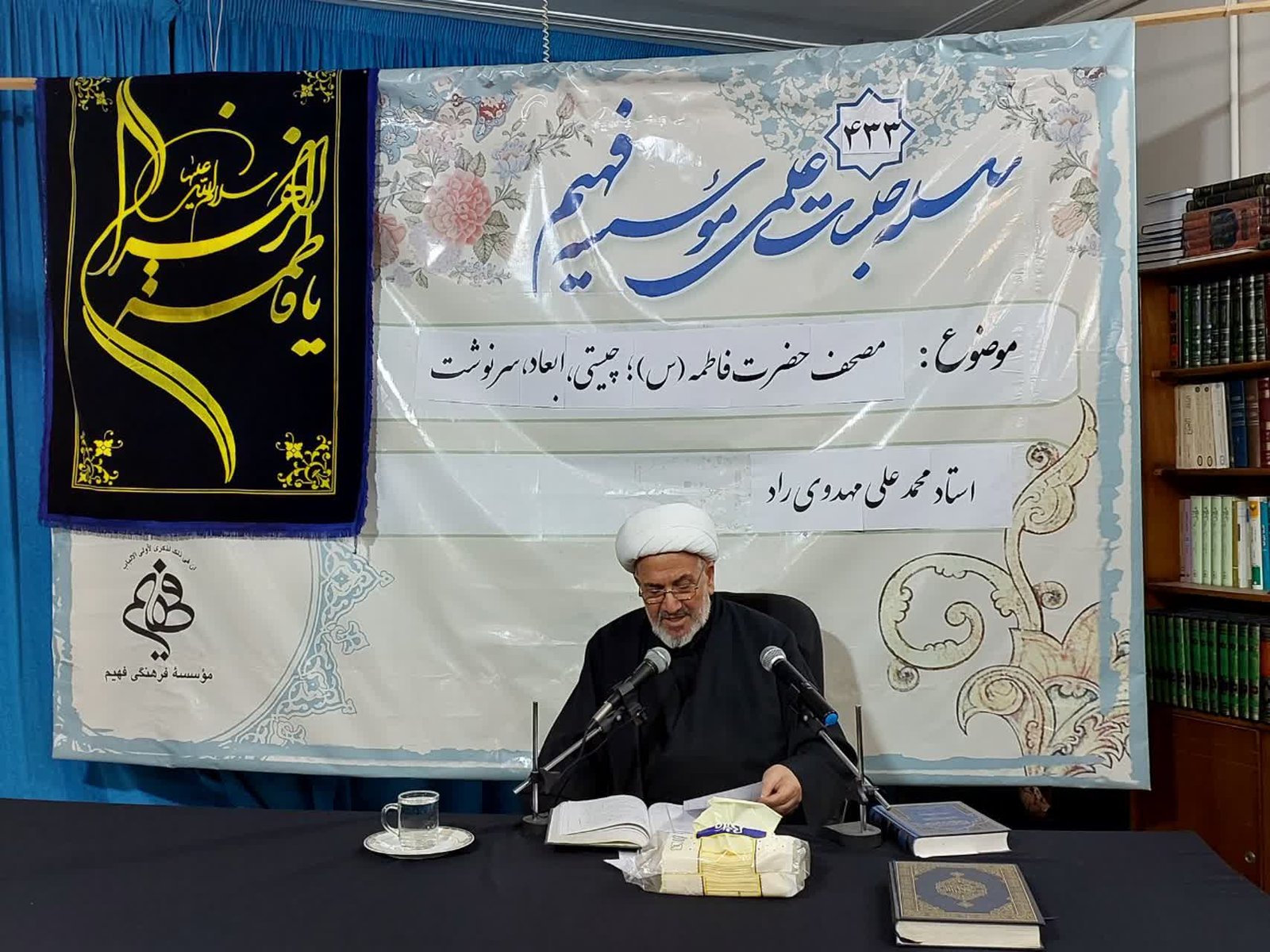
Among the collections of narrations, if we were to name the most comprehensive source, we should mention the book 'Awalim al-'Ulum. This book, with a little leniency, is admittedly almost the same as Bihar al-Anwar. The astonishing point is that when the late Ayatollah Sayyid Muhammad Baqir Muwahhid Abtahi published, for the first time, the volume of this book concerning Lady al-Zahra (SA), without the supplements and only with annotations, he came across a narration that the late Majlisi had reported, saying: «وَجَدْتُ فِی نُسْخَةٍ عَتِیقَةٍ... لَا أَصْلَ لَهَا» (I found it in an old copy that has no original source), and therefore I do not rely on it. I was curious to see what the respected author had done with this narration; I saw that he too had written: «وَجَدْتُ فِی نُسْخَةٍ لَا أَصْلَ لَهَا» (I found it in a copy that has no original source), but had reported it out of scholarly trustworthiness. However, in the "Mustadrak" edition that he produced, publishing the discussions concerning Lady al-Zahra (SA) in two thick volumes (about one thousand five hundred pages), all the narrations concerning the Mushaf have been gathered in one place.
Among these narrations, there is only one which states: «فِیهَا مِثْلُ قُرْآنِکُمْ هَذَا ثَلَاثَ مَرَّاتٍ وَ اللَّهِ مَا فِیهِ مِنْ قُرْآنِکُمْ حَرْفٌ وَاحِدٌ» (In it there is three times as much as this Qur'an of yours, yet by God, there is not a single letter of your Qur'an in it). But the narration indicating that the noble verse ﴿سَأَلَ سائِلٌ بِعَذابٍ واقِعٍ﴾ (A questioner asked about a punishment bound to befall) was in the Mushaf has no firm chain of transmission, and unfortunately some contemporary scholars have tried, on the basis of this very weak narration, to prove that the Mushaf of Fatima also contained the Qur'an, whereas this basis is not sound.
The crux of the discussion lies in the narration which states that Lady al-Zahra (SA) left behind a Mushaf that: «مَا هُوَ قُرْآنٌ وَ لَکِنْ کَلَامٌ مِنْ کَلَامِ اللَّهِ أَنْزَلَهُ عَلَیْهَا إِمْلَاءُ رَسُولِ اللَّهِ وَ خَطُّ عَلِیٍّ» (It is not Qur'an, but speech from the speech of God which He sent down upon her, dictated by the Messenger of God and in the handwriting of Ali). The difficulty lies precisely in the phrase «إِمْلَاءُ رَسُولِ اللَّهِ» (dictated by the Messenger of God). Here it seems that some eminent scholars have confused the issue. Other narrations state explicitly that after the passing of the Prophet (PBUH), Gabriel used to come to Lady al-Zahra (SA) to console her intense grief: «دَخَلَهَا غَمٌّ شَدِیدٌ... وَ کَانَ جَبْرَئِیلُ یَأْتِیهَا فَیُحْسِنُ عَزَاءَهَا عَلَی أَبِیهَا وَ یُطَیِّبُ نَفْسَهَا وَ یُخْبِرُهَا عَنْ أَبِیهَا وَ مَکَانِهِ وَ یُخْبِرُهَا بِمَا یَکُونُ بَعْدَهَا فِی ذُرِّیَّتِهَا وَ کَانَ عَلِیٌّ (ع) یَکْتُبُ ذَلِکَ فَهَذَا مُصْحَفُ فَاطِمَةَ» (Intense grief entered her... and Gabriel would come to her, offer her fine consolation for her father, soothe her soul, inform her about her father and his place, and inform her of what would happen after her among her offspring, and Ali (AS) would write it down; this is the Mushaf of Fatima).
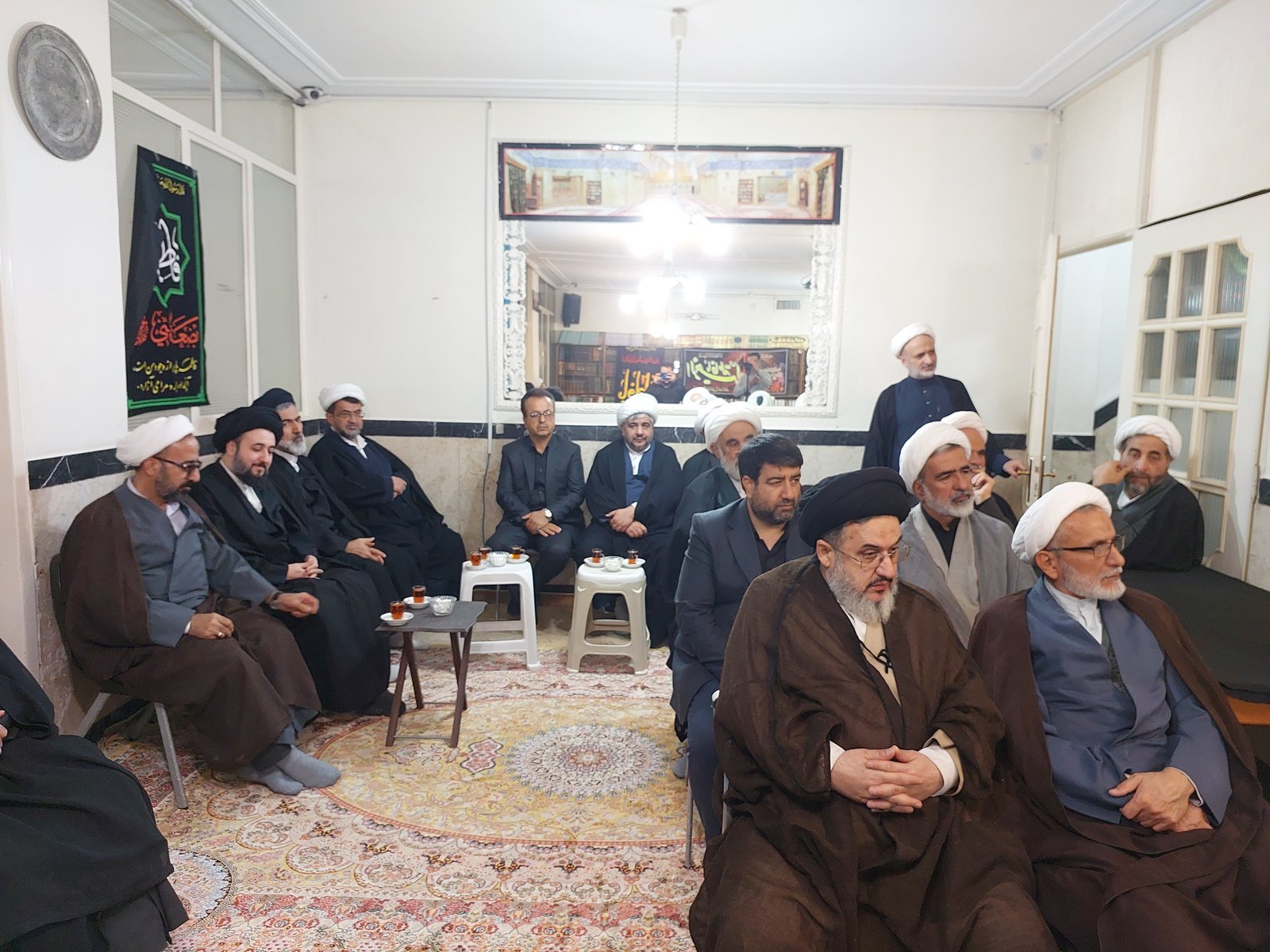
Before analysing the content, it is necessary to trace the genealogy of the word "mushaf." Contrary to the notion of the Salafis and Wahhabis, who claim that the word mushaf became current after Islam and refers exclusively to the Qur'an, and who on this pretext accuse the Shi'a of believing in another Qur'an for Lady al-Zahra, this word was also used in pre-Islamic literature and prose. Lexically, mushaf means «مَا جُعِلَ بَیْنَ الدَّفَّتَیْنِ» (that which is placed between two covers). Al-Jahiz in Kitab al-Hayawan, al-Khalil ibn Ahmad al-Farahidi in al-'Ayn, and other lexicographers have stated this meaning explicitly. Abu Ishaq al-Fazari even reports from al-Awza'i (d. 157 AH) that he had seen "a mushaf from among the mushafs of the Byzantines." Nasir al-Din al-Asad, in his valuable book Masadir al-Shi'r al-Jahili, has convincingly proved that writing was widespread in the pre-Islamic period and that the word mushaf was used for written compilations.
The first person in the contemporary period to beat the drum of accusation was 'Abd Allah ibn 'Ali al-Qasimi (known as al-Najdi). He wrote a book full of delusion entitled al-Sira' bayna al-Islam wa-l-Wathaniyya. The late Shaykh Abu al-Hasan al-Khunayzi (whom the Shi'a of the region called "al-Imam Abu al-Hasan al-Khunayzi") wrote a faithful and courteous refutation of him entitled al-Da'wa al-Islamiyya. Interestingly, al-Qasimi later turned away from Wahhabism as well, criticised the Wahhabi scholars, eventually inclined towards atheism, and died in Cairo in a pitiable condition. Yet, astonishingly, the Wahhabis still reprint his anti-Shi'i books! The late Allamah Amini (may God have mercy on him), in al-Ghadir, made precise references to his deviations and distortions of meaning.
Therefore, "mushaf" is a general name for a book and is not specific to the Qur'an. Concerning the Mushaf of Lady al-Zahra (SA), all the narrations agree that its scribe was the Commander of the Faithful, Ali ibn Abi Talib (AS). The statement of some scholars that the dictation was from Lady al-Zahra is probably a slip of the pen, for the narrations state: «أَمْلَاهُ اللَّهُ عَلَیْهَا وَ أَوْحَی إِلَیْهَا» (God dictated it to her and revealed it to her). Here an objection is raised: how could revelation be given to Lady al-Zahra? The answer is clear: the noble Qur'an uses the term revelation even regarding the honeybee (وَأَوْحَی رَبُّکَ إِلَی النَّحْلِ – and your Lord revealed to the bee). In religious literature we have the concept of "muhaddath" and "muhaddatha," that is, a person to whom the angels speak. Allamah Amini states explicitly in al-Ghadir that the Islamic community is in consensus that among earlier communities there were those upon whom angels descended (such as the Virgin Mary and the mother of Moses), and that this does not entail prophethood. The Sunnis even consider the second caliph to be a "muhaddath"; how is it, then, that when we come to Lady al-Zahra (SA), an angel's speaking with her is regarded as polytheism and unbelief?!
Now, the resolution of the conflict in the phrase «إِمْلَاءُ رَسُولِ اللَّهِ»:
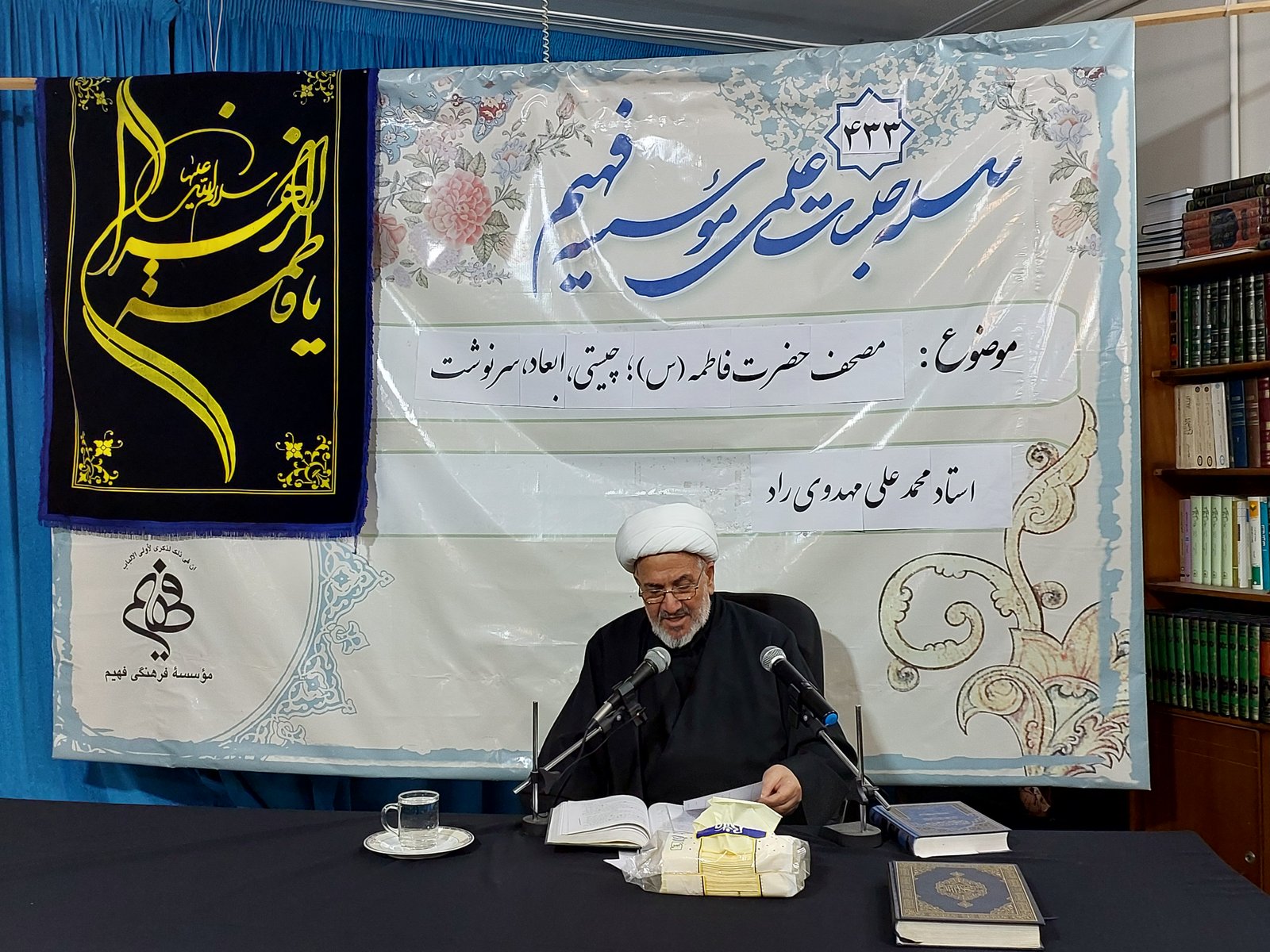
In some narrations the expression «إِمْلَاءُ رَسُولِ اللَّهِ» appears, and in others «إِمْلَاءُ اللَّهِ» or the descent of Gabriel. The late Sayyid Muhsin al-Amin suggested that there may have been two books: one containing rulings, which was dictated by the Prophet (PBUH), and the other the Mushaf of Fatima, which was dictated by Gabriel. Allamah Majlisi (may God be pleased with him), however, offers a more precise solution. He says that in many of these narrations, what is meant by «رَسُولِ اللَّهِ» is not the Noble Prophet (PBUH) but "the messenger of God," that is, Gabriel or a divine angel. The evidence for this claim is the numerous narrations which state explicitly that this took place after the passing of the Prophet (PBUH) to console Lady al-Zahra (SA). If we take "Messenger of God" to mean the Prophet, it would conflict with the explicit narrations about Gabriel's descent after his death. The noble Qur'an has also repeatedly applied the term "messenger" (rasul) to angels: ﴿إِنَّهُ لَقَوْلُ رَسُولٍ کَرِیمٍ﴾ (Indeed, it is the word of a noble messenger) (concerning Gabriel), or where Gabriel says to Mary (SA): ﴿إِنَّمَا أَنَا رَسُولُ رَبِّکِ﴾ (I am only the messenger of your Lord). Imam al-Rida (AS) also says: «الْمَلَائِکَةُ هُمْ رَسُولُ اللَّهِ» (The angels are the messengers of God).
Therefore, the Mushaf of Fatima (SA) is a book that, after the passing of the Noble Prophet (PBUH), was dictated to Lady al-Zahra (SA) by the trustworthy Gabriel and written down by the Commander of the Faithful (AS). Its contents include reports of the future, the standing of her descendants, the fate of rulers and kings, and her testaments; it contains no verses of the Qur'an and no legal rulings (the lawful and the unlawful), and this divine trust is now preserved with the Imam of the Age (may our souls be his ransom).
Now that the discussion has reached this point, I would like to take the opportunity to recite an elegy. A heart-rending narration has been reported from 'Ammar ibn Yasir describing the state of the Commander of the Faithful (AS) after the martyrdom of al-Zahra (SA). 'Ammar says: After the martyrdom of Lady al-Zahra, I saw that Ali (AS) rarely left the house. One day I went to him and found him sitting sorrowful, sunk deep in grief; Imam al-Hasan was on his right and Imam al-Husayn on his left, and he would look at al-Husayn (AS) and weep.
I could not bear it; my sobs burst forth and I wept bitterly. When I had calmed down, I said: "O my master and my lord! You who are a mountain of patience and who call us to forbearance, what is this prolonged grief?"
He looked at me and said: «یَا عَمَّارُ! إِنَّ الْعَزَاءَ لَمِثْلِی فَقَطْ» (O 'Ammar! Condolence and consolation befit only someone like me). "In losing Fatima, I did not lose only my wife; rather, I lost the Messenger of God once again. Whenever the sorrow of the world weighed heavily on my heart, I would look at Fatima's face and my sorrows would be eased. When she spoke, it was as if I heard the voice of the Messenger of God, and when she walked, the conduct and bearing of the Prophet took shape before my eyes. Now, with her departure, I no longer have any refuge..."
Then he spoke a sentence that sets the world ablaze: «وَ إِنَّ أَعْظَمَ مَا لَقِیتُ وَ مِنْ مُصِیبَتِهَا...»; 'Ammar! My greatest pain was the moment I wished to wash her body. When I drew back the garment, «رَأَیْتُ ضِلْعاً مِنْ أَضْلَاعِهَا مَکْسُوراً وَ رَأَیْتُ سَوَاداً فِی جَنْبِهَا...» (I saw one of her ribs broken, and I saw a bruise on her side...); I saw that her side was broken and her chest had turned black from the blows of the whip... and Fatima had hidden these from me...
«وَ سَیَعْلَمُ الَّذِینَ ظَلَمُوا أَیَّ مُنْقَلَبٍ یَنْقَلِبُونَ»
Comments
No comments yet. Be the first.
Write a note, critique or commentShare your view with us and other readers without leaving this page.