


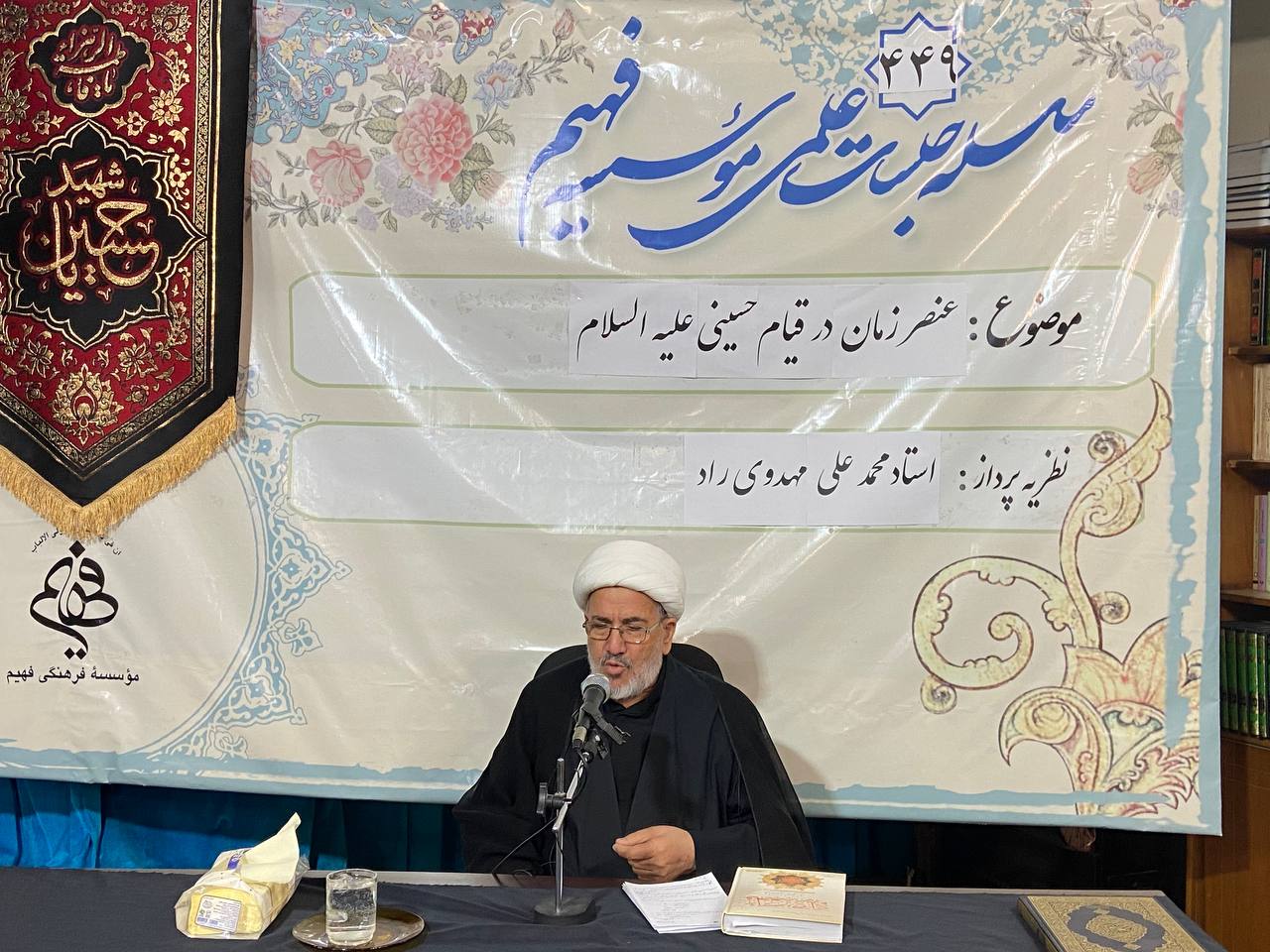
An Introduction to and Reflection on Surat al-'Asr
«بِسْمِ اللَّهِ الرَّحْمَنِ الرَّحِيمِ. الْحَمْدُ لِلَّهِ رَبِّ الْعَالَمِينَ. السَّلَامُ عَلَى سَيِّدِنَا وَ نَبِيِّنَا أَبِي الْقَاسِمِ الْمُصْطَفَى مُحَمَّدٍ صَلَّى اللَّهُ عَلَيْهِ وَ آلِهِ بَيِّنَةِ الْمَعْصُومِينَ.» «بِسْمِ اللَّهِ الرَّحْمَنِ الرَّحِيمِ. وَالْعَصْرِ * إِنَّ الْإِنسَانَ لَفِي خُسْرٍ * إِلَّا الَّذِينَ آمَنُوا وَعَمِلُوا الصَّالِحَاتِ وَتَوَاصَوْا بِالْحَقِّ وَتَوَاصَوْا بِالصَّبْرِ.» Surat al-'Asr is one of the Meccan surahs, and in the early Islamic centuries it received far more attention from exegetes than in later centuries. Because they breathed the atmosphere in which the verses were revealed, they probably grasped truths that today lie beyond the reach of our understanding. The first days of the Prophetic mission in Mecca were extremely hard and heavy days for the believers, to the point that they had refuges and hiding places which, in the words of the revolutionaries of the years of struggle, resembled "safe houses"; the house of Zayd ibn Arqam, for example, was counted among these bases. The believers would gather in these small circles in the darkness of night, hold their discussions and make their plans, and upon parting they would join hands and recite Surat al-'Asr; in fact, their farewell was Surat al-'Asr. Muhammad ibn Idris al-Shafi'i says in this regard that had the Messenger of God (PBUH) brought only this one surah for the guidance of humankind, it would have sufficed, a statement which, taken as a whole, is truly worthy of reflection.
Framing the Discussion and the Concept of Righteous Deeds
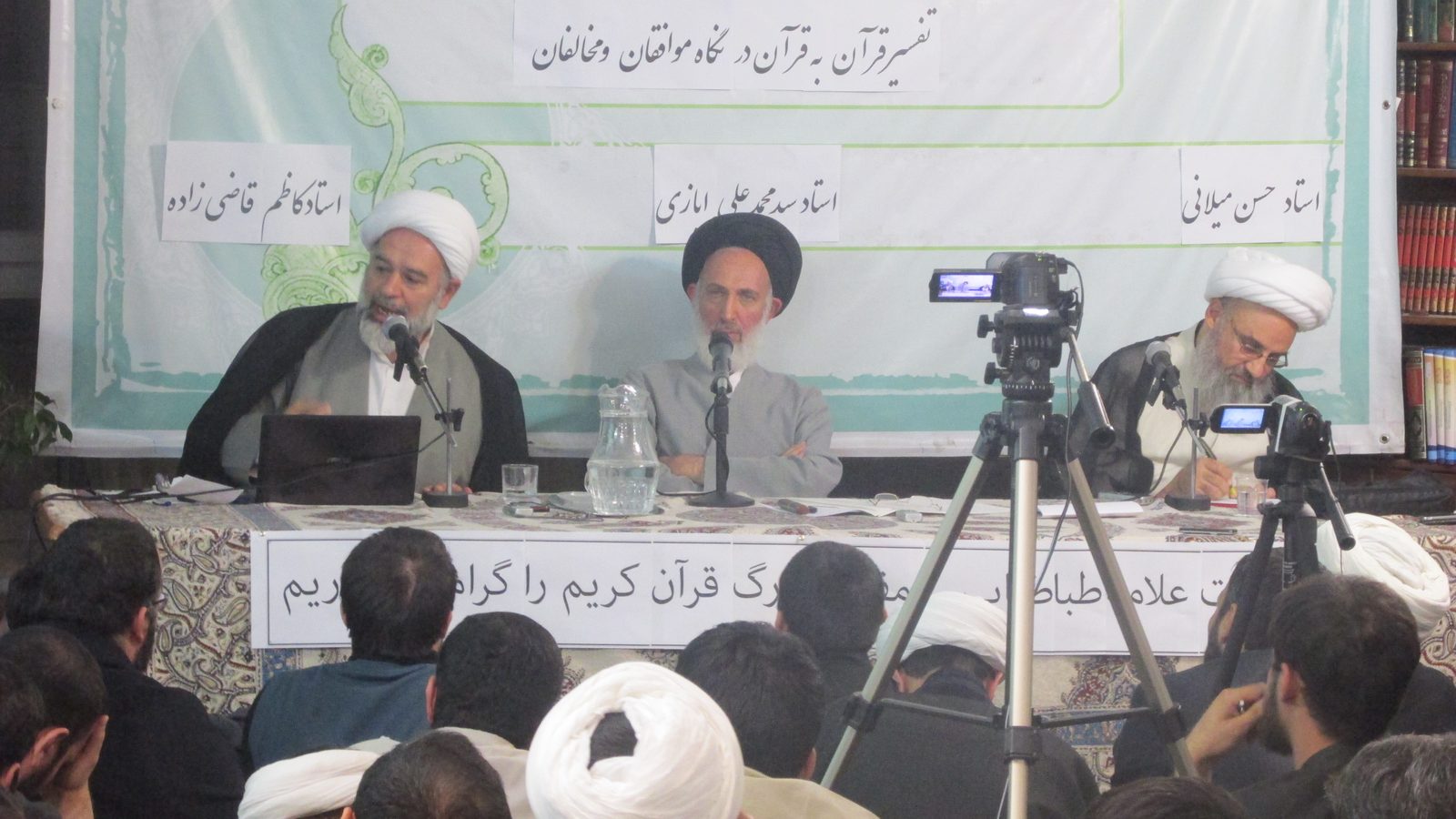
At first, when our dear friend, Ayatollah Qazizadeh, suggested that I speak in this brief opportunity, I intended, in light of my recent studies, to discuss the reflection of the uprising of Aba Abdillah al-Husayn (AS) and its dimensions in the research of contemporary Egyptian scholars, who have produced noteworthy works. Later, however, I changed my mind and decided to present the theme of my talk under the title "Righteous Deeds, or the Husayni Uprising and Ashura: The Manifestation of Righteous Deeds," since this title seemed to me more appealing and more striking.
The idea that every surah has a fundamental and foundational axis around which all its verses revolve, although alluded to in the classical exegetical heritage, has been discussed far more seriously in the last century. Perhaps the precise and technical originator of this discussion was Shaykh Abdullah Draz in his highly readable and beneficial book «النَّبَأُ الْعَظِيم». After him, this approach spread, and in exegeses such as "al-Mizan," Allamah Tabataba'i addressed this subject repeatedly in practice, and in two places (one in Surat al-Hamd and the other in the twelfth volume, in connection with the verses of challenge) theoretically and explicitly.
If we are to pass quickly over this introduction, it must be said that the oath by "al-'Asr" means time in the absolute sense; although some have applied it to the era of the Prophet or to the late afternoon of the day, these are mostly instances of it, and the exegetes are almost unanimously agreed on the meaning of absolute time. In the exegeses, very important discussions are raised concerning the subtle semantic link between the "muqsam bihi" (that by which the oath is sworn) and the "muqsam 'alayhi" (that for which the oath is sworn).
The central theme of Surat al-'Asr, without exception, is "the ultimate destiny of human beings." All human actions, whether individual, social, moral, political or cultural, fall, in terms of their origin, into one of three categories: they are either God-centred, self-centred or other-centred. The message of the surah is that if an action is "God-centred," it has a faithful and good outcome; otherwise, man is in loss and ruin. The composition of the words in the verse «إِنَّ الْإِنسَانَ لَفِي خُسْرٍ» shows that the unbelieving human being is on a downward slope towards ruin.
The Characteristics and Setting of Righteous Deeds
The exception to this loss, however, is «إِلَّا الَّذِينَ آمَنُوا وَعَمِلُوا الصَّالِحَاتِ». I wish to pause a little on the expression "righteous deed." Some time ago, although I was not in the mood for writing, I was reading intensively, and it occurred to me to consider how the exegetes have dealt with the frequently recurring expression «عَمِلُوا الصَّالِحَاتِ» (nearly seventy-five occurrences) and «عَمَلٍ صَالِحٍ». They have mostly said that a righteous deed means a good deed, or a deed in harmony with human nature (fitrah) and reason; but this expression is far more delicate than that, and referring it to something supposedly self-evident sometimes creates difficulties.
Alongside the righteous deed (al-'amal al-salih), we also have the "good deed" (al-'amal al-hasan) and the "corrupt deed" (al-'amal al-fasid). The most important characteristic of a righteous deed is that it has a divine and godly origin. A good deed may be a useful act, such as building a bridge for the welfare of the people, yet its origin is not necessarily divine; but if it is done out of faith and for the pleasure of God, because God has asked such a thing of me, it becomes a righteous deed.
Another key point is that, in terms of its setting, a righteous deed is one that, in that particular moment of time and place, is the "most urgent, most necessary and most effective" response. For example, Imam Hasan al-Mujtaba (AS) was in the final days of his i'tikaf (spiritual retreat in the mosque) when a believer approached him anxiously and said that a creditor was pressing him hard and he was unable to repay his debt. The Imam immediately rose from his place to resolve his problem; when a pious person ran up and asked why he was abandoning his i'tikaf and its rewards, he replied that he had heard from his grandfather, the Messenger of God (PBUH), how great is the reward for meeting the need of a believer. This means attentiveness to time and performing the most necessary deed possible at that very moment
.
The Conduct of the Commander of the Faithful in Understanding Time and Righteous Deeds
It is reported in both Shi'i and Sunni narrations that Surat al-'Asr was revealed concerning Imam Ali (AS); this revelation mostly carries an interpretive (ta'wili) meaning, in the sense of identifying its exemplar. In the conduct of the Imams (AS), attention to "time," and to the fact that matters depend on their proper moments, is of great importance; whereas we often suffer from "anachronism" and lose our opportunities.
After the episode of the Saqifah, in which the fabric of that divine plan was torn apart, the Commander of the Faithful (AS), as the axis of truth, did not abandon time. At night he would seat Lady Fatima al-Zahra (SA) upon a mount and go to the doors of the Muhajirun and the Ansar in order to complete the proof against them. One of Mu'awiya's most vile letters to the Imam also taunts him over this very episode. Mu'awiya, whom Abbas Mahmud al-Aqqad in his book «مُعَاوِيَة فِي الْمِيزَان» describes as an extremely ill-natured and strange character, with utter impudence mocks these nightly efforts of the Imam (كَانَ يَحْمِلُ فَاطِمَةَ عَلَى حِمَارٍ...).
But when Imam Ali (AS) saw that the water that had flowed away would not return to the stream, he changed course and found the necessity of the time in something else. Abu Sufyan tried to provoke the Imam with verses of poetry, but in the fifth sermon of Nahj al-Balagha the Imam rebuffed him and said: «هَذَا مَاءٌ آجِنٌ، وَ لُقْمَةٌ يَغَصُّ بِهَا آكِلُهَا، وَ مُجْتَنِي الثَّمَرَةِ لِغَيْرِ وَقْتِ إِينَاعِهَا كَازَارِعٍ بِغَيْرِ أَرْضِهِ» (This is stagnant water, and a morsel on which the one who eats it chokes; and whoever picks fruit before its ripening is like one who sows in the land of another).
In the profound, precise and tolerant Shiqshiqiyya Sermon, the Imam, while explicitly declaring his rightful position, says: «وَ إِنَّهُ لَيَعْلَمُ أَنَّ مَحَلِّي مِنْهَا مَحَلُّ الْقُطْبِ مِنَ الرَّحَى». Nevertheless, in the matter of the Shura (council), although he knew its outcome, he took part in order to complete the proof and to go along with them (فَأَسَفَّ إِذْ أَسَفُّوا وَ طَارَ إِذْ طَارُوا). Throughout this entire period he never obstructed matters, and at critical moments he gave sincere counsel, to the point that the second caliph said repeatedly: «لَوْ لَا عَلِيٌّ لَهَلَكَ عُمَرُ», and a similar statement from Uthman is also reported in "al-Ghadir."
But when its time came, he explained his reason for accepting government thus: «أَمَا وَ الَّذِي فَلَقَ الْحَبَّةَ وَ بَرَأَ النَّسَمَةَ، لَوْ لَا حُضُورُ الْحَاضِرِ وَ قِيَامُ الْحُجَّةِ بِوُجُودِ النَّاصِرِ، وَ مَا أَخَذَ اللَّهُ عَلَى الْعُلَمَاءِ أَلَّا يُقَارُّوا عَلَى كِظَّةِ ظَالِمٍ وَ لَا سَغَبِ مَظْلُومٍ...». Contrary to the view of figures such as Muhammad Jawad Mughniyya and Abd al-Karim al-Khatib, who interpreted «حُضُورُ الْحَاضِرِ» as the society being filled with corruption, its precise Arabic meaning is the presence of the people and the completion of the proof through the existence of supporters.
The Uprising of Aba Abdillah al-Husayn and the Manifestation of Righteous Deeds within Time
What keeps the movement of Imam Husayn's (AS) uprising ever relevant is precisely this correct understanding of time. The consequences of the Saqifah gradually hollowed out the Islamic community from within, to the point that Sayyid Qutb, in his book "Social Justice," wishes that the third caliph had never come to power so that those corruptions would not have taken shape. In such an atmosphere, filled with sedition, in which the truth had become lost (in the words of Lady Fatima al-Zahra (SA): «أَلَا فِي الْفِتْنَةِ سَقَطُوا»), had Aba Abdillah not risen up, no trace of the Prophet's law and of the awe of Islam would have remained in people's hearts.
Why did Imam Husayn (AS) not rise up in the time of Mu'awiya? Because the appropriate time had not yet arrived, and there was a covenant between them. At Mina he gathered seven hundred of the Companions and Successors, and in a truly remarkable and eloquent address he took a pledge from them to go and expose the corrupt face of the Umayyad regime in their own lands; then, in a stern letter to Mu'awiya, he took him to task for breaking the covenant and for his crimes. Even so, it was not yet the appointed time for the uprising.
But when the time came, the Imam departed from Medina. He stayed in Mecca for four months and five days, a city whose people had always been at odds with the Ahl al-Bayt. During this period he held gatherings, engaged in enlightening the people, and recounted to them the hadiths of Ghadir and wilayah.
In those same days, a very important conversation took place between Abdullah ibn Umar and Imam Husayn (AS). Abdullah ibn Umar proposed reconciliation and allegiance to Yazid, but the Imam said: "Do you invite me to pledge allegiance to one about whose father and grandfather you know what my grandfather said? أَ تَعْلَمُ أَنِّي ابْنُ بِنْتِ رَسُولِ اللَّهِ؟"
One of the important strategies of the Umayyads was to deny the descent of al-Hasan and al-Husayn (AS) from the Prophet. Ibn Abi al-Hadid reports that Amr ibn al-As wrote a letter to the Commander of the Faithful (AS) and taunted him: "Why do al-Hasan and al-Husayn say that we are the sons of the Messenger of God? They are your children; what connection do they have with the Messenger of God!" The Imam replied to the messenger: «قُلْ لِشَانِئِ ابْنِ الشَّانِئِ: لَوْ لَمْ يَكُونَا وَلَدَيْهِ لَكَانَ رَسُولُ اللَّهِ أَبْتَرَ» (Tell that hater, son of a hater: had these two not been his sons, then the Messenger of God would have been abtar, without posterity!). God the Glorified has denied that the Prophet is abtar, and by the confirmation of this light it becomes clear that these two are truly the sons of the Messenger of God.
Elegy on the Desolation of Aba Abdillah and the Tragedy of the Six-Month-Old Infant
I sincerely apologise if my remarks have been long; I am grateful that you have listened. Tonight I would like you scholars yourselves, all together, to become reciters of the elegy.
«السَّلَامُ عَلَيْكَ يَا أَبَا عَبْدِ اللَّهِ وَ عَلَى الْأَرْوَاحِ الَّتِي حَلَّتْ بِفِنَائِكَ، عَلَيْكَ مِنِّي سَلَامُ اللَّهِ أَبَداً مَا بَقِيتُ وَ بَقِيَ اللَّيْلُ وَ النَّهَارُ، وَ لَا جَعَلَهُ اللَّهُ آخِرَ الْعَهْدِ مِنِّي لِزِيَارَتِكُمْ. السَّلَامُ عَلَى الْحُسَيْنِ وَ عَلَى عَلِيِّ بْنِ الْحُسَيْنِ وَ عَلَى أَوْلَادِ الْحُسَيْنِ وَ عَلَى أَصْحَابِ الْحُسَيْنِ.»
Tonight we have gathered together to weep for the desolation of the Master of Martyrs. Which desolation? The very one that Aba Abdillah himself proclaimed: «وَ سُبِيَتْ مِنْ غَيْرِ جُرْمٍ حَرَمِي» and «يَا فُرْسَانَ الْهَيْجَاءِ وَ يَا فُرْسَانَ الْخَيْلِ بَرَزْتُمْ لِلْقَتْلِ». May we be sacrificed for your desolation and your wronged state, O Aba Abdillah! Would that you had been there, had seen it, had wept and beaten your heads and faces. Let us recite the elegy from the salutations of the Ziyarat al-Nahiya al-Muqaddasa, which Sayyid ibn Tawus has transmitted from the tongue of the Imam of our Time. Go beside the six-cornered shrine of Aba Abdillah, place your hand on your chest, and send salutations to that Ali al-Asghar who, they say, is buried upon his father's chest:
«السَّلَامُ عَلَى عَبْدِ اللَّهِ بْنِ الْحُسَيْنِ، الطِّفْلِ الرَّضِيعِ، الْمَرْمِيِّ الصَّرِيعِ، الْمُتَشَحِّطِ دَماً، الْمُصَعَّدِ دَمُهُ فِي السَّمَاءِ، الْمَذْبُوحِ بِالسَّهْمِ فِي حِجْرِ أَبِيهِ، لَعَنَ اللَّهُ رَامِيَهُ حَرْمَلَةَ بْنَ كَاهِلٍ الْأَسَدِيَّ...» I will not translate these passages; you yourselves grasp the depth of the tragedy and weep. May your ziyarah be accepted.
But from tomorrow they cut off the water; whenever you drink water, remember. From the grief of thirst, the whole plain is a mirage, and the heart is seared by the thirst of the milkless Asghar. It is no wonder if the child is thirsty, when the master and Rabab are thirsty. Would that I might die for that mother whose infant writhes from thirst in her lap, while the mother can do nothing. The child's restlessness passed all bounds, and the exhausted mother was utterly devastated.
Did the historians not tell why, in answer to thirsty lips, an arrow came as the reply? «فَرُمِيَ بِسَهْمٍ فَذُبِحَ مِنَ الْوَرِيدِ إِلَى الْوَرِيدِ»! Sayyid ibn Tawus writes that when this tragedy occurred, Aba Abdillah did two things: first, he placed his hand beneath the blood flowing from the infant's throat, and when his hand was filled with blood, he scattered it towards the sky and said: «هَوَّنَ عَلَيَّ مَا نَزَلَ بِي أَنَّهُ بِعَيْنِ اللَّهِ» (What has befallen me is made easy for me, for it is in the sight of God). Imam al-Baqir (AS) says: not a single drop of that blood returned to the earth. The second thing was that the Imam dyed his noble beard with that blood, so that he might go to meet God with the blood of Ali al-Asghar. It was then that a caller cried out: «دَعْهُ يَا حُسَيْنُ فَإِنَّ لَهُ مُرْضِعاً فِي الْجَنَّةِ» (Leave him, O Husayn, for he has a wet nurse in Paradise).
The hardest moment of the whole event was when he had taken the child from his mother to quench his thirst, and now he looked on in bewilderment, wondering what answer to give Rabab. Sayyid ibn Tawus writes: Aba Abdillah did not carry the swaddled infant back to give to his mother; rather, he called out: «خُذِي يَا زَيْنَبُ», "Zaynab, my dear, come and take this swaddled child..."
With what face shall I carry this drooping head to the tent? What shall I do about this bleeding throat? No one showed mercy to the whiteness of your throat; it is the custom of Kufa to make the guest a target! You struggled with hands and feet, and yet you smiled again; so God Himself kisses these two smiling lips.
My dear Ali, what answer shall I give Rabab? Alas for the heart of Husayn! O God, by this distress of Aba Abdillah, hasten the reappearance (faraj).
Comments
No comments yet. Be the first.
Write a note, critique or commentShare your view with us and other readers without leaving this page.