


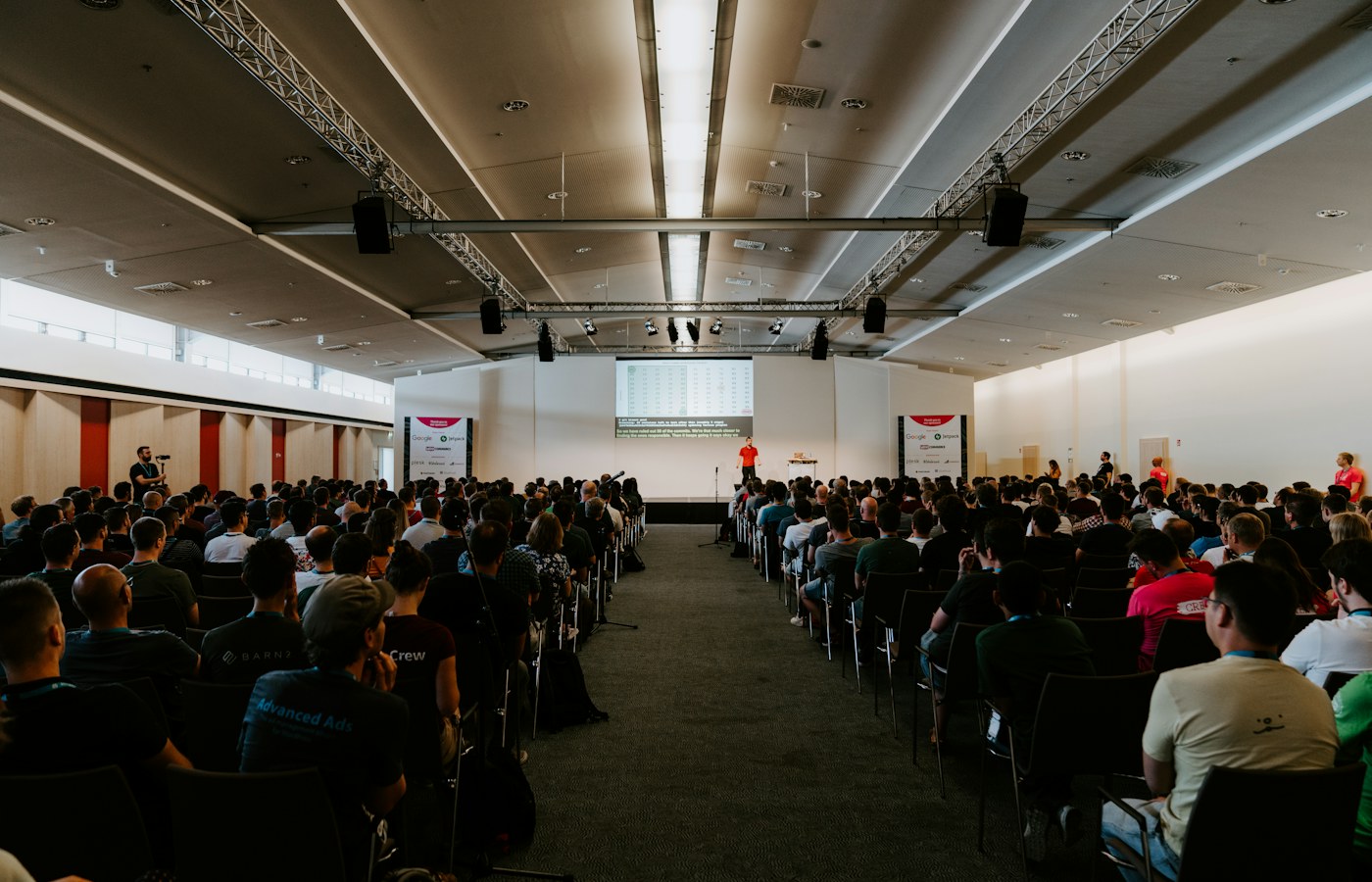
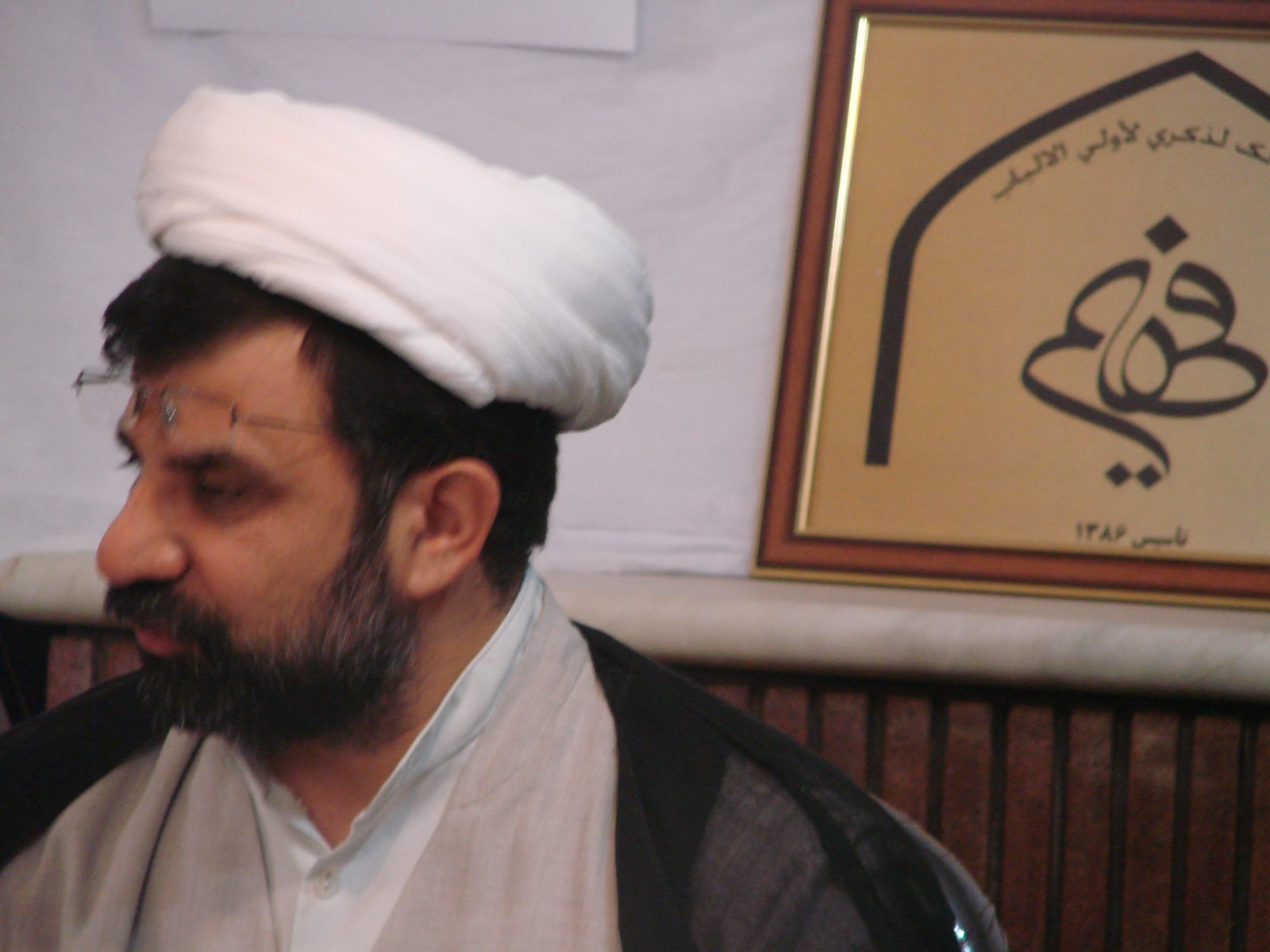
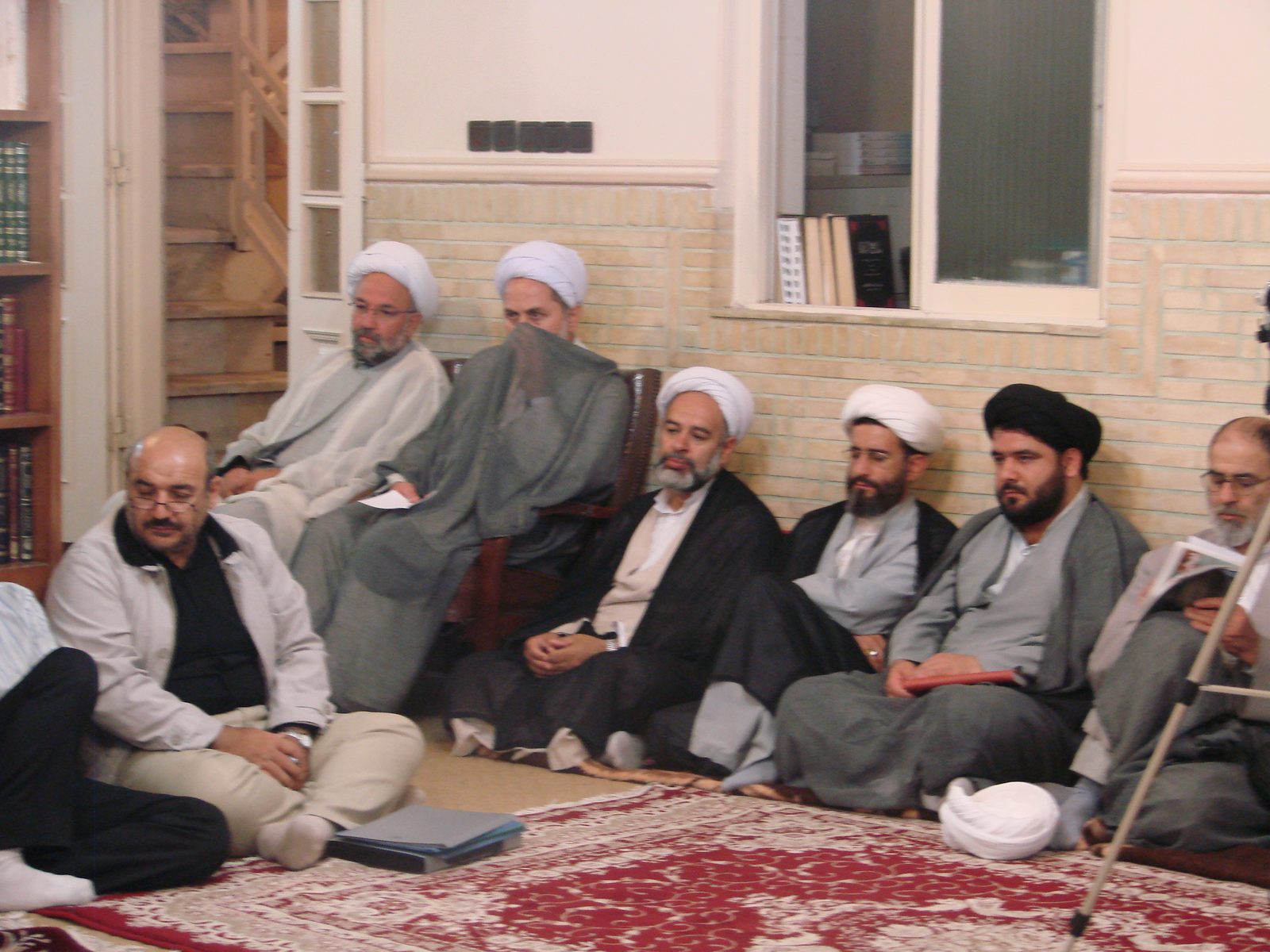
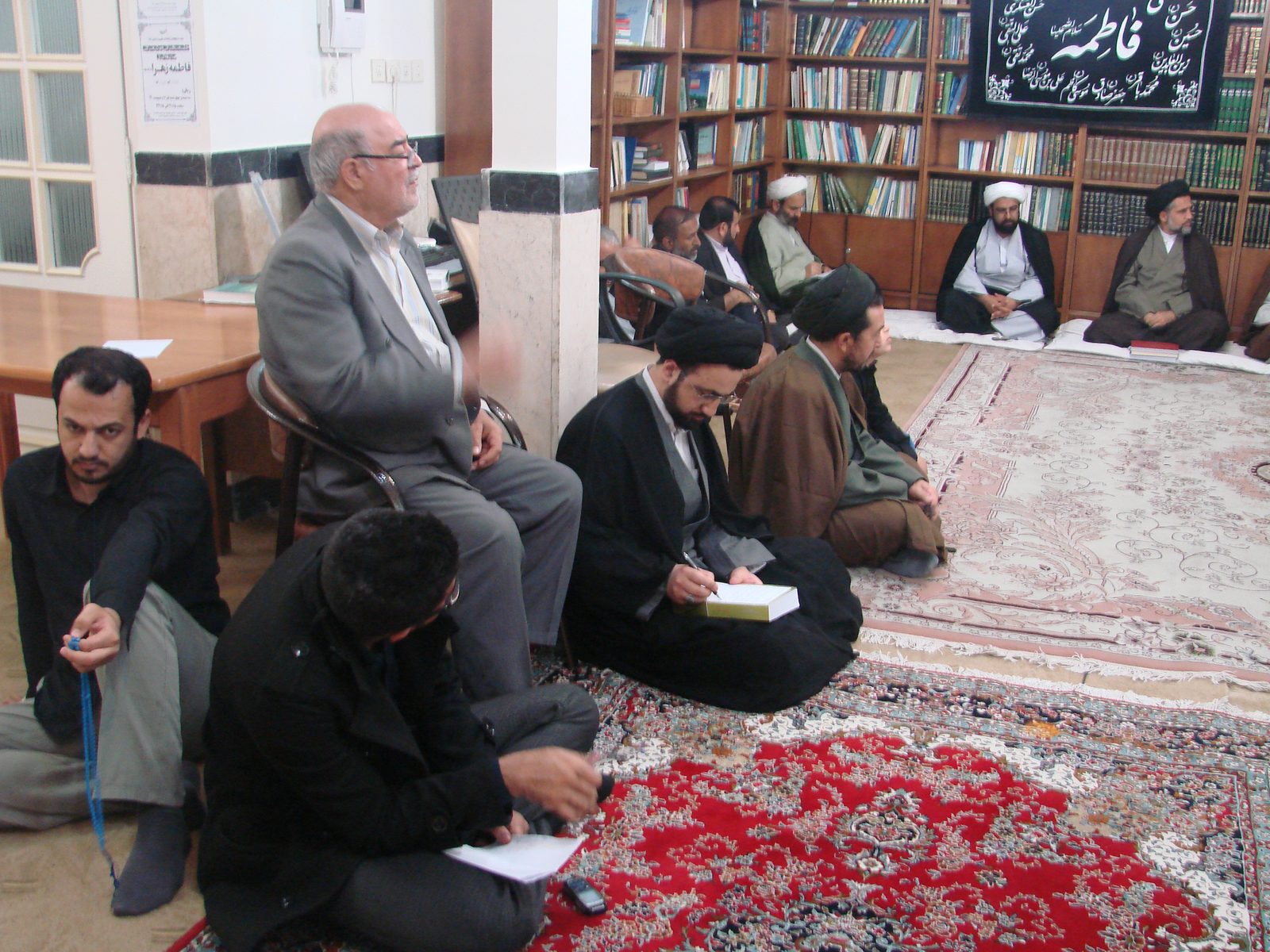
بسم الله الرحمن الرحیم. الحمد لله العلیم. At the outset, I extend my greetings and salutations to all the listeners and viewers of this scholarly gathering, and I send blessings upon the radiant soul of Imam Khomeini (RA) and the esteemed martyrs of the Islamic Revolution. This debate session, hosted by the “Fahim” Cultural and Research Institute and moderated by Professor Qazizadeh, is one of the series of scholarly sessions, debates and theory-development chairs held at this academic venue. For the information of our esteemed audience, I would note that this institute has thus far had the honour of holding four hundred and thirty-seven theory-development sessions, and it endeavours to examine and scrutinise new and emerging religious issues free from political leanings. This session was scheduled to be held a month ago, but because it coincided with the debate between Mr. Soleimani and Hujjat al-Islam Hamed Kashani, it was postponed, and tonight the opportunity has come about. Naturally, the red lines and frameworks governing this institute's debates rest on the observance of courtesy, good manners, mutual respect and the preservation of the country's highest interests.
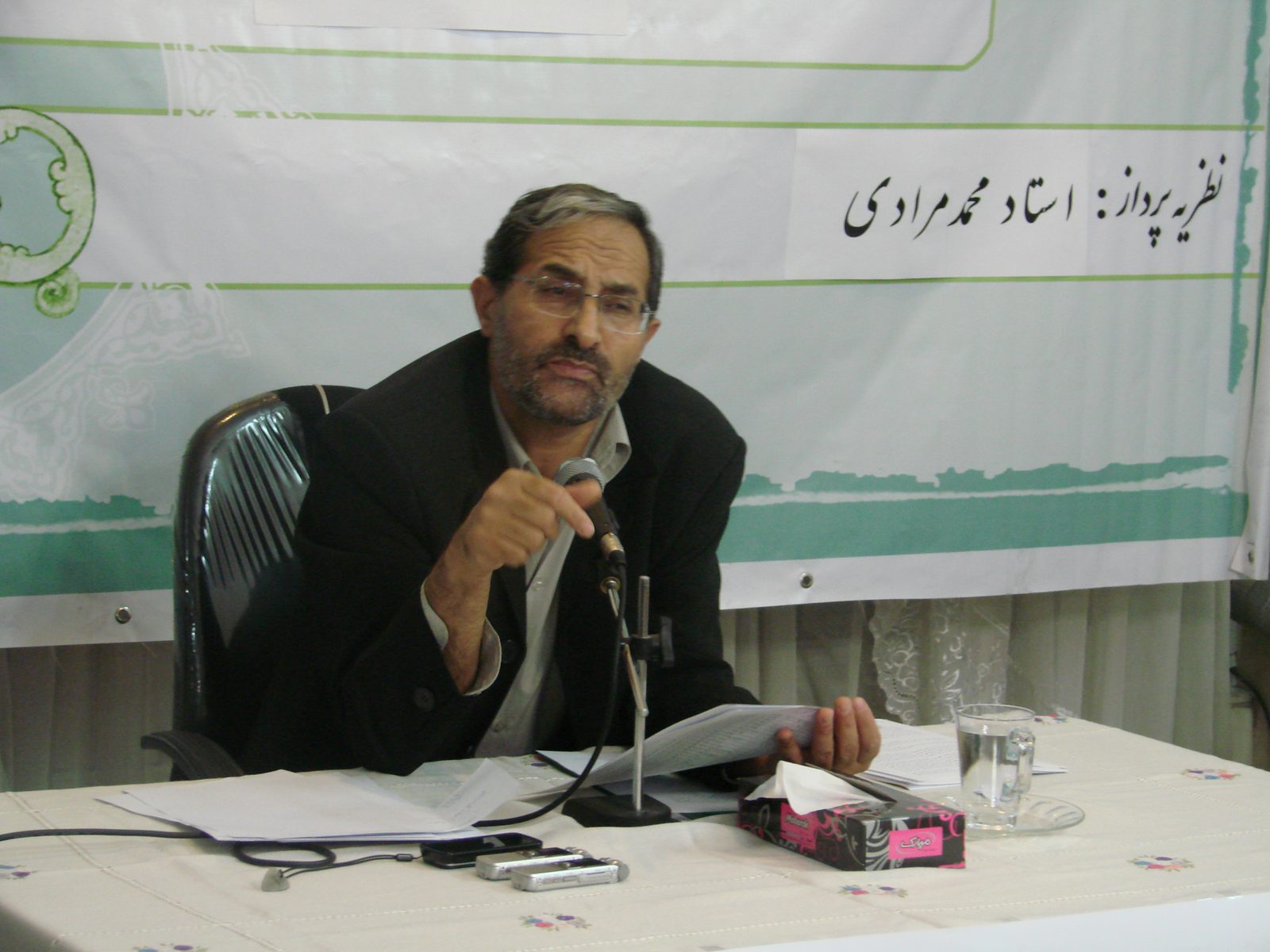
A final point before the formal start of the discussion is that, unlike the previous debate between Professor Soleimani Ardestani and Professor Kashani, we do not intend in this session to enter into particular instances and historical events; hence we will not address topics such as the burning of the house of Lady Fatimah al-Zahra (SA) or the manner of the martyrdom of Imam al-Jawad (AS). Our aim is to raise the debate to deeper layers and to examine the issues with a more scholarly, trans-historical approach. In this session we are in the presence of Dr. Soleimani Ardestani, retired professor of Mofid University and author of the book The Qur'an and Religions, and we are also hosting Professor Sayyid Sadra Hashemi, teacher of the advanced (kharij) course in fiqh and usul at the Qom Seminary, who accepted the institute's invitation. The axis of our discussion in this session is an examination of “the sources of inference and of understanding religion”, which is in fact the root and foundation of Professor Ardestani's judgements and interpretations in his many discussions. Without wasting time and avoiding side issues, I ask Professor Ardestani to explain, in about ten minutes, his foundations and sources of inference in understanding religion, after which we shall turn to Professor Hashemi.
بسم الله الرحمن الرحیم. I offer my greetings and respects to the honoured audience, to Mr. Hashemi and to Dr. Farati. I am also grateful to Professor Qazizadeh for arranging this session. Truly, the culture of dialogue must become ever more firmly established in our society, and especially in the hawza. To put it briefly, my first encounter with the science of usul al-fiqh goes back to around the year 1363 SH, when I began studying the late Muzaffar's Usul al-Fiqh. When I reached the second volume, I realised that the sources I had in mind for understanding Islam were entirely different from the prevailing path. In the discussion of the “single-narrator report” (khabar al-wahid), I found the proofs of its authority to be inconclusive. In the section on “consensus” (ijma'), I likewise found that consensus essentially has no connection to Shi'i foundations and that there is no proof of its authority, since consensus does not disclose the statement of the Infallible; and although it is authoritative among the Sunnis, it has no place in Shi'ism. At the same time as studying al-Lum'a and entering demonstrative (istidlali) jurisprudence, I gradually realised that in the prevailing jurisprudence the Noble Qur'an too is in practice abandoned and has no real place, and that reason likewise lacks any genuine standing. Thus, in that very year '63, I came to the conclusion that the square of “the Book, the Sunnah, consensus and reason” is an incorrect classification, since the Book and reason are effectively absent, and what is presented as the Sunnah and consensus in fact goes back to the “single-narrator report”, the proofs of whose authority I do not consider conclusive. Of course, I do not mean an absolute rejection of the single-narrator report; but, in brief, I accept the Sunnah, not necessarily the single-narrator report as it is commonly defined.
Gradually, by reflecting on the religious texts, I realised that we have two proofs (hujjahs): the “inner prophet”, which is primordial nature (fitrah) and reason, and the “outer prophet”, which is the Book and the Sunnah. I also noticed that although the traditional view proclaims the Book, the Sunnah, consensus and reason as its slogan, in practice it relies, in order, on “consensus, widespread acceptance (shuhrah) and the single-narrator report”: a shuhrah that has no basis or foundation, a consensus that is not actually attained, and a single-narrator report whose authority is flawed. My four sources therefore differ from the prevailing ones. In my intellectual system, the first source is “fitrah”, the second “reason”, the third “the Book” and the fourth “the Sunnah”. That is to say, for the Sunnah to be valid it must pass through the three filters of fitrah, reason and the Book, and if it does not conflict with them, it will be valid.
Another point I realised in those early years was the enormous deviation that has occurred in the definition of “fiqh”. When a seminary student at the beginning of his path encounters the noble verse of nafr: «...فَلَوْلَا نَفَرَ مِن كُلِّ فِرْقَةٍ مِّنْهُمْ طَائِفَةٌ لِّيَتَفَقَّهُوا فِي الدِّينِ وَلِيُنذِرُوا قَوْمَهُمْ إِذَا رَجَعُوا إِلَيْهِمْ...» (al-Tawbah: 122), he realises that “tafaqquh” means deep reflection on religion as a whole, not merely subsidiary practical rulings. Reducing fiqh to a specialisation in practical rulings is a deviation. Tafaqquh in the verses and narrations means the understanding of Islam as a whole. Separating subsidiary rulings from the understanding of Islam (al-fiqh al-akbar) is disastrous. My example is this: if a neurologist prescribes a medicine that is beneficial for the brain but leads to the failure of the kidneys or the heart, the patient will say: I want a healthy brain for a living body! A mufti cannot issue a ruling on the basis of a single-narrator report that calls God's justice or wisdom into question and then say, “my specialisation is not theology (kalam)!” In the hawza, “al-fiqh al-akbar” (the principles of belief and the understanding of Islam) must be the foundation of “al-fiqh al-asghar” (practical rulings). One cannot expect the desired fruit without knowing the roots, the trunk and the requirements of a tree; the result of such an approach is picking pumpkins from a pear tree!
In answer to your question about the definition of “Sunnah”, I accept the well-known definition with certain qualifications. I do, however, hold a particular view on infallibility ('ismah), and I accept infallibility only within the scope of “receiving and conveying revelation and stating the divine ruling”; in other respects I regard the Prophet and the Imam as “just” ('adil). For the Sunnah to be authoritative, it must yield assurance (itminan); hence I mostly rely on “cumulative evidence” (the accumulation of conjectures and contextual indicators), not on a lone report. Content-based critique of hadith and presenting it to the three filters (fitrah, reason and the Qur'an) is my method. I also divide practical rulings into two categories: rulings concerning “the relationship between man and God” (such as acts of worship and foodstuffs), in which reason has little scope and which are governed by the “principle of ease”; and rulings concerning “the relationship between man and man” (social rights), in which reason is involved and which are governed by the “principle of precaution” (because lives, honour and persons are at stake). In the first category I may act upon a single-narrator report with leniency, but in matters of human rights I set the single-narrator report aside and act with complete precaution.
بسم الله الرحمن الرحیم. «لا حول و لا قوة الا بالله العلی العظیم. والصلاة والسلام علی سیدنا محمد و آله الطاهرین». I too am grateful for the convening of this session, and at the very outset I express my regret at, and dissociate myself from, certain discourtesies and unjust accusations levelled against Mr. Soleimani by some individuals. As regards the course of the discussion, in preparing for this debate I listened to more than a hundred hours of your recordings and about seventy hours of critiques, and I suspended my advanced (kharij) course for ten days so as to gain a precise command of your intellectual system. My principle is not to accept anyone's word without proof and, before critiquing, to understand the speaker's meaning fully. I believe that Mr. Soleimani's major premises and general foundations differ from our prevailing major premises, but within his own system of thought they possess internal coherence.
Another point is that previously, in my advanced course in fiqh, I spent two years working on the topics of “takfir and apostasy” and on doubts raised from outside the school and from within the religion. I have examined works ranging from Fada'ih al-Rawafid (written in the sixth century and answered by 'Abd al-Jalil Qazvini in his book al-Naqd) to Ibn Taymiyyah's Minhaj al-Sunnah, as well as the works of later authors such as Hakamizadeh's Asrar-i Hazar Saleh, the critiques of Sayyid Murtada Jaza'iri and Sadeqi Tehrani's commentary al-Furqan. Many of Mr. Ardestani's objections have precedents and resemble those of Sayyid Murtada Jaza'iri (in his critique of consensus and shuhrah) and some views of the late Sadeqi Tehrani. Mr. Soleimani makes three sets of claims: 1. negative claims regarding the sources of inference (the Book, the Sunnah, consensus and reason); 2. objections to the process and method of inference; 3. objections to the products, that is, the fatwas. Until the first two stages have been examined, critiquing the third stage (the fatwas) is futile.
Now let us turn to the discussion of the sources. He does not accept consensus and shuhrah. My question is: which type of shuhrah do you not accept? Shuhrah in narration, shuhrah in practice, or shuhrah in fatwa? (Mr. Ardestani: None of them.) Very well. The Shi'i jurists consider shuhrah to be of three types: 1. shuhrah in narration (as a ground of preference in cases of conflicting reports); 2. shuhrah in practice (which compensates for weakness in a chain of transmission, or undermines a chain); 3. shuhrah in fatwa. The proof for the authority of shuhrah in practice according to the majority is that when the early companions acted upon a weak narration, this discloses that they possessed a reliable contextual indicator that has not reached us («لعلّهم ظفروا بقرينة»). And if they turned away from an authentic narration (the turning away of the majority), they must certainly have seen some defect in it. What is your objection to this foundation?
As for consensus, the consensus we have in mind is the consensus of the early scholars (up to the era of Shaykh al-Tusi). Given the burning of the great Shi'i libraries in Baghdad (the libraries of Shaykh al-Tusi, Sayyid al-Murtada and Shapur), many of the primary collections of narrations (usul) were lost. Therefore the agreement of the early companions, who were close to the era of the Infallibles, yields assurance for the jurist, by the calculus of probabilities and the accumulation of conjectures, that they had a reliable basis. The late Ayatollah Khoei states in Misbah al-Usul: «شهد بعض الأعاظم بحصول القطع من اتفاق ثلاثة نفر» (some of the eminent scholars have claimed that certainty is attained from the agreement of three persons, such as Mirza Shirazi and Shaykh Ansari), on account of the intensity of their piety and precision. If a person knows that a group of pious and meticulous jurists agree on a ruling, he rationally attains assurance. Shaykh Ansari has a detailed discussion of consensus in al-Rasa'il, and he states that if the transmitted consensus does not yield knowledge for you, do not throw it away; rather, keep it as one indicator alongside the other indicators (cumulative evidence).
In response to the question whether you accept no shuhrah at all, not even the shuhrah in narration that appears in the maqbulah of 'Umar ibn Hanzalah: «يَأْتِي عَنْكُمُ الْخَبَرَانِ الْمُتَعَارِضَانِ... فَقَالَ: خُذْ بِمَا اشْتَهَرَ بَيْنَ أَصْحَابِكَ وَ دَعِ الشَّاذَّ النَّادِرَ», you said no. Yet this is incompatible with the shared intuition of reasonable people. If a meticulous person says something, reasonable people say that he must have had a basis for it. Just as you yourself, when you cite a narration and have forgotten the source, say “I have certainly seen this somewhere”, and we too accept it because of your trustworthiness.
(Mr. Ardestani's turn): Thank you for the time you have given and the in-depth study you have undertaken. Your argument rests on this basis: “reliance on personalities, and on the knowledge, scrupulousness and piety of the scholars”. If that is the basis, then, from my study of other religions, I would say that in the two-thousand-year history of Christianity or of other religions there have been figures far more learned, more brilliant and more pious, who were in consensus on their false beliefs. If we are to trust their consensus merely because of the genius or piety of individuals, I should not be a Shi'i at all! Blind trust in personalities, even if it be Ayatollah Bahjat, is a mistake. With all his greatness, he might relate a report, on the basis of trust in some person, that has no basis in reality (such as the story of Ja'far the Jinn).
Here a dreadful and fundamental fallacy has occurred in traditional source-criticism and hadith studies: “conflating moral truthfulness with skill in discerning truthfulness”. You say: “So-and-so is a truthful and just person, so whatever he narrates, or whomever he declares trustworthy, is correct.” Whereas “truthfulness” is a moral virtue, “recognising the truthful” (distinguishing the truthful from the liar) is a psychological and sociological expertise and skill. How many saintly people are extremely naïve and are deceived by professional liars! Indeed, liars recognise one another better! The entire edifice of your science of rijal and hadith studies rests on this: because al-Najashi or Shaykh al-Tusi was a good man, his judgement concerning the trustworthiness of narrators who lived centuries before him is also authoritative. This is inferring expertise from moral commitment, which is invalid. For example, the author of the Tafsir of 'Ali ibn Ibrahim says that he narrates only from trustworthy persons; and you say that, because he himself is just, all his narrators are just! This is a disaster. The justice of a narrator proves that he does not lie deliberately, but it does not prove that he has not fallen into error or naïveté in assessing other narrators or in understanding content. Therefore I do not rely on any personality merely on account of that personality. If it is established that a ruling is genuinely a matter of consensus — the discussion concerns real, attained (muhassal) consensus, not the transmitted consensus whose contrary is sometimes also found in the sources. I state nothing unless it has been established for me with the clarity of rational judgements and of the verses of the Noble Qur'an; for «حُکْمُ الْأَمْثَالِ فِيمَا يَجُوزُ وَ لَا يَجُوزُ وَاحِدٌ». My manner of expression is simple and unadorned, and I avoid obscurity and pretentious complexity, unlike some who try to display their erudition by using heavy Western or Arabic terminology. I take pride in the plain speech of my people and in my rustic simplicity, and I believe that the truth must be presented plainly and without affectation.
When I open the manuals of practical law (al-risalah al-'amaliyyah) and examine the fatwas of the great marja's, I find numerous cases that, in my view, conflict with the explicit text of the Qur'an, definitive reason and sound fitrah. I will first show these cases and then turn to the critique of the question of shuhrah. When thousands of instances of such conflicts become evident, the standing of shuhrah in fatwa will also be shaken. I have gathered all these critiques in a collection entitled Fiqh and Human Rights, and I have shown that hardly a page of the practical manuals can be found that is free of a ruling contrary to the apparent meaning of the Qur'an and to the judgement of reason, or at least of unwarranted precautions.
My fundamental questions are these: first, on which definitive rational or textual proof are these fatwas based? Second, had those proofs also been available to me, would I have reached the same inference? Third, why have the narrations on which the earlier jurists relied not reached us? And had they reached us, would we not have set them aside upon presenting them to the Noble Qur'an, because of their contradiction with the Book of God?
You said that the jurisprudence of the early scholars was hadith-based jurisprudence. For example, the late Shaykh al-Saduq (may God be pleased with him) wrote the noble book «مَنْ لَا يَحْضُرُهُ الْفَقِيهُ» (Man La Yahduruhu al-Faqih, “For One Who Has No Jurist at Hand”). It is clear from the title of the book that its aim was to give the duty-bound (mukallafin) access to the rulings in the absence of a jurist. In this book, which is one of the Four Books and one of the pillars of our hadith heritage, where is the place of reason and the Qur'an? Al-Saduq allowed people to act directly upon the narrations of this book, whereas today we have deprived people of this right and hold them obliged to follow a marja' (taqlid), on the argument that understanding religion is a specialised matter. If Shaykh al-Saduq's foundation was correct, one must then ask what place the presentation of narrations to the Book, the Sunnah and reason had in his methodology. If you say that al-Saduq selected the narrations, I ask: is there any guarantee that, had someone like me seen those narrations, I would have accepted them by my own rational and Qur'anic criteria?
I can show you a chapter in Wasa'il al-Shi'a entitled: «بَابُ أَنَّهُ لَا تُؤْخَذُ الْجِزْيَةُ إِلَّا مِنَ الْيَهُودِ وَ النَّصَارَى وَ الْمَجُوسِ» (the chapter stating that the jizyah is taken only from the Jews, the Christians and the Magians). Under this heading the author of al-Wasa'il has cited thirteen narrations. But on careful examination of the texts of the narrations we find that not even one of them explicitly indicates the exclusivity mentioned in the chapter heading. Rather, some narrations contain anomalous and implausible material; for example, a narration stating that the Zoroastrians had a prophet whose book was written on twelve thousand tanned cowhides! This number is inconsistent with historical realities and with the means available in that era. Twelve thousand cowhides would amount to a volume equivalent to three to four hundred thick present-day books, which for three thousand years ago seems strange and unreasonable. My purpose in raising this example is to critique the method of inference: that jurists place a general heading over a chapter and issue fatwas on that basis, while the wording of the narrations beneath it is sometimes silent and sometimes even contrary to that heading.
As for your remark that my views shake the body of fiqh and usul: my point is that “the truthfulness of a narrator” does not entail “the narrator's ability to recognise the truthful”. This is a logical principle. Even in the narrations we have: «الْمُؤْمِنُ غِرٌّ كَرِيمٌ وَ الْفَاجِرُ خِبٌّ لَئِيمٌ» (the believer is guileless and noble, and the profligate is deceitful and base). The late Mirza Musa Tabrizi, in Wathiqat al-Wasa'il, or at the beginning of the discussion of al-Rasa'il, has pointed out that the likelihood of error on the part of a believer is sometimes greater than that of a hypocrite, because the believer, owing to the purity of his inner self, is well-disposed and quick to believe, whereas the hypocrite and the profligate, being themselves people of guile, detect the guile of others more quickly. Just as in customary affairs, if a merchant wishes to give his daughter in marriage to someone, he is more exacting and investigates more thoroughly than a simple-hearted person would; so it is in the transmission of narrations.
Therefore, if a narrator says «سَمِعْتُ عَنْ أَبِي عَبْدِ اللَّهِ (AS)», this mere claim is not proof that the attribution is correct, unless the chain of transmission and the modes of receiving the hadith are completely transparent and connected. No jurist has claimed that the mere claim of having heard from the Infallible is authoritative; rather, the science of rijal was established precisely to examine such trustworthiness and the connectedness of chains. The late al-Kulayni says in the introduction to al-Kafi: «بِالْآثَارِ الصَّحِيحَةِ عَنِ الصَّادِقَيْنِ (AS)». But this does not mean that everything narrated certainly issued from the Infallible. Even the late Shaykh al-Hurr al-'Amili, in the conclusion of Wasa'il al-Shi'a (the ninth benefit), adduces twenty-two proofs for the authenticity of the Four Books, all of which the late Ayatollah Khoei rejected in Mu'jam Rijal al-Hadith. Thus the science of rijal is based on “sense perception” (hiss), not on “conjecture” (hads). Testimony to trustworthiness must be based on sensory matters or matters close to sense perception. If the authentication of earlier narrators by later rijal scholars rests merely on conjecture and ijtihad, then, according to the foundations of the science of rijal itself, such testimony is not admissible.
I believe that the narrations of the Four Books are reliable, subject to three conditions: first, that they are not afflicted by a conflicting report; second, that they do not concern grave matters such as lives, large amounts of property and sexual relations (furuj); and third, that they do not contain strange, bizarre and superstitious matters. Al-Hakim al-Naysaburi, in al-Madkhal ila Ma'rifat Kitab al-Iklil, has a discussion of the causes of hadith fabrication and relates that fabricators sometimes memorised authentic chains of transmission and attached their own forged texts to those chains (combining a sound chain with a forged text). Hence the mere soundness of a chain does not guarantee the soundness of the text. We have narrations with sound chains that conflict with the firm (muhkam) teachings of the Qur'an and of reason; such narrations are embellished falsehood and void, for the Infallible (AS) said: «مَا خَالَفَ كِتَابَ اللَّهِ فَهُوَ زُخْرُفٌ».
As for consensus, I do not say that if everyone agreed on something it must be false; but I critique “the sanctity of consensus”. Document-based consensus (al-ijma' al-madraki) is not authoritative, because it does not disclose the statement of the Infallible (AS). When I can show hundreds of cases of the jurists' consensus that clearly contradict reason and the Qur'an, this shows that the instrument of “consensus”, as a means of disclosing the view of the Infallible, lacks the necessary efficacy. The “conjecture” that since all the jurists said so they must have had some proof is a conjecture refuted by glaring historical errors. Did not Christianity, with its billions of followers, hold a consensus on the Trinity for centuries? Did God necessarily intervene in the order of creation to guide them? The rule of divine grace (qa'idat al-lutf) requires the sending of messengers and the revealing of scriptures, not that there be some unseen intervention in every erroneous consensus of the community.
As for the Sunnah and infallibility: I fully accept the infallibility of the prophets and the Imams (AS) in “receiving and conveying revelation” and in explaining the divine rulings. The word of the Infallible in stating a shar'i ruling is a decisive proof. But in the ordinary affairs of life, where a matter is unrelated to the Shari'ah, they too are human: «قُلْ إِنَّمَا أَنَا بَشَرٌ مِثْلُكُمْ يُوحَى إِلَيَّ». The Imams' (AS) knowledge of the unseen is likewise «مِنْ عِندِ الله», not intrinsic. «لَا يَعْلَمُ الْغَيْبَ إِلَّا اللَّهُ», unless God wills it: «عَالِمُ الْغَيْبِ فَلَا يُظْهِرُ عَلَى غَيْبِهِ أَحَدًا * إِلَّا مَنِ ارْتَضَى مِن رَّسُولٍ». Hence their knowledge depends on the divine will.
Concerning the Imamate, I have accepted the principle of the Imamate of the Commander of the Faithful (AS) through firm Qur'anic and narrative proofs and by the method of “Inference to the Best Explanation”. The verses of wilayah in Surat al-Ma'idah and other verses, together with the mutawatir narrations, yield assurance. But regarding the other Imams and the question of Mahdism, although the narrations of the “twelve caliphs” (ithna 'ashar khalifah) also exist in Sunni books and their best instance is precisely these Imams of the Shi'a, I believe that these beliefs must be brought out of a purely devotional and inherited state and weighed on the touchstone of reason and wisdom. Wherever a religious proposition conflicts with definitive reason, it must be reconsidered; but as long as a rational explanation can be offered, we do not abandon the belief.
A final point concerns the rights of people (haqq al-nas) and the intervention of fiqh in customary transactions. The Qur'an says: «يَا أَيُّهَا الَّذِينَ آمَنُوا لَا تَأْكُلُوا أَمْوَالَكُم بَيْنَكُم بِالْبَاطِلِ». Yet jurists sometimes, by entering into the details of transactions and stipulating unnecessary conditions (such as precise specification of term and weight where custom is tolerant), declare void transactions that the custom of reasonable people regards as valid and binding. Such interventions sometimes amount to violating the rights of people rather than protecting them. Religion did not come to create needless complications in people's economic relations; rather, it came to prevent injustice, usury (riba) and the wrongful consumption of wealth. Many of the complex rulings on transactions in the practical manuals have caused hardship and difficulty ('usr wa haraj) for ordinary people and even for the devout, and may make many customarily valid transactions appear void in the Shari'ah; this in itself calls for serious reconsideration.
In dealing with the Sunnis, how should the question of “predestination” (jabr) be explained? If we accept predestination, what meaning and significance would religion have at all? When the foundation is predestination, many religious concepts are called into question. My view of what lies outside this circle is a different one; it is not as though one should imagine that an ideal world exists outside and that here is unsuitable — no, elsewhere conditions may be even worse. Hence we must make do and move forward with this very religion and its voice, so that rational thinking may be attained.
To complete the discussion, I would say that I too have researched these sources as much as other seminarians. Someone asked me: “Can you prove to me the birth of the Imam of the Age (AJ)?” I replied: “I have not done specialised historical work in this field; you should go to historians and experts, such as Mr. Rasul Ja'fariyan.” My point is that I claim no expertise in these details; but regarding the principle of the twelve Imams, I believe that the number “twelve” (ithna 'ashar) has reached the level of tawatur among both the Shi'a and the Sunnis. The Holy Prophet (PBUH) explicitly stated the number twelve: «اَلْأَئِمَّةُ مِنْ بَعْدِي اثْنَا عَشَرَ». Now, whether in Sunni or in Shi'i sources, the best explanation of these twelve persons is the very explanation that Shi'ism has offered. Thus, in addition to other proofs, I have a considerable conjectural proof. But if you ask me to prove his birth by means of a “mutawatir report”, I have not undertaken such research. I do, of course, hold the belief in my heart, but I cannot, without firm proof and merely to persuade the masses, say something I have not researched; for I do not consider deception (tadlis) and demagoguery permissible.
My honesty lies in saying “I did not find it”. Such truthfulness should not be regarded as a crime. I also asked others whether they had seen a mutawatir report on this matter; the answer was negative. In order to speak with assurance-yielding proof, I say that the Imamate of the Commander of the Faithful (AS) is established for me, and for the other Imams too the best explanation is the twelve-fold Imamate. But if you insist on a purely historical proof of the birth, you must refer to specialists in history. I cannot make extravagant claims. My view is that in examining each of the other eleven Imams individually, I may not be able to adduce a mutawatir report for each of them separately, but this does not mean that I do not accept them. I regard the Imam of the Age (AS) as my Imam, and my proof is the very explanation of the “twelve” that both groups (al-fariqayn) have narrated. I do not abandon the religion of my fathers and forefathers, for I have not found it to be contrary to reason.
Regarding the other Imams too, my proofs are not as strong as those I have for the Commander of the Faithful (AS) (such as the verse of wilayah, the verse of tabligh and the prophetic hadiths), but the proof is complete for me. You might ask why I speak so frankly. Because I have seen that others have not done more work than I have. A scholar telephoned me in order to guide me. I asked: “What is your proof for the Imamate of Imam al-Jawad (AS)?” He said: “His answers to questions in his childhood.” I said: “That a child gave answers is a report, but does it count as a definitive rational proof?” The difference between him and me is that I am aware that this is not a pure rational proof. My crime is that I do not wish to engage in demagoguery. We have “almost mutawatir” narrations that the Prophet said: «یَكُونُ بَعْدِي اثْنَا عَشَرَ خَلِيفَةً». When we examine the options, we see that the only correct instance is the one the Shi'a assert, and there is no alternative. Should one turn to 'Umar ibn 'Abd al-'Aziz? No.
If someone says “prove the birth” and I have not worked on it, I refer him to those qualified. But this “not having worked on it” creates no flaw in my analysis. I have learned that one must not resort to flimsy justifications in order to prove a belief. One of the professors (Mr. Ayazi) remarked that young people say you are “plastering over” things (offering baseless justifications). I said that I do no such thing. When the Imamate of these twelve noble figures has been established for me by assurance-yielding proofs, that suffices.
But the point that was ambiguous in your words, and which you also raised on the Kalameh network, was your saying: “Even if I were to research, I would obtain nothing more than conjecture.” And you said: “I see this terrain as rocky ground.” These are your words. It must be noted, however, that in proving the Imamate the “mutawatir report” is not the only criterion; rather, a “single-narrator report accompanied by definitive indicators” also yields knowledge. It is like a prophet who brings a miracle: the report of his prophethood is a single report, but with the indicator of the miracle it yields certainty. With regard to the Imams (AS), too, we do not need a mutawatir report; rather, indicators that yield certainty (such as karamat, miracles of grace) suffice. The late Sayyid Hashim al-Bahrani, in «مَدِينَةُ الْمَعَاجِز» (Madinat al-Ma'ajiz), has related more than two thousand six hundred karamat, many of which are also found in Sunni books. These karamat are precisely the definitive indicators. Hence the comparison with rocky ground is not correct. If your basis is only the mutawatir report, then yes, perhaps your hands are empty; but the path is not confined to tawatur.
A clear example is the hadith of Ghadir. Why did the Prophet (PBUH) say: «مَنْ كُنْتُ مَوْلَاهُ فَهَذَا عَلِيٌّ مَوْلَاهُ»? And why did he order a halt? So that this report would reach the level of tawatur and the foundation of Shi'ism would be made firm. In other cases, however, a report accompanied by indicators suffices.
As for the accusation you level against the Shi'i scholars that they have set “reason” aside, this is an incorrect claim. Shaykh Ansari (may God have mercy on him), in «فَرَائِدُ الْأُصُول» (Fara'id al-Usul, i.e. al-Rasa'il), in the corollaries of the argument from closure (dalil al-insidad) and of the authority of certainty, states: «إِنَّ الْمَعْرُوفَ بَيْنَ الْأُصُولِيِّينَ... أَنَّ كُلَّ مَا حَصَلَ الْقَطْعُ بِهِ مِنْ دَلِيلٍ عَقْلِيٍّ فَلَا يَجُوزُ أَنْ يُعَارِضَهُ دَلِيلٌ نَقْلِيٌّ... وَ إِنْ وُجِدَ مَا ظَاهِرُهُ الْمُخَالَفَةُ فَلَابُدَّ مِنْ تَأْوِيلِهِ أَوْ طَرْحِهِ». He says that if certainty is attained from a rational proof, a textual proof cannot contradict it, and if a textual proof apparently contradicts it, it must be interpreted or discarded. The Shaykh states explicitly that among the definitive shar'i proofs we have found nothing that contradicts self-evident and innate reason: «لَمْ نَجِدْ فِي الْأَدِلَّةِ الْقَطْعِيَّةِ... مَا يُخَالِفُ حُكْمَ الْعَقْلِ الصَّرِيحِ». How, then, do you accuse the Shi'i jurists of hostility to reason? The difference between the Usulis and the Akhbaris lies precisely in this regard for reason.
The basic problem in your discourse is the conflation of “reason”, “fitrah” and “illusions”. The fitrah you speak of — is it the innate propositions of logic (the first principles of demonstration), or personal taste? You said somewhere that you take polls in your class; are reason and fitrah determined by the vote of twenty students? This source you put forward is ambiguous and without criteria, and the fatwas of the jurists cannot be refuted with it.
You repeatedly say that in the hawza “thinking is a crime”. This is not fair. Our jurists have been rationalists. Of course, in the West too there is disagreement over what reason is, but what you say sometimes resembles illusion more than demonstration.
You said that you have “phenomenology” in mind. But you must explain this term, phenomenology, precisely, rather than passing over it with shouting. I say that the book «غُرَرُ الْحِكَم» (Ghurar al-Hikam) of the Commander of the Faithful (AS) and «صَحِيفَةُ السَّجَّادِيَّة» (al-Sahifa al-Sajjadiyya) are themselves the best miracle and proof of truth. Even if the chain of each individual narration is not examined, the content of these books proclaims that they did not issue from an ordinary human being. This is a living miracle, unlike transmitted miracles, which may be called into question. The Noble Qur'an also says: «قُلْ لَئِنِ اجْتَمَعَتِ الْإِنْسُ وَ الْجِنُّ عَلَىٰ أَنْ يَأْتُوا بِمِثْلِ هَٰذَا الْقُرْآنِ لَا يَأْتُونَ بِمِثْلِهِ». The challenge (tahaddi) of the Qur'an is perpetual.
You exonerate the Akhbaris and accuse the Usulis. You say the Akhbaris were more rational. Have you seen the dispute between Wahid Behbahani and the author of al-Hada'iq? The author of al-Hada'iq (Yusuf al-Bahrani), although he had been treated unkindly, entrusted his funeral in his will to Wahid Behbahani. These are signs of their piety and rationality, not as you portray them. When Allamah Majlisi relates a narration in «بِحَارُ الْأَنْوَار» (Bihar al-Anwar), he sometimes notes beneath it that it is incompatible with reason or requires interpretation. Our jurists were not “algae” (narrow-minded); they were meticulous and incisive.
Finally, if anything harsh was said, I apologise. The discussion had great scope, and more terminology could have been brought up. I thank the organiser of the session and all the friends. وَالسَّلَامُ عَلَيْكُمْ وَرَحْمَةُ اللهِ وَبَرَكَاتُهُ.
Comments
No comments yet. Be the first.
Write a note, critique or commentShare your view with us and other readers without leaving this page.